Herman Melville

  • Moby Dick (1956)

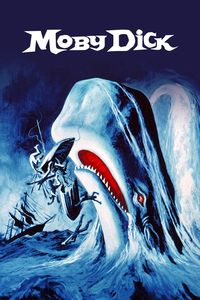
    Moby Dick (1956)

    (On TV, October 2020) Considering the central place of Herman Melville’s Moby Dick in the American literary canon, any film adaptation would be an ambitious undertaking, roughly akin to Captain Ahab’s maniacal quest for the Great White Whale that maimed him. It’s hard to imagine a better director for that gigantic endeavour than a middle-aged John Huston, considering the ways his directorial style has been described. In some ways, this adaptation is quite good: With novelist-screenwriter Ray Bradbury cracking the case of adapting a very long book into a movie, the script is not bad. Some very good production means (for a mid-1950s movie) have gone into recreating the world of a whaling ship and the gigantic animal they intend to fight. Where Moby Dick doesn’t do as well is in a small but crucial detail—casting. Specifically, the casting of Gregory Peck as Captain Ahab—look, no one ever dislikes Peck, but he is far too well-mannered to be an effective Ahab. You want someone able to spittle around their grandiose rants, with crazy eyes and stabby hands. In other words: Not Peck. It’s not that he’s bad, it’s just that he’s not close enough to the ideal version of the character. This is driven even deeper with the knowledge that John Huston was right there, behind the camera rather than in front of it. Or that Orson Welles shows up briefly for a cameo but not as Ahab. Too bad—with a fresh coat of CGI paint and another lead actor, this Moby Dick could be much, much better.

  • In the Heart of the Sea (2015)

    In the Heart of the Sea (2015)

    (On Cable TV, September 2016) On some level, I’m nonplussed by the decision not only to make In the Heart of the Sea, but to spin it in-story as “the inspiration for Moby Dick”. If you want to sink a blockbuster budget into showing the miseries of eighteenth century whale hunting, why not be entirely fictional, or squarely remake Moby Dick and throw in as much CGI into it? But no. This is the story of the Essex, which inspired Moby Dick, and it’s based on a nonfiction book. Rather than be faithful to an adaptation, the filmmakers now have to limit themselves to a patchwork of testimonials describing a true story, and wrap it in a framing device about Herman Melville gathering research material for his upcoming book. The result seems almost an oddity in today’s made-for-teens blockbuster landscape, with lavish production means spent on a subject that approaches irrelevance—despite a too-cute wink at today’s oil industry. Still, as far as modern technology allows for a credible re-creation of the eighteenth-century whaling industry and perils, In the Heart of the Sea certainly has its high points: Beyond the cramped shipboard living conditions and terrible storms, chasing whales takes on an extra edge when confronted with a cetacean antagonist seemingly intent of destroying our pesky human characters. Interpersonal conflicts eventually turn into a terrible story of survival at sea, by which time we better understand why the story is definitely not that of Moby Dick. Liam Hemsworth brings his usual easy charisma to the lead role. Director Ron Howard adds another good movie to his eclectic repertoire, even though In the Heart of the Sea definitely lacks the extra oomph of his better efforts—it’s no Rush, for instance. While the result may not fascinate anyone except those lucky few keenly interested in historical naval dramas, In the Heart of the Sea isn’t a bad movie. It just lacks whatever is needed for a truly satisfying experience.