Ian McKellen

  • The Good Liar (2019)

    The Good Liar (2019)

    (On Cable TV, June 2020) Some movies are best appreciated without narrative, but for the longest time it feels as if The Good Liar won’t be one of them. As it clearly establishes itself as a suspense film in which an elderly conman sets his sights on a wealthy widow, we can anticipate the coming twists and turns: cons are only as good as their terrible targets and, since she’s not, then there will be a counter-con. It’s in the movie genre lexicon. We’re just along for the ride until she springs the trap. Until that point, we’re left to enjoy Ian McKellen and Helen Mirren as they go through the plot, make their way through the set-pieces designed to show off their duplicity (or ruthlessness) and just appreciate the atmosphere provided by director Bill Condon, once against working hard at providing slick entertainment for older audiences. It’s all good fun according to the unspoken rules of the genre, and despite a weird detour through Berlin, by the 80-minute mark we’re ready for the last revelations to be put in place. They are. The twists happen. The charming widow isn’t what she presented herself as—but we knew that all along. But then the film keeps going, adding more and more layers of personal revenge to the story until we’re left shaking our heads at how unnecessary those last twists were, how they come out of nowhere, and how they take away from the film’s well-worn charm. It doesn’t change much to the overall telling of the tale, but it does push the film firmly from “fun” to “not-fun” territory, which is a significant miscalculation for a con film. I still enjoyed most of The Good Liar, but I could have done without much of the last 15 minutes, so at-odds they seem to be with the remainder of it. Still—McKellen and Mirren playing off each other certainly isn’t to be dismissed lightly.
  • Six Degrees of Separation (1993)

    Six Degrees of Separation (1993)

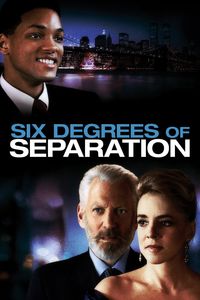
    (On TV, March 2020) An early entry in the “Wil Smith can act” section of Smith’s filmography designed to eventually get him an Oscar, Six Degrees of Separation is tonally very different from the films that ensured Smith’s success: It’s a rather quiet comedy-drama (adapted from a stage play) in which Smith plays a gay conman insinuating himself in the lives of upper-class Manhattanites. Smith looks impossibly young here—this was his first big role, and it happened right in the middle of his Fresh Prince of Bel-Air run. Not that he’s the only one worth noting here: In addition to a pair of lead performances from Stockard Channing and Donald Sutherland, the film also sports Ian McKellen, Heather Graham and, improbably, J. J. Abrams before he turned from screenwriter to showrunner and director. Six Degrees of Separation itself is a bit more interesting than expected—not solely content with the con at the heart of it, it goes on tangents about degrees of separation, a discussion of Cats-the-movie (in which McKellen would later star), honours given to Sidney Poitier, and, perhaps most devastatingly, how a significant incident in our lives can become nothing more than someone else’s party anecdote. The theatrical origins of the film mean that the dialogue is better than average, and Smith is already quite impressive in a role that runs on pure charisma. We know how the rest turned out.

  • Apt Pupil (1998)

    Apt Pupil (1998)

    (In French, On TV, December 2016) Stephen King’s Different Seasons novella collection was originally meant as a way to publishing four non-supernatural stories that King couldn’t sell, but it has ended up being the source material for three of King’s best movie adaptations. After Stand by Me and The Shawshank Redemption, here is Apt Pupil, which tells the dark story of a budding fascist teenager discovering an ex-Nazi living in his city. Things get worse when the two start jockeying for power over one another, eventually getting locked into a mutual destruction pact. Contrasting the sunny California setting with the darkest secrets within, director Bryan Singer doesn’t try to be subtle and the result is a fair thriller that allows a good actor’s duel between Brad Renfro and Ian McKellen, who’s particularly good here. The suspense set-pieces are well handled, and the film ends on a far more unnerving note than you’d expect … despite one or two big coincidences precipitating the third act. A solid thriller, Apt Pupil hasn’t aged a lot since 1998 despite ex-Nazis dying in droves since then.

  • Mr. Holmes (2015)

    Mr. Holmes (2015)

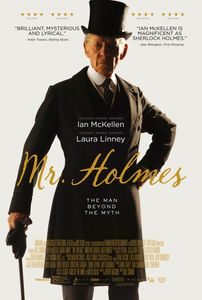
    (Video on Demand, December 2015)  At a time when we’ve been served with no less than three recent muscular re-invention of Sherlock Holmes (from Sherlock to Elementary to the two Sherlock Holmes Guy Richie movies), it’s a noteworthy change of pace to see Iam McKellen play an elderly Holmes wrestling with early dementia and past regrets in Mr. Holmes.  Directed by Bill Condon, this is a film about a very human Holmes (far less fanatical than his three recent counterparts) and it plays in minor keys: the caper to be resolved doesn’t depend on outlandish deductions, and the real mystery here is Holmes struggling to recall events from his own life.  McKellen is a terrific Holmes, bringing both gravitas and vulnerability to the role.  A thoroughly de-glammed Laura Linney is there to provide another point of view, further challenging our view of Holmes.  It’s a fairly slow film, and one that may not hold your attention easily if you’re distracted by other things, but it does build to a finely-controlled finale in which Holmes accepts his place in life and the necessity of being close to other people.  Given that at least two of the three other recent Sherlocks are struggling with the same thing, Mr Holmes does have something more to bring to the character and should be admired as such.  Just don’t expect fist-fights, gun battles and ticking-clock deductions: it’s not that kind of film, and it’s probably better for it.

  • The Da Vinci Code (2006)

    The Da Vinci Code (2006)

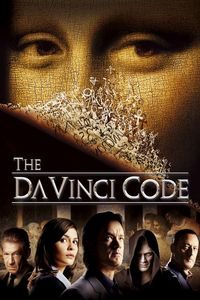
    (In theaters, May 2006) This film is as critic-proof as they come, what with its built-in audience, puffed-up controversy and all-star cast and crew. No matter what anyone say, it’ll make zillions and find a modest place of some sort in film history. Stripped of the hype, though, it’s no surprise to find that The Da Vinci Code is merely an average thriller, competently made but hardly innovative. In many ways, it’s fitting that two of the blandest (but competent) Hollywood stars of the moment, director Ron Howard and star Tom Hanks, would help in delivering the epitome of mass-market cinema entertainment. Perfectly blending French and American cinema, The Da Vinci Code delivers endless conversations rudely interrupted by car chases and modest gunfights. Of the actors, only Ian McKellen is any fun at all as a mischievous historian with a flamboyant streak: Tom Hanks, Paul Bettany, Jean Reno and Audrey Tautou are wasted in roles that either don’t suit them or are cut short without much conclusion. But the film’s most distinctive trait is how it alternates between talky exposition and very average thriller episodes. To be fair, the book was just as bad, except that the roughshod charm of Dan Brown’s clunky-but-earnest prose had a forward rhythm of its own. I expect a huge number of academic papers to be written on the adaptation of this story from one medium to another, especially when you consider that the book seems faster-paced that the film. While the critical knives had been drawn in anticipation of this film, the end result in no way deserves a critical savaging: in most aspects, it’s perfectly serviceable, with a tiny thrill of irreverence considering the subject matter. I’ve seen both better and worse this week. In the end, most people will find this film to be a mirror of their own expectations: Fans of the book will be pleased, curious film-goers will be satisfied and literary critics will find another reason to call Dan Brown the Anti-Christ. Now that’s entertainment for everyone!