Idris Elba

  • The Suicide Squad (2021)

    The Suicide Squad (2021)

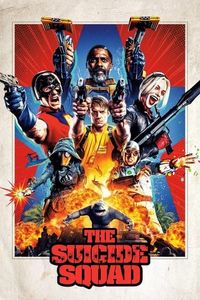
    (On Cable TV, December 2021) Considering that the house brand of both the Suicide Squad as a concept and writer-director James Gunn as a filmmaker is being provocative, it makes no sense to complain that The Suicide Squad is alternately gross, gory, profane and vulgar. That’s all true. But unlike a number of similarly down-and-dirty movies lately, this one is actually funny, entertaining and a sharp improvement over the 2016 David Ayers Suicide Squad. Going into the film completely cold, I was pleasantly surprised by an opening sequence that really messes with audience expectations, then goes on to introduce the real characters. Consciously aiming for the bottom of the barrel of DC universe villains, Gunn does feature more than the usual fare. At the exception of fan favourite Margot Robbie as Harley Quinn, Viola Davis and Joel Kinnaman, the only elements judged salvageable from the previous film, the film focuses on new characters and sends them into a Central America situation somewhat reminiscent of 1980s action movies. But Gunn clearly intends to surprise audiences because nothing (from the opening sequence onward) ever goes to plan. Perhaps the film’s highlight is Harley Quinn’s reaction to being attracted to another bad boy — a perfect relationship that she nonetheless recognizes as being terrible for her. Margot Robbie once again steals the show, but she has a lot of competition — not necessarily from Idris Elba’s rock-solid performance as a professional killer, but John Cena once again grabbing the spotlight. The change of scenery to a fictional Central American capital brings a lot of colour and flavour to the film, and allows a city-smashing climax to feel different from North American metropolises. As usual whenever R-rated Gunn movies are concerned, I have a number of issues with some specific aspects of the execution — the gore, the coarseness, the quasi-nihilism. But The Suicide Squad works well in spite of them, even though I would be wary of recommending the result to anyone but a jaded viewer. I was expecting much worse anyway from a soft reboot of a film few people even liked.

  • Daddy’s Little Girls (2007)

    Daddy’s Little Girls (2007)

    (On Cable TV, May 2021) Every so often, writer-director Tyler Perry gets out of his Madea-adjacent comedy comfort zone and tackles a straight-up drama, often leaving himself out of the cast. Such is the case with Daddy’s Little Girls, a small-scale romantic drama where a down-on-his-luck blue-collar single father (Idris Elba) comes in personal contact with a high-powered lawyer (Gabrielle Union) at a time of personal crisis. It’s not meant to be a grandiose movie, which fits Perry’s fast-and-direct filmmaking style quite well. But the flaws in Perry’s style are also more glaring when he’s not playing the class clown, and so the story is brought down by caricatural antagonists. It’s not enough for the protagonist to be in a custody battle with an ex-wife; she’s got to be an enabler to a violent drug dealer who beats the kids and threatens them into selling drugs at school. So, yeah, so much for “small-scale.”  Fortunately, the film does better when it focuses on staider stuff — the parenting bond between the protagonist and his three girls, and the cross-class romance between the two lead characters. Perry is constantly gifted with great casting, and it’s hard to resist the Elba/Union pairing here with such charismatic performers. This doesn’t necessarily make Daddy’s Little Girl a good movie, but it’s tolerable — and of greater interest to those tracking down Perry’s filmography as one of the least distinctive films in his body of work.

  • The Gunman (2015)

    The Gunman (2015)

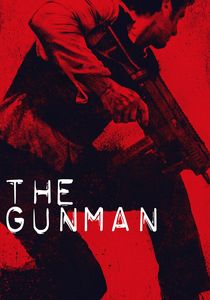
    (In French, On TV, February 2021) You can make a workable argument that The Gunman is a technically accomplished but generic action movie with a miscast lead and an awkward aspiration to deliver a humanitarian message. A visibly aged Sean Penn (55 at the film’s release) plays a mercenary who goes on the run after completing a nationally destabilizing mission on behalf of powerful multinationals, only to be lured back a few years later when the multinationals start tying loose ends. Director Pierre Morel directs the globetrotting film with his usual good form, although that style is practically undistinguishable from countless other mid-budget action films: there’s little distinction in the way the shootouts and chases are executed, lending a forgettable sheen to the entire enterprise. Unfortunately, Penn is a bigger problem for The Gunman than its middling execution: too old to play the role, Penn is further out of his element, considering a screen persona that did not include many action-driven roles — and he’s far too old to start, even considering that Morel helped Liam Neeson find a third career as an action hero. (The difference is that Neeson has the imposing physicality and gravelly voice to pull it off — Penn does not.)  I’m also going to blame Penn (who also co-wrote and co-produced) for attempting to jam some socially relevant material in a film that could have used a much lighter touch in that area — the hypocrisy of a run-and-gun action movie claiming a social conscience in denouncing the influence of multinationals in the affairs of a nation-state is a bit rich. Capable supporting roles from Javier Bardem, Idris Elba and Jasmine Trinca can’t quite elevate the material either. It’s not surprising if The Gunman has faded away from any kind of cultural relevance in the past five years — it’s unremarkable in most ways except for its biggest issues. Penn himself is probably happier seeing it slink back into obscurity.

  • Fast & Furious Presents: Hobbs & Shaw (2019)

    Fast & Furious Presents: Hobbs & Shaw (2019)

    (In Theatres, August 2019) The origin story of Fast & Furious Presents: Hobbs & Shaw sounds like a case study for an ambitious Hollywood studio executive: what if the two biggest stars of your biggest moneymaking franchise start squabbling badly enough that it makes headlines? The obvious answer is to spin off another series to specifically showcase one of the squabbling stars and hope that the box-office keeps churning in. So it is that there’s nary a Vin Diesel to be found in Hobbs & Shaw, as the film feels free to jettison much of the increasingly burdensome “Family” of the main series in favour of focusing on the antagonistic relationship between Agent Hobbs (Dwayne Johnson) and reformed terrorist Shaw (Jason Statham). This spinoff clearly takes bold leap into science fiction as the antagonist is a cyber-enhanced “Black Superman” as played by the always-incredible Idris Elba. But that’s not the least credible aspect of a film that has its protagonists escape a falling smokestack, pull a flying helicopter by their arm muscles or run down the side of a skyscraper. No, believability and physics aren’t the strong suit of Hobbs & Shaw—in keeping with the original series, this is more about quick quips, demented action sequences, celebrity cameos (including a very funny Ryan Reynolds and an amused Helen Mirren) alongside an exaggerated sense of fun. It generally works—while elements of the third act feel like a step back from the calculated insanity of the previous action sequences, the film as a whole can depend on great lead action icons and a rather cute Vanessa Kirby building on the good reviews she received in Mission Impossible: Fallout. It’s not as good or as involving as much of the mainline series, but Hobbs & Shaw does the trick in between other instalments.

  • Molly’s Game (2017)

    Molly’s Game (2017)

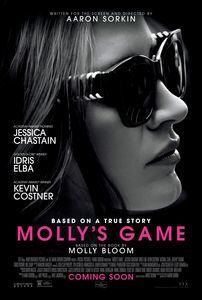
    (On Cable TV, October 2018) So… Jessica Chastain as the lead in an Aaron Sorkin film? You definitely have my attention. But Molly’s Game goes many steps further in giving us a real-life story of poker, Hollywood, organized crime, Idris Elba, a brainy leggy heroine and a two-hour stream of patented Sorkin dialogue. A fascinating example of an adaptation that goes further than the source material, this film not only adapts the content of Molly Bloom’s story as published in the original Molly’s Game, but updates it through a framing device taking place after the book’s publication. The fascination here is evenly distributed between Sorkin’s usual brand of rapid-fire witty dialogue, Molly Bloom’s extraordinary personality and Chastain’s uncanny ability to inhabit the role. It’s a great match between actress and subject, as the attractive Chastain gets to play a ferociously smart character who turns to the legally dubious side in order to make a living. Her conceit is simple enough: take care of all the necessary arrangements for wealthy poker players to have their regular games. It’s not entirely legal, certainly not completely safe, and much of the film’s interest is in detailing all the precautions she has to take in order to attract and retain the high-rollers while protecting herself. Michael Cera plays against type as a slimy Hollywood actor (reportedly Tobey Maguire) who ends up becoming one of Molly’s worst opponents, while Elba is his usual charismatic self as a high-powered lawyer. Sorkin also has fun directing his own script, fully getting into his heroine’s mind and history. (Kevin Costner pops up for a few scenes as her father, and gets a great scene in which he fast-forwards through years of therapy with his immensely intelligent daughter.) At 140 minutes, Molly’s Game is not a short movie, but it is seldom less than engrossing thanks to its script, directors and multiple subject matters. It’s thoroughly entertaining, and a strong demonstration of what Sorkin and Chastain can do at their best.

  • The Mountain between Us (2017)

    The Mountain between Us (2017)

    (On Cable TV, June 2018) There is a very familiar blend of thrills in The Mountain between Us that makes the movie almost useless despite some very nice high points here and there. Mixing a disaster survival story with a romance isn’t new, and the way director Hany Abu-Assad uses high-tech means to create visual excitement (most notably in a lengthy one-shot crash sequence) don’t really amount to much when the film can be almost entirely predicted from the first five minutes. While the nature photography is nice, the survival story strains credulity while the romance seems overly familiar from similar films. The execution isn’t that special, and not even capable actors Idris Elba and Kate Winslet can save this one from nearly instant forgetfulness. Far too long for its own good given its thin plot, The Mountain between Us is not predestined to much of a future—it’s the kind of film that becomes a footnote more quickly than you can imagine.

  • The Dark Tower (2017)

    The Dark Tower (2017)

    (On Cable TV, April 2018) I’m not that familiar with Stephen King’s series (even though I’ve got most of it on my shelves, waiting for a sustained reading marathon) but you don’t need to be a fan to be disappointed by the low energy of this big screen The Dark Tower. Some of the film is worth defending: Idris Elba has never been less than interesting even in misfires such as this one. Matthew McConaughey can play evil very well. Some of the initial world building of the film is intriguing. There’s a great action sequence at the end. But beyond those things, The Dark Tower feels like a blend of several very familiar urban fantasy tropes remixed without much wit nor conviction. It does a poor job hinting at the grandeur of King’s series, and far too often goes back to familiarity when we’re here for the new and unexpected. I often complain about the Hollywood process that uniformizes whatever quirky source of inspiration comes its way, and that’s seldom as apparent as in here. Whatever may have been worthwhile in King’s source material is compressed in an extremely familiar three-act structure and plot moments that feel stolen from the past five years of YA urban fantasy. What’s left cannot be satisfying to audiences unfamiliar with King’s work nor his fans. The Dark Tower feels like a mess, and watches like one. Looking at the poor critical and commercial returns for the film, it’s fair to say that there will never be a sequel in that continuity and I’m not devastated by that idea.

  • No Good Deed (2014)

    No Good Deed (2014)

    (Netflix Streaming, October 2016) What happens when you drop two good (even underrated) actors in a generic formula film? You get something that’s worth watching even if the film itself is almost entirely forgettable. After all, it doesn’t get more hackneyed that a home-invasion thriller in which a dangerous escaped criminal fixates on a woman left alone at home—during a storm, no less! But, with some capable directing and Idris Elba and Taraji P. Henson arguably slumming in the lead roles, No Good Deed becomes almost watchable despite a blatantly predictable plot and much nonsense along the way. I’m really not fond of the way that the film ends up tying both the aggressor and the victim together—it’s a far scarier concept to imagine just a random criminal—but I’ll allow it in the spirit of hackneyed plotting. Elba is far too good to play one-dimensional criminal, but he does it so well that it’s hard to be mad at him. Meanwhile, Henson has a far more interesting role as the victim who ends up protecting her children while fighting back at the aggression, even when it moves away from her house. No Good Deed isn’t much more than B-grade exploitation filmmaking, but thanks to its lead actors it remains compelling throughout, which is a great deal better than other movies of its ilk.

  • Beasts of No Nation (2015)

    Beasts of No Nation (2015)

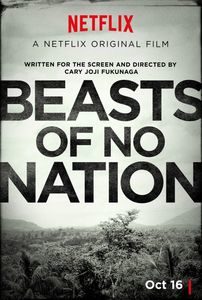
    (Netflix Streaming, August 2016) Netflix’s new role as an original movie distributor starts with a bang with Beasts of No Nation, an uncompromising film that not only suggests Netflix’s good eye for content, but also a willingness to support material that otherwise wouldn’t get much visibility in today’s megaplex-spectacle context. Beasts of no Nation certainly isn’t a traditional crowd pleaser: Focusing on the plight of a (very) young man recruited into an army of children during an African civil war, it’s a film that hits hard, stares where others don’t like to watch and offers no easy conclusions. Bloodshed, abuse and madness abound, while writer/director Cary Joji Fukunaga doesn’t flinch in presenting his material. Beasts of No Nation benefits from a pair of exceptional performances: Abraham Attah as the young Agu, our viewpoint character, and Idris Elba as the cult-like commander of his army. The African scenery is gorgeously showcased, and the film does have a cinematic quality that may not have been expected from a streaming release. The footnote of Beast of No Nation in movie history is assured: Once Netflix picked it up and promised simultaneous availability online, most American theatre chains struck back by refusing to play it on the big screen. The joke, within a few years, will be on them. In the meantime, Netflix has done well for itself and the film by ensuring Beasts of No Nation publicity and distribution. It’s the kind of move that suggests a slightly brighter future for cinema, as more complex viewing experiences can be made viable through streaming platforms.

  • Takers (2010)

    Takers (2010)

    (In theatres, September 2010) Keeping expectations low is one way to best appreciate Takers given how this surprising California-noir crime thriller recycles a bunch of familiar elements into a watchable whole.  The story, about a crew of Los Angeles professional bank robbers pulling off one last heist even as the FBI is closing on them and dissention strikes within their ranks, is so generic as to approach cliché: You can pick bits and pieces of Heat, Cradle 2 The Grave and even The Italian Job out of the finished result and it’s not as if the dialogue is anything special.  Worse yet is the direction, which feels forced to use an incoherent shaky-cam style every time something interesting is happening, undercutting our ability to make sense of what’s going on.  But despite the problems, it works: Takers features a fine multiracial cast (with special mention of Idris Elba, Michael Ealy and Paul Walker), a snappy rhythm, a few surprising stunts and a compelling sense of place for Los Angeles.  What may sour the impression left by the film is a curiously off-balanced moral center, with fairly unpleasant cops taking on glamorous criminals with crime-financed luxurious lifestyles: The ending provides plenty of bloodshed and little reassurance as to who, if anyone, actually fulfilled their objectives.  Still, if Takers may not be original… it’s entertaining enough.