Isabella Rossellini

  • Cousins (1989)

    (On Cable TV, November 2022) I do believe in treating movies with matching intent—that is, watching them according to their intentions. But there are a few genres, plots and tropes that make it hard to keep a straight face as the filmmakers intended, and Cousins gets to work early at showing those overdone elements. Much of the narrative, for instance, is an elaborate rationalization for an affair—a man and woman (newly cousins-in-law) finding out that their spouses are having an affair with each other, and deciding to have one of their own. Since this is one of those “good” affairs, it starts slow and remains hesitant until it blossoms into True Love (aw) as opposed to their spouse’s affair, which is a despicable immature temporary thing. The epitome of self-conscious romantic drama that only works if you take a very selective protagonist-centred view of events, Cousins is the kind of movie that only works as a movie. Ted Danson and Isabella Rossellini both star as the good couple (what an ironic casting coup in featuring Rossellini in an affair drama, considering her pedigree), with Sean Young and William Petersen ending up as the bad one. (Plus, Lloyd Bridges as an elderly eccentric.) But it’s the director’s name that’s most surprising here: Joel Shumacher, during his initial ascending period as a mostly dramatic director. I strongly suspect that the film will strike most other viewers as a mostly innocuous romantic dramedy. But sometimes, the suspension of disbelief thing doesn’t work, and a movie looks like a hideous assembly of forced elements, and that’s how Cousins felt to me this time around.
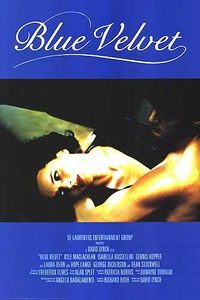
  • Blue Velvet (1986)

    Blue Velvet (1986)

    (On Cable TV, January 2017) I have resigned myself to the fact that David Lynch and I will never enjoy a harmonious filmmaker/moviegoer relationship. Case in point: Blue Velvet, often acclaimed as one of his most representative films and almost a bona fide classic thirty years later. For all of my good intentions and Blue Velvet’s overall accessibility compared to other Lynch films, I found myself watching the film in a fairly detached manner, unwilling to try to make too much sense of it given the quicksand trap examples established by his other movies. I’ve never been particularly eager to play the mind games of Lynch’s movies, and found that my best viewing mode for them is purely contemplative, not expecting the plot to make sense. Even in that state, though, I have to admit that Dennis Hopper’s performance is ferociously good: His character, all id and swagger, thunders on-screen and has his way with characters like a tornado. We can only, like the film’s protagonist, watch in awe and hope that he doesn’t notice us. Blue Velvet has, at its core, a long sustained sequence of abuse and voyeurism that can’t easily be forgotten. It’s by far the standout segment in a film dealing with crime and violence in a small town. Kyle MacLachlan is fine as the viewpoint character and Laura Dern does have a few good moments (in-between this and Wild at Heart—perhaps my less-disliked Lynch film—, a substantial part of her best filmography owes much to Lynch) but it’s Isabella Rossellini who earns her acting acclaim in this film as Hopper’s souffre-douleur. It makes, in typically Lynchian sense, for a big surreal ball of moviemaking, although I note with some comfort that there is a level of superficial understanding here that’s not necessarily possible in other more enigmatic Lynch films. When I say that Blue Velvet ranks highly among Lynch’s best films, keep in mind that I’m grading on a curve.