Jack Palance

  • The Professionals (1966)

    The Professionals (1966)

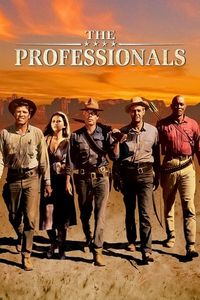
    (On TV, September 2021) I’ve seen too many undistinguished westerns lately to expect much from yet another one, but The Professionals gradually won me over. The casting certainly gets things rolling in the right direction: with Lee Marvin and Burt Lancaster sharing the lead as mercenaries going into Revolutionary War Mexico, you’re in good hands — but then throw in Claudia Cardinale and Jack Palance and it just gets better. The film also cranks up the action by featuring an explosive-heavy plot with a demolition expect (Lancaster, looking suitably ragged-down) as a rich American asks them to go south to rescue his wife (Carnivale, lovely) from a Mexican warlord (Palance). Many explosions pepper what happens next, plus a slightly-twisty plot that could have been taken from a film noir. This already sets the film apart from so many other westerns, but the execution more than supports the premise. There are really interesting parallels to be made between The Professionals and the spaghetti westerns that were emerging as renewal engines for the western genre — A Fistful of Dollars had come out in 1964, but the clearest parallels in terms of explosive Mexican Revolution action are with the later A Fistful of Dynamite (1971). Still, compared to many American westerns of the 1960s, The Professionals has more energy, more distinctiveness and more fun to it. No wonder I liked it a lot more than the usual western of the time.
  • Cops and Robbersons (1994)

    Cops and Robbersons (1994)

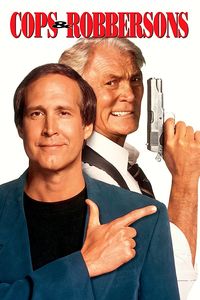
    (In French, On Cable TV, June 2021) I haven’t held back in calling out Chevy Chase as one of the unfunniest comedy stars of the 1980s — while his shtick occasionally works (I’m a big, big fan of Christmas Vacation), it’s often smarmy to an intolerable degree, and it’s interesting to see that it got worse with time, until his hubris grew too big for audiences to like. After his 1980s heydays, he experienced flop after flop in the early 1990s, with Cops and Robbersons arguably being the nail in his box-office coffin — you can just look at his filmography before and after 1995 to see a striking difference. To be fair, the problem with Cops and Robbersons isn’t just Chase — but other than “this is not a great script,” most of the specific problems with the film can be summarized as “Chase.”  It could have been much, much worse — rather than being portrayed as an “irresistible” ladies’ man as in Fletch or Memoirs of an Invisible Man, Chase here reverts to a variation on his bumbling suburban dad persona made famous in the Vacations films. A familiar character played on autopilot — with the same largely being true of Jack Palance as a misanthropic hard-boiled veteran cop forced to play Granddad in moving to the suburbs for a stakeout. The casting of Dianne Wiest as a funny mom is slightly perplexing considering her persona and the sitcom nature of the gags, but that’s among the least of the film’s problems. The main issue here is that the script has one good idea (encapsulated in the too-cute title) executed in very familiar riffs. You’ll say that this does make it look like plenty of other mainstream comedies of the time and you’d be right — the failure mode of Cops and Robbersons is being overly familiar, and that’s better than being actively obnoxious as other Chase films. Still, that doesn’t make it a better film — and for Chase it was a three-strikes-you’re-out kind of career realignment, not helped along by his abysmal reputation off-screen. When egomaniacs get humbled, not all of them repent and change their ways — some simply take their ball and go home.

  • Once a Thief (1965)

    Once a Thief (1965)

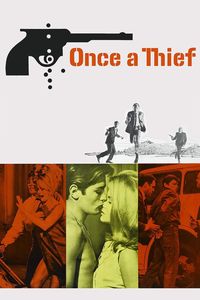
    (On Cable TV, March 2021) There’s a hit-and-miss quality to Once a Thief that steadily brings the film close to a good movie, then retreats and repeats. It does set itself an impossible high bar with a very modern-feeling opening sequence blending a great jazz piece with a robbery sequence. It soon settles for a much less flashy drama — the story of an immigrant (none other than Alain Delon!) trying to forget his past criminal life in order to settle down with his son and wife (none other than Ann-Margret!) but keeps getting dragged back into the criminal life. If you’re going to talk about a cast, this film has a pretty good one, with other roles played by Jack Palance and personal favourite Van Heflin. Ann-Margret’s red mane is wasted in the film’s black-and-white cinematography, but she gets quite a showcase for dramatic intensity with wild hair and screaming sequences. While Once a Thief came too late to be considered a classic film noir, it does have the advantage of its late production date: it’s socially conscious to a degree that would have been unusual in the 1940s and 1950s, concerned as it is about the immigrant experience and the way marginalized people are punished beyond fair retribution. The ending is quite harsh even by the standards of the genre, which paradoxically makes Once a Thief age better than its contemporaries.

  • The Big Knife (1955)

    The Big Knife (1955)

    (On TV, September 2020) Considering my fondness for Hollywood stories about Hollywood, I’m surprised that I don’t like The Big Knife as much as I probably should. The story of an actor negotiating a new contract with his studio while blackmailed due to a few sordid stories (both past and current) sounds like something right up my alley. It’s not as if the film doesn’t have other qualities either: Ida Lupino is wonderful as usual, Rod Steiger chews a lot of scenery, and Jack Palance is sort-of interesting. But in the end, it’s the entire film that fails to impress—perhaps too bleak for esoteric reasons (blame playwriter Clifford Odet, who wrote the theatrical play from which this is adapted), perhaps too stuck to the florid dialogue of the original, perhaps a bit too sedate and stage-bound as the theatrical play itself. I’m not sure there’s a crowd-pleasing movie to be made about an actor declining a wealth-making studio contract, and certainly not in the way the film ends. Too bad, because there are flashes of wit in the dialogue, and some fun performances—just not the kind of material that transforms a film into something compelling. In the end, I just could not make myself believe in The Big Knife.

  • Alone in the Dark (1982)

    Alone in the Dark (1982)

    (In French, On Cable TV, September 2020) Coming at the tail end of the 1979–1982 slasher craze, Alone in the Dark definitely knew what it was doing in revolving around a handful of psycho killers escaping from an insane asylum during a power outage and targeting their psychiatrist. Quickly shifting to home-invasion thriller, the film clearly upholds the tropes of the subgenre, and doesn’t care much about narrative cohesion. The biggest draw of the film, even today, is a cast that throws in Jack Palance, Donald Pleasence and Martin Landau together as psychiatrists and psychopaths. (Elsewhere in the film, Lin Shaye has an early brief role.) Better executed than average by writer-director Jack Sholder, Alone in the Dark does, however, remain a first-wave slasher—interesting if you’re into the whole psychopaths-with-knives thing; otherwise not very much.

    (Second Viewing, On Cable TV, January 2021) Not remembering my first viewing, it took me a few false starts before I was able to make it (again) through Alone in the Dark. Either I stopped midway through, or I left it running while I was doing something else and realized by the end of it that I was never compelled to follow what was happening. When I finally sat down to watch with (mostly) undivided attention, I’m not sure I got much more out of it. The first half-hour does have something worth paying attention to: As a psychologist takes residence at an insane asylum, he has trouble connecting to a close-knit foursome of violent criminals, who blame him for the death of their previous psychiatrist. When a power outage strikes, they soon escape and head for his residence. The rest of the film, alas, is more or less a home-invasion thriller, albeit with a twist that can unfortunately be seen (or rather not seen) from the very introduction of the antagonists. If there’s any reason to watch the film, it’s probably for the casting of a few familiar actors: Jack Palance, Martin Landau and Donald Pleasence all have substantial roles here, with none other than Lin Shaye (who finally achieved horror stardom three decades later!) making a short appearance early in the movie. Alone is the Dark does work well in its execution, but it does boil down to a very average early-1980s horror film. That may not sound like much (it partially explains why I didn’t even remember seeing the film a few months ago), but it’s slightly more interesting than the omnipresent slashers of that time.

  • City Slickers II: The Legend of Curly’s Gold (1994)

    City Slickers II: The Legend of Curly’s Gold (1994)

    (In French, On TV, August 2020) Whatever made the success of City Slickers is certainly revisited in its sequel… except mechanically and in diluted fashion. It’s not a real surprise to see Jack Palance come back to join Billy Crystal and Daniel Stern once again as they head out west. While the first film had all the clichés (or rather: familiar elements) of a cattle drive, City Slickers II goes for the clichés (or rather: familiar elements) of a treasure hunt. It works all the way to an upbeat conclusion, but there are quite a few plot cheats along the way, from a final revelation about this being a manufactured reality that is belied by previous events, and then another backflip in order to provide the kind of feel-good conclusion that its earlier twist prevented. Eh, whatever: once again, the real fun is in seeing Crystal and friends match squints with Palance and the indignities of the wild west so far away from the urban canyons of Manhattan. Palance himself has the panache of a veteran movie star, while Crystal is up to his usual standards. City Slickers II is indeed a slickly made film with a big-enough budget to shoot visually interesting scenes out in the far west, but it does mechanically move through its unconvincing plot and doesn’t have much to go in terms of having the characters develop their relationship – the best it can do is welcome a third partner played by Jon Lovitz, who doesn’t turn out to be quite annoying as first feared. That’s not a lot, although if you just want a few chuckles against a western backdrop, City Slickers II is not that painful of an experience.

  • Le mépris [Contempt] (1963)

    Le mépris [Contempt] (1963)

    (On Cable TV, July 2019) There are a few things colliding in Le Mépris. Writer-director Jean-Luc Godard shows us what happens when a marriage crashes into a film production, comparing the nitty-gritty of making a movie and the heightened melodrama of a suddenly disintegrating relationship. The film stars Brigitte Bardot in of her most dramatically challenging roles, as her picture-perfect sex-appeal bolsters her role as a woman who realizes that her husband is trying to sell her to a film producer in an attempt to get more money. Cue the titular but no less furious contempt. The anti-romantic plot thread is perhaps best exemplified by a very long sequence midway through the film in which the married couple argues in measured terms throughout their apartment—the kind of sequence that makes film students think about the use of space and character separation. The other subplot, about the multilingual production of a movie based on The Odyssey, is far droller: Featuring no less than Fritz Lang in an amusing role as the film director, it also stars a young Jack Palance as a hard-driving film producer who may or may not be interested in Bardot’s character. The banter here is far funnier than expected, what with a poor translator trying her best efforts to bring together a cast and crew speaking four languages, Lang arguing about the meaning of The Odyssey, and metatextual glimpses at a movie production. The blend of two tones and styles is provocative, especially when they literally involve a car crash at the climax, resolving a few plot threads in far too convenient a manner. Much of Le mépris is interesting; much of it is long—ultimately, it’s up to the viewer to pick and choose their favourite parts.

  • City Slickers (1991)

    City Slickers (1991)

    (Second viewing, On Cable TV, June 2018) I hadn’t seen City Slickers since the mid-nineties, and I had forgotten quite a bit about it—including what makes it so good. Beyond Jack Palance’s tough-cowboy performance (which led to an Oscar win and the infamous one-armed push-up acceptance speech that I saw on live TV) and Billy Crystal’s usual nebbish charm, City Slickers is built around a solid core of personal rediscovery, as well as an accompanying constellation of recurring gags, strong comic personalities playing off each other, and more throwaway gags than I remembered. Crystal is great, but the ensemble around him also works wonders at driving the film forward. Deftly playing with western archetypes and references (most specifically to Red River, which does make a good accompanying feature), it’s also a very nineties comedy film touching upon modern alienation and the value of manhood in a cerebral urban environment—seeing characters abruptly thrust into a different context is always good for a few laughs. The ending is a bit pat in the way it resorts to familiar action-movie theatrics as a shortcut to self-actualization, but that’s the way these things go: City Slickers is meant to entertain, not radically question our assumptions. It succeeds at what it tries to do.