James Caan

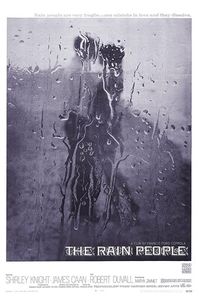
  • The Rain People (1969)

    The Rain People (1969)

    (On Cable TV, November 2021) As an aging movie reviewer who’s accumulating what’s laughably called “maturity,” I’ve gotten much better at not calling movies “boring and dull and pretentious” — there’s usually something good about everything and it’s my job to find what it is (or which audience it would serve best). But the fact that it doesn’t happen as often is not a guarantee that it doesn’t still happen and so, well: The Rain People is boring and dull and pretentious. There’s a reason for that:  Coming from writer-director Francis Ford Coppola in the burgeoning years of the New Hollywood, it gets to play with things that Classic Hollywood would not have allowed: An unsympathetic character leaving her loving husband out of sheer wanderlust; a gritty filmmaking style aping realism and delivering drudgery; an inconclusive conclusion without much in terms of character development. These, obviously, are the tools of literary fiction but in the characteristic zeal that marks, well, much of American history, the New Hollywood filmmakers went far overboard and later generations can only suffer through those early releases. There’s clearly a footnote in film history for The Rain People — not only as an early work from a major American director, but also a film featuring both James Caan and Robert Duvall prior to The Godfather. There’s an audience for those non-formulaic films with closer ties to written character drama than genre pictures — but even aging movie reviewers have their preferences, and I’m throwing my lot with the genre-obsessed plot-dominant camp that does not settle for boring and dull and pretentious.
  • El Dorado (1966)

    (YouTube Streaming, August 2021) When watching classic western films, I often have the impression of déjà vu, and that’s even more pronounced for El Dorado considering that it seems built from many of the same elements as director Howard Hawks’ previous Rio Bravo. Once again, John Wayne is presented as a hero, as he assembles a group of helpers to help fend off the film’s antagonist. It’s an interesting crew, though: In-between the protagonist (Wayne) being subject to bouts of paralysis due to an injury, he’s joined by an alcoholic sheriff played by Robert Mitchum, an unbelievably young James Caan as a naïve gunslinger and Arthur Hunnicutt playing one of his usually grizzled mentors. That four-man crew is the focus of the various action sequences, occasionally enlivened by a good supporting cast — perhaps the most remarkable being Michele Carey’s eye-catching turn as a vengeful daughter. It’s all conventional, sure, but rather well-executed. If it takes too long for the crew to get together, El Dorado really starts working once they are, and there are a few modest twists on the formula to keep things entertaining. I’m not that enthusiastic about the result, but it steadily gets better as it goes on, and does manage to wrap everything up in a satisfying fashion. I doubt I’ll remember much more than Carey within a few days, though.

  • Games (1967)

    (On Cable TV, July 2021) I had a momentarily double take in looking at Games’ TV log entry — talking about a 1967ish film featuring “A young couple who are into kinky mind games,” screams Who’s Afraid of Virginia Woolf? to me, but as a viewing attests, there’s a gulf of difference between the two movies: Games is a pure genre thriller, occasionally silly and ultimately quite glum. It does feature a couple into mind games (first shown as party tricks) but slowly sinks into a tangled web of deception and murder. Simone Signoret is the film’s most remarkable asset as a mysterious older woman who turns the tables on the couple, even if said couple is played by none other than Katharine Ross and a surprisingly young James Caan. For noted iconoclast director Curtis Harrington, Games is about as close to mainstream stuff as he did — there’s a pleasant lunacy to the overlapping plots that come to dominate the film, but it’s executed in relatively straightforward fashion for a twisty thriller. The colourful cinematography is very much of tis time, and now gives an interesting period patina to the result. You can slot Games squarely in the “solid movie” category — not a masterpiece nor particularly memorable, but well-made and entertaining enough to make up an evening’s entertainment.

  • Kiss Me Goodbye (1982)

    (On Cable TV, July 2021) The “deceased spouse comes back to haunt the protagonist during their next romance” comedic trope is surprisingly common in Hollywood, and Kiss Me Goodbye’s distinction is that of taking place in the early 1980s, with younger versions of familiar actors. Here, we have Sally Field as the widow, James Caan as the ghost (an exuberant Broadway director) and Jeff Bridges as her new fiancé (an Egyptologist). It takes a while to get going, but the film does hit a comfortable second act in which a wisecracking Caan keeps intruding over the living couple’s time together, unbeknownst to him but highly present for her. There are a few nice comic moments, including one in which the living fiancé turns the tables and starts pretending to see his own ghost. The third act gets more complicated, as the deceased’s flaws are uncovered and make the living fiancé look a lot better in comparison. It’s funny to read that Caan hated the film (which contributed to his subsequent five-year hiatus away from acting) because he has seldom been looser or funnier on-screen, playing a big character who seems to be having fun with it all. In comparison, Fields and Bridges are merely up to their usual standards — good, but hardly memorable. The ending sequence is slightly overcooked, but otherwise Kiss Me Goodbye is a decent-enough comedy with some unusual material as joke fodder. Reviews haven’t been kind to the film since its release, but it’s serviceable enough for a look without high expectations.

  • Alien Nation (1988)

    Alien Nation (1988)

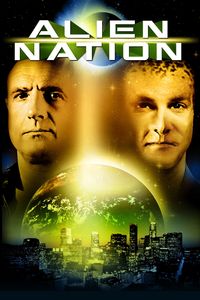
    (In French, On Cable TV, August 2020) The Science Fiction genre has a long history (especially in print) of using murder mystery narratives in order to illustrate a future society: it’s a great way to examine what makes a society tick, allow the detectives to meet various people and show a science-fictional device as a wrinkle in the investigation or the crime. Conversely, Hollywood has an equally long history of using science-fictional environment as mere backdrop for a thoroughly ordinary plot that could have worked just as well in contemporary settings. The difference between the two is subtle but significant: in one case, the plot enhances the genre, while in the other the plot is irrelevant to the genre. Seasoned SF fans clearly prefer the first—there’s even a dismissive expression from the Turkey City Lexicon, “Abbess phone home” to call Science Fiction that could have been anything else. Alien Nation straddles the line between the two in such a way that can often look like one or the other. One way of looking at it is that Alien Nation takes us in a decently imagined “near future” of 1988, in which a ship of aliens has landed on Earth and been assimilated in American society. They have their own language, biology and physical capabilities, and much of the film’s first half-hour is spent illustrating those changes through the early stages of a murder investigation, complicated by the pairing of the first alien policeman with an investigator (James Caan) resentful since aliens killed his partner. The metaphor for immigrant integration really isn’t subtle here, from the title onward. Still, that first half-hour is probably the most interesting thing about Alien Nation, as the aliens have their own alphabet and language, live in ghettos (with their own strip clubs), and love drinking sour milk recreationally. But then the film loses interest in taking refuge in “ordinary story labelled SF” territory: The mismatched-cop duo clearly cribs from racial integration films, and as the story advances, we’re left with a cops-against-a-monster conclusion that strips away nearly anything that had been interesting about earlier worldbuilding. (Not to mention basic questions: why would an alien species so vulnerable to saltwater choose to stay in a coastal town?) At least Caan has a decent role as the human cop, while Mandy Patinkin is unrecognizable as his alien partner. You can gauge the interest of Alien Nation’s premise and underlying concept in the long list of TV movies and novels that were produced as spinoff—the idea was so good that it couldn’t be left alone. But the film itself merely achieves a middle-of-the-road cop drama and nothing more. That’s not too bad, but it could have been better.

  • Thief (1981)

    Thief (1981)

    (In French, On TV, May 2020) You can take a look at Thief and not immediately get how many things had to come together in exactly the right way for it to succeed. First up, you have writer-director Michael Mann in his feature-film debut, taking a few years of experience doing TV and applying a meticulous eye for detail at this drama featuring a master thief trying to get out of the business. There’s also the cinematography proper to an early Bruckheimer production, making splendid use of darkness and light to heighten what could have been handled as just another thriller. You’ve got James Caan, also precise in the way he plays a professional safecracker with an almost abstract idea of what he would do once away from the outlaw lifestyle. It features an able performance from Willie Nelson, as well as the big-screen debut of James Belushi and Dennis Farina. You have exact technical details, a strong sense of place for Chicago, some strong neo-noir style, plenty of elements anticipating Mann’s later movies (Heat, notably), and enough sordid details that not everything is settled by the film’s end. Thief is a strong debut for Mann, an intense role for Caan, and a great throwback watch for twenty-first century viewers.

  • Funny Lady (1975)

    Funny Lady (1975)

    (On Cable TV, May 2020) All right, dear readers, you win: Funny Lady is the film that gets me to admit that Barbra Streisand is one of my pin-up girls — because she made the film worth a look even when it’s an ill-conceived mess from the start. As a rule, it’s not a good idea to make a romance sequel, and true to form, this follow-up to Funny Girl has the protagonist ping-pong between two suitors (played by Omar Sharif and James Caan), including the one rejected in the first film. It’s a narrative dead-end, and indeed much of the film’s plot is a chore to get through. (Although one notes that it reflects the real-life story of Fanny Brice and her tumultuous love life.) But Funny Lady being a big-budget musical taking a look at a past era of American theatre, I found the film on much firmer footing in showing the backstage of a musical (including a hilariously disastrous production) or indulging in its own musical numbers. Streisand is the focus of attention, naturally—sexy, spectacular and smart, either singing or acting, she’s clearly better than the production itself. This being said, Funny Lady is worth a look if you’ve seen Funny Girl: there are a few moments (let’s fly and sing!) that make it worthwhile even if the film itself isn’t so good.

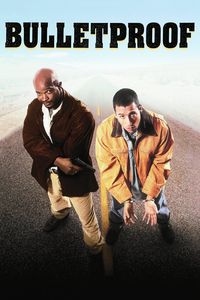
  • Bulletproof (1996)

    Bulletproof (1996)

    (On TV, April 2020) In Adam Sandler’s career, Bulletproof still stands away from his comfort zone—sure, it’s a comedy, but it’s also an attempt to melt Sandler’s comic sensibilities with an action movie and the result is closer to a comedy incompetently attempting action than a true hybrid. There are clear signs nearly everywhere that the production did not have the means to execute its ambitions—action, people and dialogue don’t always match, exposing significant production shortcomings. Young Sandler does have some charm, but most of the film can feel like a contest to see just how abrasive Sandler could be. While Damon Wayans occasionally acts as a foil, there’s a limit to just how he and James Caan (playing his usual brand of heavy) can restrain him. Shorter than I expected at 90 minutes, this buddy comedy with antagonistic leads is mildly amusing, which is just about what it was aiming for. Soundtrack trivia: I found Bulletproof’s main theme using cues that sounded distractingly like the Red Hot Chili Pepper’s “Rollercoaster”… is it just me?

  • Rollerball (1975)

    Rollerball (1975)

    (Criterion Streaming, January 2020) For viewers like me, raised on the notion that Rollerball was just this dumb dystopian movie about some fantasy sports, actually watching the film is in order. Not the remake: The original one, with James Caan somehow playing an elite world-famous athlete. Because there’s a lot more in the margins of the film than you’d ever expect: Darkly funny, perceptive stuff that adds so much depth to it that you’ll regret ever thinking it was a silly film. (But that’s OK: You can blame the remake.) With chameleonic director Norman Jewison at the helm, how could it be silly? Jewison has done many movies, and if some of them weren’t as good as others, none were stupid. So it is that Rollerball, beyond the brutal roller-skate sport, quickly starts sketching the bread-and-game nature of the event in a society dedicated to social control. The film draws a merciless portrait of the rich (down to them burning down a tree for fun) and of information control—one of the best throwaway lines has an entire century having been accidentally deleted from the computer memory banks now holding all knowledge. Now, I wouldn’t necessarily want to portray Rollerball as this underrated classic—it’s got more depth than you may expect from the marketing, but it’s no masterpiece of dystopia. Even the more generous commentators won’t be too sure whether the added material is just fluff around the Rollerball raison d’être of the movie, or if the Rollerball is the hook to talk about the then-fashionable idea of a dystopian future. But I was surprised—I wasn’t expecting much, and got something somewhat better than expected. The final tally is a Science Fiction film of the mid-1970s that’s not quite as depressing or childish as many of its contemporaries. That’s already not too bad—see it with Soylent Green for a change of pace.

    (Second viewing, Criterion Streaming, June 2020) I’m not sure why I returned to Rollerball after only a few months, but here we are, and the film does hold up to a fresh revisit. Much of it isn’t as satirical as it must have been intended at the time: corporate anthems and violent manufactured sports are a thing of reality, and it’s enough to make anyone wonder why we’re not seeing as many science fiction films actually attempting to anticipate a future (either as satire or realism) these days. What is worth a look is the film’s pre-Star Wars approach to SF in a 1970s context: The OCR computer font is a dead giveaway, but so are the social issues tackled here. It’s also not shy at all about its social themes—they’re explicitly discussed in the film by the characters themselves, and reinforced by the decadent aristocracy changing the rules on whims advantaging them. The blend of such commentary with action sequences is the film’s notable trait (and Jewison’s direction certainly changes during the rollerball scenes), although it may weaken the film is other ways, the flash outshining the substance. Rollerball could have been better, but it’s still surprisingly good.

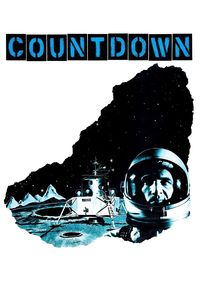
  • Countdown (1967)

    Countdown (1967)

    (On Cable TV, July 2019) No matter how much you know (or think you know) about movies, there’s always another one you don’t know, and today’s discovery for me is 1967’s Countdown, a pre-moon landing techno-thriller about a desperate backup plan to land a single American on the moon before the Soviets do. What was speculative fiction back in 1967 is now a fascinating bit of alternate history, especially considering the care taken in ensuring that the film is grounded in reality—NASA collaborated with the film, and the filmmakers went to painstaking detail to ensure that the film felt plausible. Perhaps the biggest surprise in discovering Countdown (which doesn’t even rank among IMDB’s 100 top seen movies of 1967) is finding out that not only it was director Robert Altman’s first film, but that it starred none other than a very young James Caan and Robert Duvall as astronauts competing to be the first humans on the moon. Altman’s touch can be seen most clearly in his typical (but rarely seen at the time) overlapping dialogue—otherwise, this straightforward tightly-plotted thriller is as far removed from his other movies as it’s possible to be. Caan and Duvall are nearly unrecognizable as younger men, but give quite a bit of gravitas to their ongoing squabble through the film. Compared to other films of the period and later renditions of the space program, Countdown scores highly when it comes to verisimilitude—the spirit, sets, perceived danger and technical details all ring true. Special-effects-wise, the biggest issues come toward the end, as the sequences set on the surface of the Moon don’t have the characteristic harshness that real-life footage has shown us. But for a film released 18 months before the Apollo 11 moon landing, it’s a pretty good effort. Story-wise, I do feel as if the film (or the novel on which it’s based) is missing an entire third act—we leave the protagonist at the earliest possible moment, whereas I feel there was a much stronger and longer story to tell about his return back home. Still, I quite liked Countdown: its techno-thriller aesthetics and narrative drive fall squarely in one of my favourite kinds of fiction, and I think that it’s a splendid period piece to illustrate the suspense of the moon program back in the mid-1960s, before we saw it all culminate with a successful moon landing. I have a feeling I’ll be singing the praises of this less-known film for years to come.

  • Dick Tracy (1990)

    Dick Tracy (1990)

    (Second Viewing, In French, On Cable TV, January 2019) Back in 1990, Hollywood really wanted audiences to go see Warren Beatty’s Dick Tracy. After the success of Batman in 1989, it had been designated as the most likely contender for the Summer Box-Office crown. I remember the overwhelming marketing push. It didn’t quite work out that way: While Dick Tracy did decent business, movies such as Ghost and Die Hard 2 did much better. Still, the film had its qualities (it did get nominated for seven Academy Awards) and even today it does remain a bit of a curio. Much of its interest comes from a conscious intention to replicate the primary colours of the film’s 1930s comic-book pulp origins: the atmosphere of the film is gorgeous and equally steeped in Depression-era gangster movies and comic-book excess. A tremendous amount of often-grotesque prosthetics were used to transform a surprising ensemble cast of known names (Al Pacino, Dustin Hoffman, James Caan … geez) into the caricatures of Tracy’s world. Beatty himself shows up as Tracy, square-jawed and willing to give his best to a film he also directed and produced. Madonna also shows up, but she ends up being more adequate than anything else. Dick Tracy’s big twist is very easy to guess, but this isn’t a film that you watch for the overarching plot: it’s far more interesting when it lingers in the nooks and corner of its heightened vision of 1930s cops-vs-gangsters cartoons. Visually, the film holds its own by virtue of being one of the last big-budget productions without CGI: the matte paintings are spectacular, and you can feel the effort that went into physically creating the film’s off-kilter reality. The question here remains whether the film would have been better had it focused either on a more realistic gangster film, or an even more cartoonish film. Considering the original inspiration, there was probably no other option than an uncomfortable middle ground. In some ways, I’m more impressed by Dick Tracy now than I was when I saw it in 1990 (at the drive-in!)—I wasn’t expecting as much, and I’m now more thankful than ever that it lives on as how big budget 1990 Hollywood rendered the gangster 1930s.

  • Eraser (1996)

    Eraser (1996)

    (Second Viewing, In French, On TV, December 2018) I recall seeing Eraser in theatres, and not being all that happy about it. (The idea of a portable railgun firing “near the speed of light” with no recoil seemed hilarious to me, but laughing alone in the theatre isn’t one of my fondest memories. But then again I placed a lot more emphasis on scientific rigour back then.) In retrospect, though, Eraser had aged decently enough—it does feature Arnold Schwarzenegger near the prime of his career, after all, and the kind of big dumb action movies made in the mid-1990s have grown scarcer in recent years, accounting for a bit of nostalgia. I mean; in how many 2018 releases do we have a parachuting hero bringing down an airplane rushing toward him with nothing more than a handgun? Some rough-looking CGI (alligators and human skeletons!) add to the charm. At the time of the film’s release, much of the release chatter had to do with how the audio and CGI team had to work around the clock right before release to change all mentions of the villainous “Cirex” to “Cyrez” after computer chip company Cirix complained. In terms of star vehicle, Eraser is pretty much what Schwarzenegger could handle at the time—and having a featured role for Vanessa Williams is more interesting when you realize that the film never goes the obvious route of creating a romantic subplot between both of them. James Caan also has a good turn as a mentor-turned-villain. The political machinations justifying the plot are better than average for an action movie, and the coda seem closer to a political thriller than an action film. Eraser is still not a good movie (and it pales a bit compared to other late-1990s actioners), but it has aged into a decent-enough one.

  • Honeymoon in Vegas (1992)

    Honeymoon in Vegas (1992)

    (In French, On TV, November 2018) Nicholas Cage and Las Vegas make for an interesting coupling ((he’s apparently now a resident of the city), especially given how each one of the movies in which they come together are so different. Leaving Las Vegas is a depressing tragedy, Con Air is a brash action spectacular, and Honeymoon in Vegas is an offbeat romantic comedy featuring no less than a troupe of parachuting Elvises (Elvii?) at the climax. Writer/director Andrew Bergman certainly seems to have fun in setting up the film’s premise, as a couple (Nicolas Cage and Sarah Jessica Parker) travels to Vegas to be married, only to run into an Indecent Proposal-like situation in which a rich man (James Caan) offers to erase the protagonist’s gambling debts in exchange for a weekend with his soon-to-be wife. (Indecent Proposal was released in 1993, although the original novel predates Honeymoon in Vegas.) There’s some plot weirdness about Parker looking like the rich man’s dead wife, but never mind the justifications: Much of the film’s fun is in seeing Cage’s character chasing his wife, only to come back in style by jumping out of an airplane with a bunch of Elvis impersonators. As they say—what goes on in Vegas … warrants a movie. The result is a frothy funny film, not particularly deep at all, but offbeat and likable enough to be worth an unpresuming look. Cage is surprisingly fun as a romantic hero, and the Honeymoon in Vegas itself offers an interesting contrast to his other Vegas movies. Still, it may work best as a chaser for Leaving Las Vegas.

  • That’s My Boy (2012)

    That’s My Boy (2012)

    (On Cable TV, June 2018) I’ve been gorging on classic movies lately, so it’s even more of a shock than usual to take in one of the dumbest and most repulsive Adam Sandler movies yet. That’s My Boy is unusual in the Sandler oeuvre in that it’s clearly R-rated (Sandler is, temperamentally and intellectually, more closely aligned with the PG-13 rating) and it really doesn’t waste any time in establishing that fact: Once a film starts with statutory rape played for laughs, you have to wonder if it has anywhere lower to go. Alas, it does: incest, granny-lusting and priest-punching are only some of the not-so-delightful surprises that the film still has in store. Most of it plays limply despite the film’s incessant bombardment of curse words and shock images: Like most teenagers discovering the R-rating, Sandler seems convinced that everything is funnier with four-letter words and if he’s not entirely wrong (I did catch myself laughing once or twice) he does overdo it. It’s a mixed blessing to see gifted actors such as Susan Sarandon, James Caan and arguably Andy Samberg being dragged into the mess—although Ciara is cute as a peripheral love interest who shows up in two scenes. Still, much of the film is bottom-grade raunchy comedy, too crude to be interesting and too trite to be surprising. I usually see those films in order to know what I’m talking about when I’m dismissing comedians such as Sandler, but at the moment, That’s My Boy is having an unexpected impact: Making me like the classic Hays Code comedies I’m watching even more.

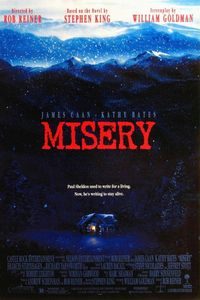
  • Misery (1990)

    Misery (1990)

    (In French, On TV, July 2016) Stephen King’s Misery is a memorable novel (even and especially now, touching upon the themes of fannish entitlement that have grown so tediously familiar latterly), and its movie adaptation (partially thanks to screenwriter William Goldman) manages to be as good, in its own way, as the original book. James Caan ably plays a best-selling author who, thanks to an accident, comes to rest in an isolated farmhouse under the supervision of his self-professed “number one fan” (a terrifying Kathy Bates in a career-best performance) who turns out to be completely crazy in dangerous ways. What follows is so slickly done as to transform King’s writer-centric thriller into a horrifying experience for everyone. Director Rob Reiner is able to leave his comedic background behind in order to deliver a slick thrill ride, gradually closing off the protagonist’s options even as it becomes clear that he’s up against a formidable opponent. While the film does soften a few of the book’s most disturbing or gory moments, it does not lack for its own unbearable scenes. A solid, competent thriller, Misery easily ranks near the top of King’s numerous adaptations, and remains just as good today as it was a quarter of a century ago.