James Gunn

  • The Suicide Squad (2021)

    The Suicide Squad (2021)

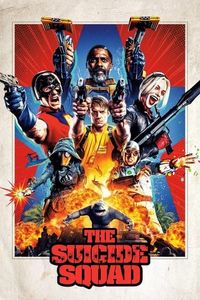
    (On Cable TV, December 2021) Considering that the house brand of both the Suicide Squad as a concept and writer-director James Gunn as a filmmaker is being provocative, it makes no sense to complain that The Suicide Squad is alternately gross, gory, profane and vulgar. That’s all true. But unlike a number of similarly down-and-dirty movies lately, this one is actually funny, entertaining and a sharp improvement over the 2016 David Ayers Suicide Squad. Going into the film completely cold, I was pleasantly surprised by an opening sequence that really messes with audience expectations, then goes on to introduce the real characters. Consciously aiming for the bottom of the barrel of DC universe villains, Gunn does feature more than the usual fare. At the exception of fan favourite Margot Robbie as Harley Quinn, Viola Davis and Joel Kinnaman, the only elements judged salvageable from the previous film, the film focuses on new characters and sends them into a Central America situation somewhat reminiscent of 1980s action movies. But Gunn clearly intends to surprise audiences because nothing (from the opening sequence onward) ever goes to plan. Perhaps the film’s highlight is Harley Quinn’s reaction to being attracted to another bad boy — a perfect relationship that she nonetheless recognizes as being terrible for her. Margot Robbie once again steals the show, but she has a lot of competition — not necessarily from Idris Elba’s rock-solid performance as a professional killer, but John Cena once again grabbing the spotlight. The change of scenery to a fictional Central American capital brings a lot of colour and flavour to the film, and allows a city-smashing climax to feel different from North American metropolises. As usual whenever R-rated Gunn movies are concerned, I have a number of issues with some specific aspects of the execution — the gore, the coarseness, the quasi-nihilism. But The Suicide Squad works well in spite of them, even though I would be wary of recommending the result to anyone but a jaded viewer. I was expecting much worse anyway from a soft reboot of a film few people even liked.

  • Brightburn (2019)

    Brightburn (2019)

    (On Cable TV, December 2019) Oh, yuck to Brightburn. I’ll be the first one to say that the commercial dominance of the superhero film is a creative dead-end, that it harms movies more than it benefits them, and that the sooner we get to something else the better off we’ll be. But that doesn’t mean that we need to extend the genre into an even worse one. The concept of blending super-powerful characters with kid/slasher horror is something that raises my hackles from the get-go, and nothing in Brightburn’s gleefully sadistic execution changes my mind about. Simply put, this is a film that wonders what would have happened if the Superman origins story (super-powerful alien crash-lands as a baby in Kansas, is raised by human parents) had led to a psychopathic character unable to be stopped by anyone. The result of this isn’t in doubt? Well, prepare to spend 90 minutes being reminded over and over of this obvious conclusion, except with enough gore and blood to make it even more obvious. Just in case you hadn’t figured it out. Of course, it’s unfair to compare Brightburn to a superhero film turned to horror—it’s far more honest to see the project (produced by famously gore-friendly filmmaker James Gunn) as a horror film looking to superheroes in its escalation of violence. Much of the structure of the film is borrowed from those hateful killer-kid movies, in which a child goes around killing playmates and adults while no one can believe that the adorable little cherubs could be capable of so much evil. Except that this time, our killer-kid can smash people with cars and punch holes in their heads with laser beams. The only bit of dramatic tension is about the killer-kid’s parents attempting to strangle baby-Hitler in the crib (so to speak), but since this is a sadistic film, you can probably imagine how that turns out. So yeah: yuck to that movie, and let’s hope that its existence is enough to stop other similar projects from taking off. No matter my growing antipathy to superhero film domination, I’m even less sympathetic to gore-filled horror films. I look forward to an era where I don’t have to check my humanity at the door before peeking at the newest film releases.

  • Super (2010)

    Super (2010)

    (On Cable TV, April 2019) While I’ll support any creator’s intent to deconstruct a genre, they should be aware that there are a few inherent dangers in doing so, including being so intent on the deconstruction that you forget about core narrative elements such as, well, character attachment, tonal unity or satisfying endings. With Super, writer-director James Gunn clearly takes aim at the superhero genre, turning in a horrifyingly serious look at what it would take for someone to become a superhero or a sidekick. Never mind the physical training—what kind of trauma would lead someone to take up a life of costumed vigilantism? The answer has nothing noble, and quite a bit of disturbing material. As a dark comedy that delights in shifting from comedy to horror in a few moments, Super includes gore, rape, realistically portrayed injuries, social awkwardness and merciless put-downs as part of its package. The result is not for the faint of heart, nor for uncritical superhero movie fans, nor anyone expecting a tidy ending, nor anyone who dislikes deconstructions of superheroic power fantasies. At least Rainn Wilson and Ellen Page are not too bad in the lead roles (although being saddled with “It’s all gooshy” as erotic dialogue can earn anyone sympathy points), with a nod to Kevin Bacon as a rather good villain, and a surprising ensemble of known actors in supporting roles. The similarities with Kick-Ass, also released in 2010, are not as interesting as those two movies appearing at that time as a signal of the subgenre’s evolution (Super is much harsher than Kick-Ass, which was already not a walk in the park). Now somewhat better known than in 2010 thanks to Gunn’s mega-success (directing, ironically enough, more superhero movies), Super nonetheless remains a half-success, not quite controlled enough to achieve its subversive aims without alienating a chunk of its audience along the way.

  • The Belko Experiment (2016)

    The Belko Experiment (2016)

    (On Cable TV, January 2019) Office work can be dispiriting enough that there is really no reason to add a battle royale on top of it, but that’s what writer/producer James Gunn and director Greg McLean go for in The Belko Experiment. The story depends on a highly suspicious number of contrivances (all the way to devices willingly implanted in people’s skulls) to pit eighty office workers against each other until a single one is left. The surprisingly strong subgenre of “everyone must die except one” movie is generally ugly and nihilistic (even you, The Hunger Games) and this newest entry is no exception. Having the same murder mechanics inside an office building could have been played for laughs but definitely isn’t, and the result is not particularly uplifting. Given the forgone conclusion (blood … pools of blood), the only thing that remains is the execution, and the best that The Belko Experiment can do is fight its way to an average set of thrills and gore. The ending does feature one effective scene and one mildly intriguing plot backflip, but it also raises expectations beyond what the film can fulfill—now that the really interesting questions have been raised, what’s next? But the film then cuts to the credit sequence, not really interested in its final idea as anything but a stinger. Viewers already know from the “Battle royale in an office” description whether they’re interested in seeing the film, but they should be forewarned that they will get nothing extra on top of that.

  • Guardians of the Galaxy Vol. 2 (2017)

    Guardians of the Galaxy Vol. 2 (2017)

    (Netflix Streaming, December 2017) The first Guardian of the Galaxy was a gamble and a welcome surprise, providing a rare example of colourful space adventure with likable characters and a seemingly effortless sense of fun. This sequel provides more of the same, except that it’s even more self-assured and perhaps a bit more rigid in the way it presents itself. Why mess with a formula that works? Once more, we get the usual Marvel Cinematic Universe blend of humour, action and visual spectacle, with an impossibly colourful palette and a smirking attitude. The film begins with a strong credit sequence in which a big action scene is played in the background while classic rock makes a comeback alongside a choreographed ballet of mayhem. Afterwards, much of the film is spent getting to know Star-Lord’s dad and further team-bonding exercise. Under writer/director James Gunn’s guidance, Guardians of the Galaxy Vol. 2 plays well, although the formula is more expected this time around. Characters seem to behave in more expected ways, and the film isn’t afraid to lean on its own biggest strength. The visual aspect of the film is a wonder to behold, completely giving itself to the idea that space opera should be big and bold and rainbow-coloured. Chris Pratt makes for a likable lead, but actors as varied as Zoë Saldaña, Dave Bautista and Kurt Russell (plus Bradley Cooper’s vocal performance) bring much to the proceedings. Despite the massively post-processed nature of a film that’s nearly entirely special effects from beginning to end, the actors end up being the film’s biggest asset: much of its charm is in seeing these characters interact and play off each other. Otherwise, the film isn’t entirely successful—Making Yondu a sympathetic father figure is glossing a bit over several mass-murder episodes, and there’s a sense, especially toward the end, that it has extended its third act a bit too long. But all told, this remains an exceptionally enjoyable blockbuster film, slickly made and able to deliver exactly what it intended. Recharge the Zune, and let’s see what’s on Vol. 3.

  • Guardians of the Galaxy (2014)

    Guardians of the Galaxy (2014)

    (In Theaters, August 2014) At a time where superhero films are in real danger of being overexposed, it’s refreshing to see that Marvel Studios are doing their damndest to avoid resting on their laurels.  Their “Phase 2” slate of movies has branched off in interesting directions so far, from quasi-improvised comedy (Iron Man 3) to far-out geekery (Thor 2) to almost-serious political thriller (Captain America 2) to an irreverent space opera with Guardians of the Galaxy.  From a plotting standpoint, this ensemble-cast action caper isn’t anything new: we’ve seen more or less the same thing half a dozen times before from Marvel Studios alone.  But from the 70s pop-fueled title card onward, it’s obvious that this is a successful attempt to stretch the envelope of superhero films in a new stylistic direction: bold, brash, colorful and with a clear emphasis on fun that feels refreshing after the stone-faced dourness of Nolan’s Batman trilogy (to say nothing of Man of Steel.)  The result is never less than highly entertaining.  Much of the credits for this success goes to writer/director James Gunn, who manages to ride herd on a good ensemble cast, a somewhat esoteric mythology, complex SFX-laden sequences and surprising pop-culture references (including pleasingly dissonant musical cues).  With this film, Chris Pratt makes a strong bid for superstar status, while Dave Batista proves to be an unexpectedly gifted performer and Zoe Saldana shows why she rose so quickly to stardom.  Guardians of the Galaxy was an insanely risky project on paper, but the result is pure blockbuster entertainment.  Particularly exemplary are the film’s occasional moments of seriousness (tempered by un-ironic fun) and its satisfying coda which takes pains to deliver its payoffs and make sure that everyone is happy.  Such crowd-pleasing instincts are a good way to ensure that the audience will come back for more, and a sign that Marvel Studios truly understand what business they’re in.