James Mason

  • The Verdict (1982)

    The Verdict (1982)

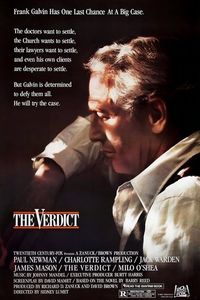
    (Disney Streaming, August 2021) The unsung hero of The Verdict is whoever who took the decision to cast Paul Newman in the lead role — what best way to portray a lawyer past his prime than to cast an aging movie idol? Newman still looks fantastic, of course (compare and contrast with how he looks in the roughly contemporary Absence of Malice), but the deliberate grey hairs, added fat and slower demeanour tell us everything we need to know, even before his character gets thrown out of a funeral in the opening scene. What follows, in keeping with the tone set early on, is an examination of justice with a jaundiced but not entirely cynical eye — as our burnt-out protagonist is handed an easy settlement but decides to push matters to a civil trial, and quickly gets enmeshed in dirty tactics and counter-tactics. If The Verdict remains compelling viewing today, it’s how it skirts the edges of an uplifting film with a gritty look at the less admirable aspects of civil law. Our protagonist isn’t above stealing mail; his opponent will spy on him; and in the film’s defining sequence, a slam-dunk testimony and piece of evidence that would, in another film, be the final blow are here (with some heavy dramatic license) judged inadmissible and struck from the record. But to get back to a crowd-friendly idealistic finale, it turns out that even inadmissible evidence can’t just be erased from memory. While the pacing of the film is a bit slow, especially at first, veteran director Sidney Lumet does keep good control over his material, gradually unfolding the layers of complexity in David Mamet’s narrative. (Unusually for Mamet, this first screenplay is adapted from existing material, and so his distinctive dialogue is not really present.)  Good supporting turns from Charlotte Rampling and the irreplaceable James Mason help round out the acting talent involved. The Verdict, then a box-office success and Oscar favourite from cerebral material and a strong narrative, is almost unusual today — but fret not, it’s still very enjoyable and the circa-1980 period has aged rather well… like its star.
  • Child’s Play (1972)

    Child’s Play (1972)

    (In French, On Cable TV, May 2021) A decade and a half before Chucky’s introduction, there was a Child’s Play movie that had nothing to do with killer dolls, and everything to do with… hmmm, that’s actually a good question: What is Child’s Play about? It’s clearly about a boarding school for boys in which two senior teachers (James Mason as the hated one, Robert Preston as the loved one) have it out for each other. It’s also certainly about mysterious escalating events in which the hated teacher is tormented and maybe the loved one has something to do with it. But while it initially appears to maybe involve the supernatural, the ending apparently tells us that it’s not — but director Sydney Lumet maintains the ambiguity as if even he hadn’t made up his mind. Almost no one escapes from Child’s Play with their dignities intact: this is often derided as Lumet’s worst film (which isn’t that much of a dishonour considering the rest of his filmography), but he does manage to imbue something of an atmosphere by exploiting the dark gloominess of a boarding school and amplifying it with kids who clearly aren’t all right. Mason is clearly the least-disappointing one here, imbuing his character with his usual, polished blend of dignity and menace. Preston merely does OK with the role he’s given and the rest of the players are rather inconsequential. (Beau Bridges is just… there in comparison to the two veteran actors.)  In a historical context, Child’s Play feels like an attempt to ride the paranormal possession train launched by Rosemary’s Baby and The Omen, except without the genre familiarity to do anything with that intention. Which isn’t outlandish, considering that the film is adapted from a Broadway play and Broadway playwrights have seldom been acknowledged as being particularly comfortable with paranormal horror.

  • The Pumpkin Eater (1964)

    The Pumpkin Eater (1964)

    (On Cable TV, April 2021) Terrible people generally make for more interesting movies than good dull people, but it’s a fine line in dosing the awfulness of characters and keeping audience sympathy. It’s especially challenging in films that don’t have much else going for them — neorealist black comedies like The Pumpkin Eater featuring a woman with a high-but-unspecified number of kids from three marriages wedded (for the third time) to a man juggling multiple affairs. The pacing is slow, the structure bounces back and forth in time, the epiphanies are small and the characters are more irritating than anything else. Fortunately, there are occasional moments to draw us back in. Cinephiles will have fun seeing James Mason in glasses and a moustache playing an utterly despicable character. Or seeing a young Maggie Smith play the homewrecker (even if the home was self-destructing anyway). Or the fight that triggers the third act. And then there’s Anne Bancroft, who got some critical attention at the film’s release for playing a terrible person, a woman with substantial mental health issues who has kids as a form of self-therapy and otherwise wanders aimlessly through the film. Oh, I’m aware that The Pumpkin Eater can be read on a few levels as a story of a woman forced into a role she did not want — but that hardly excuses the dull, bloodless way the film deals with its material and the almost innate revulsion these characters cause. They are terrible people—maybe not entirely through fault of their own, but they are terrible people. The film will probably be more interesting to those who like to witness self-contained character drama, abstracting notions of “likable” characters. For everyone else, though, The Pumpkin Eater may be a mixed bag.

  • The Story of Three Loves (1953)

    The Story of Three Loves (1953)

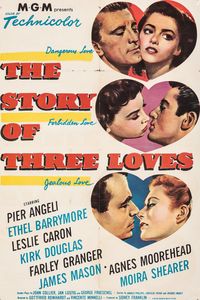
    (On Cable TV, March 2021) As much as we can admire classic Hollywood’s greatest hits, talk fondly about its actors and follow the filmography of its directors, not every film of the era leaves a mark, even when it does feature great directors and a cast of known names. That’s the case with The Story of Three Loves given its severe structural issues: an anthology film composed of three segments, it suffers from the usual afflictions of such movies. The actors are only there for a third of the time, the tone shifts all over the place, the segments aren’t equally interesting, and there’s less time to attach ourselves to the characters, which is particularly bad in discussing character-based romance. Accordingly, perhaps, each segment has its own gimmick — from ballet dancing to body-switching to trapeze. Alas, the three segments also feel like short takes on topics that would be best approached in better full-length movies such as The Red Shoes, Big and Trapeze, respectively. Sure, there’s Kirk Douglas tearing up the screen, Leslie Caron speaking French and James Mason’s distinctive vocal cadence. But they’re not there for the entire film — in fact, they’re in three different segments. Vincente Minnelli directs one segment but not the others. Perhaps inevitably, The Story of Three Loves doesn’t leave much of an impression, nor much to chew upon. It is an eloquent example of what early-1950s MGM could bring to bear on a project, but it’s not, by itself, something particularly striking.

  • The Last of Sheila (1973)

    The Last of Sheila (1973)

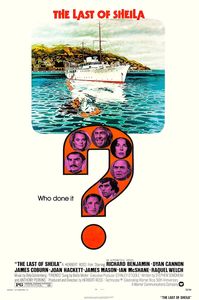
    (On Cable TV, January 2021) There’s something primal and timeless about a good murder mystery—the universal stakes of death being on the line, and the playful nature of the convoluted plotting that usually accompanies such films. The Last of Sheila has, to put it bluntly, not necessarily aged well: The muddy cinematography is clearly from the early 1970s, as are the sometimes-hideous fashions and the contemporary details that pepper the film. Here, a Hollywood mogul calls six “friends” for a Mediterranean holiday aboard his yacht. But what they discover early on is that the puzzle-obsessed mogul has fun and games in mind for them: Six days, six stops, six enigmas to resolve. But what they eventually discover is that the mogul has a much darker scheme in mind—a year earlier, his wife was killed in a hit-and-run, and the guilty driver is among them. Then it gets more complicated—all the way to an ending where the survivors all find killers and guilty consciences. The cast is interesting, what with James Coburn having far too much fun as the mogul, and guests played by a motley crew, including an old James Mason, a young Ian McShane, and Raquel Welch in the middle of her peak popularity. The script, from unlikely scribes Anthony Perkins and Stephen Sondheim (who used to host murder mystery parties), is suitably twisty, witty and clever—I’m not too sure that the third act is as spectacular as it should be given its more intimate setting, but it satisfies well enough. Despite being visibly stuck in the early 1970s, The Last of Sheila is highly watchable—even more so for fans of the actors involved, but accessible to all, especially once the fun and games start.

  • Murder by Decree (1979)

    Murder by Decree (1979)

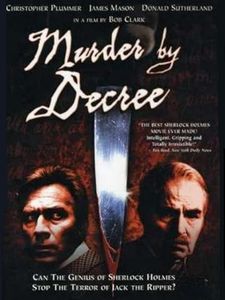
    (On Cable TV, November 2020) The idea of pairing Sherlock Holmes against Jack the Ripper has a long history—it’s a natural matchup from a chronological perspective, and an irresistible one from a dramatic viewpoint. Murder by Decree is far from being the first work of fiction to explore the pairing (even in limiting ourselves to movies, A Study in Terror did it a decade earlier), but you don’t have to be the first to be influential—It was decently successful at the box office and so I wonder how many of the later works of fiction combining the two have been influenced by this one. The plot is very much focused on the royal conspiracy angle, almost de rigueur as a way to make the stakes as high as they could possibly go in London. Depending on how you feel about whether Jack the Ripper story should adhere to the historical record, this will either be interesting or far-fetched. Still, the point of Murder by Decree isn’t as much the story as the concept, plus the rather engrossing atmosphere. Fully playing with the idea of 1800s London being a fog-shrouded city and spending a good chunk of money on period detail, director Bob Clark makes Murder by Decree notable for its iconography. There’s also a nice amount of acting talent involved: Christopher Plummer and none other than James Mason (who looks much older but sounds the same) star as, respectively, Holmes and Watson, with Donald Sutherland and Genevieve Bujold in supporting roles. It all wraps up in a package slightly too long (especially in the ending stretch, drunk on its own conspiracy fantasies) but remains enjoyable despite the gory subject matter.

  • East Side, West Side (1949)

    East Side, West Side (1949)

    (On Cable TV, October 2020) There’s a glorious, fascinating messiness to East Side, West Side that shows how the Hays Code era wasn’t necessarily an impediment for some heavy-duty melodrama. The film begins with a seemingly-happily married couple. But this façade soon comes tumbling down when, first, an ex-flame of the husband comes to town and then an ex-crush of the wife comes to town. That would be enough to power a film by itself, but the script peppers complications throughout, throwing in performers such as Cyd Charisse in a minor role that serves no real big purpose, then hinges an entire third act on the murder of one of the four main players, leading to a detective subplot that suddenly involves another main character. (It also leads to a fairly long and now-shocking sequence in which the male detective gets into a slaps-and-punches struggle with a female killer.) There are characters and sudden shifts of tone here that add a lot of texture, at the expense of what we would consider a polished script. It’s messy but a lot of fun, although you’ll have to work harder than usual to keep up with the twists and turns. An all-star cast sweetens the deal. James Mason is quite good in his own distinctive fashion as the protagonist cad, while Barbara Stanwyck is equally compelling as his increasingly estranged wife. Ava Gardner is the temptress that exposes the fault lines in their marriage, while Van Heflin rounds up the main cast with a character that increasingly reveals how resourceful he truly is over the course of the film. Top dialogue keeps things rolling, while the cinematography gives a noirish edge to New York City. Director Mervyn Leroy has enough experience to keep all the moving pieces together, and the result is a strong drama that will keep you invested from beginning to end despite its lack of clear focus.

    (Second Viewing, On Cable TV, June 2021) The interesting thing about revisiting East Side West Side, even after a few months, is its all-star cast. In-between James Mason, Barbara Stanwyck, Eva Gardner and Van Heflin (with none other than Cyd Charisse being fifth-billed in a remarkably small role), it’s very much a collection of some of my favourite actors in the business at the time. But here’s the thing: It took me an embarrassingly long time to become a fan of Stanwyck and Gardner – While Mason is distinctive and easy to like, and a previous viewing of East Side West Side made me an instant fan of Van Heflin largely thanks to his remarkable character, it took me years to like Stanwyck given her lack of adherence to a rigid persona. Meanwhile, it took me until Night of the Lizard to finally see what others saw in Ava Gardner. But now that I’m on-board for all of them, East Side West Side takes on a different quality. Oh, the film more than stands on its own as a 1950s Manhattan melodrama – With the plot revolving around an ill-fitting couple contemplating affairs with past flames, it’s rife with dramatic situations, including woman-to-woman verbal combat and a superb mother-in-law-to-no-good-husband put-down. Mason is (as often) surprisingly good as a bad husband, while Heflin gets to play a character than, in most other movies, would be the protagonist: an immensely capable special forces operative with an uncanny ability to solve problems. One of the film’s highlights remains the physical altercation he gets with a murder suspect while they’re both sitting in a car – the fact that it’s a male/female fight is surprisingly shocking, perhaps even more so given that he’s clearly in the right in subduing a killer. The slapping, pulling and grabbing goes on for a surprisingly long time, and the close quarters of the car’s front seats mean that there’s nowhere to go. It’s not necessary to like the entire film (including a slow start and adequate finale) when it has those highlights and those stars. East Side West Side is well worth a revisit, especially if you get to appreciate the actors in other films in between those viewings.

  • Cross of Iron (1977)

    Cross of Iron (1977)

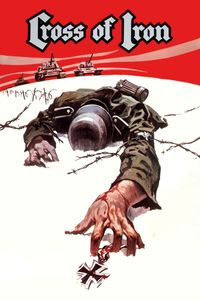
    (On Cable TV, September 2020) Director Sam Peckinpah and war movies seem like an ideal match, and one of the surprises of his filmography is that there are so few of them in there. Maybe producers couldn’t trust him with the budget of a war movie; maybe he felt that there were only so many ways he could say he was anti-war. No matter the reason, at least we have Cross of Iron to fall back on—a gritty, non-sentimental, harsh and nihilistic view of WW2 as seen from the German officers fighting against the Soviets. (The question of their allegiance to Hitler is minimized—one character admits to hating Hitler, and the Nazi political officer is a reprehensible person even by the standards of the film.) The story is substantial, having to do with a glory-seeking officer facing off against a more pragmatic one, but the real worth of Cross of Iron is in the implacable battle sequences filled with explosions, death and futility. Peckinpah is in his element here, as he apparently revels in the senseless violence, the machismo of the soldiers, and the innate ugliness of it all. At least we get decent performances out of James Coburn, Maximilian Schell, James Mason and David Warner. Cross of Iron isn’t for everyone: even those viewers familiar with Peckinpah’s brand of violence may be put off by the unrelenting pace of this film and the way it sees no way out. But that does put Cross of Iron squarely in-line with the rest of the 1970s war films, digesting Vietnam through increasingly meaningless war films that were much closer to the war-is-hell end of the spectrum than war-is-an-adventure Hollywood movies of an earlier generation.

  • Journey to the Center of the Earth (1959)

    Journey to the Center of the Earth (1959)

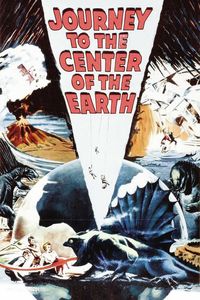
    (On TV, August 2020) These have been some very disappointing adaptations of Jules Verne novels in the 1950s-1960s, but Journey to the Centre of the Earth is not one of them… even if it’s often not really faithful at all. A special-effects spectacle, the film spends far too much time on its first act, laboriously setting up plot elements that could have been handled far more snappily. Fortunately, the fun begins once the characters head deep under the Earth, and start encountering a series of special effects showcases, from geodes to gigantic creatures to table-size mushrooms to a volcano about to explode. It’s easy to like a film that features both the distinctive voice of James Mason and the luscious red curls of Arlene Dahl. Deservedly shot in widescreen colour, Journey to the Center of the Earth was meant as a special-effects powerhouse and feels like it: It won the 1959 Visual Effects Academy Award, and lavishly spends time showing off. Those special effects may look a bit ridiculous now, but the still get the message across. As a lighthearted adventure, it ends rather happily with our group of explorers returning to share their tales. Much of what’s in the film is a pumped-up version of the original novel – with added romance, murder and thrills. But the spirit of Verne’s novel, with its cheerful exploration and return to civilization, is completely intact… and that makes all the difference.

  • Julius Caesar (1953)

    Julius Caesar (1953)

    (On Cable TV, July 2020) In a fair fight, what would win: My innate inability to process Shakespearian English, or James Mason’s mellifluous voice? In this take on Julius Ceasar, Mason plays the backstabbing Brutus, alongside such notables as Marlon Brando (as Mark Anthony), Greer Garson and Deborah Kerr. Decently written and directed by Joseph L. Mankiewicz, the film attempts to be a blend between the sword-and-sandal epic movies of the 1950s and a more classical restaging of the theatrical material. Ultimately, it’s the black-and-white cinematography that traps the film closer to a theatrical space while a widescreen Technicolor approach would have freed the material. I found this Julius Caesar a bit dull, but considering that this is my default stance for nearly all straight Shakespearian adaptations, that’s not too bad of a review. Let’s admit that the film was made for the Shakespearian crowd and move on to the next review. I was only here for James Mason anyway.

  • 20,000 Leagues Under the Sea (1954)

    20,000 Leagues Under the Sea (1954)

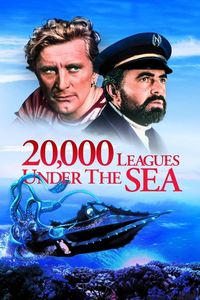
    (Google Play Streaming, July 2020) We can complain at length about Hollywood blockbusters, but when they’re well made, they endure. So it is that you can still watch Disney’s adaptation of Jules Verne’s 20,000 Leagues Under the Sea today and still have fun, even as the film is in the middle of its sixth decade. There’s a lot going on here—great underwater footage, good adventure sequences, and a lavish visual design that clearly anticipates steampunk or inspired it. There’s also the cast—a dashing Kirk Douglas in the lead role, mellifluously voiced (and bearded) James Mason as Captain Nemo, and a stocky close-cropped Peter Lorre as comic relief. Of all the film’s special-effects showcases, the squid sequence remains a highlight and quite convincing still. It all comes together in a good package where its dated nature is now part of the appeal.

  • The Prisoner of Zenda (1952)

    The Prisoner of Zenda (1952)

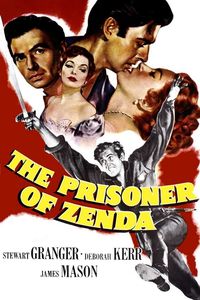
    (On Cable TV, May 2020) Modern critics of Hollywood’s fondness for near-identical remakes should find perverse satisfaction in being reminded that this is not a recent development. In fact, many periods in Hollywood’s history had blatant remakes as the order of the day—the 1930s for sound remakes of silent hits; the 1950s wave of colour remake of past black-and-white crowd-pleasers. Few, however, have been as blatant in remaking the same material as the 1952 version of The Prisoner of Zenda, which took nearly the exact same script (aside from a few minor modifications) as the 1937 version. Except in colour, and with the added technical innovations of 15 years of filmmaking. The premise is a trope classic: the visitor in a foreign country who looks exactly like the king, and thus becomes involved in palace intrigue. It’s generally watchable for a wide variety of audiences, considering that it hits upon matters of adventure, romance, action and political conflict. While lead actor Stewart Granger is a second-tier classic Hollywood reference at best, the film has another lead role for Deborah Kerr, and a deliciously scene-chewing performance from James Mason as a villain. As a modern (ish) European fairytale, The Prisoner of Zenda ends with a spectacular sword fight and plenty of swashbuckling victories for its hero. It’s not bad by itself, and even more interesting as a remake… but the baseline is that it works no matter how you see it.

  • Odd Man Out (1947)

    Odd Man Out (1947)

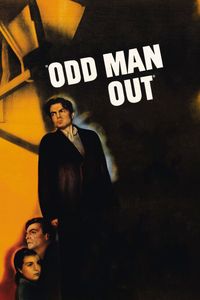
    (On Cable TV, March 2020) I don’t entirely agree with those who put Odd Man Out as a film noir, but I can see their point—this story of Irish nationalists evading police after a botched robbery, it’s definitely the kind of downbeat thriller that evokes mentions of noir. While the film predates James Mason’s Hollywood success, he was already a bankable star in the United Kingdom by the time the film was produced and that accounts for his self-assured lead performance. Often more dramatic than strictly concerned with genre thrills, Odd Man Out is a solid crime drama particularly well-directed by Carol Reed. Don’t expect stylistic flourishes, though—it’s straightforward and character-centric rather than play games with light and camera angles. The British origins do add something extra for North American audiences. All in all, a solid choice—although noir fans may feel as if the film is a touch too mainstream for them.

  • A Star is Born (1954)

    A Star is Born (1954)

    (On Cable TV, December 2018) I know that many people consider the 1954 version of A Star is Born to be the definitive take on the story, Judy Garland elevating the material in a way that’s not harmed by the rough edges of the 1937 version or Streisand’s invasive influence on the 1976 remake. But… I beg to differ, largely on the strength of the argument that I don’t like Judy Garland all that much. Still, it’s worth acknowledging that this 1954 version, as directed by George Cukor, is a much slicker version of the previous take on the film—the budget is clearly there, and the film can be lavish in the way it shows the nature of stardom in the mid-1950s. Alas, this indulgence also makes the film longer and duller with every full-length musical number stopping the film dead in its track. The 1983 re-edit of the film, which attempts to incorporate cut sequences with a mixture of audio and still pictures, is not as good as it sounds—I probably would have liked the unaltered 1954 version a bit better. This being said, I quite liked James Mason in the male lead role, as he captures the mixture of arrogance and vulnerability that the part requires. Meanwhile, superstar Garland sings well, but looks twenty years older than she should. While the film leans heavily in its musical genre, it does keep enough of Hollywood to bridge the gap between the all-movies 1937 version and the all-music 1976/2018 versions—and the look at 1950s Hollywood is simply fascinating.

  • Lolita (1962)

    Lolita (1962)

    (On Cable TV, November 2017) I ended up reluctantly watching Lolita (Kubrick completionism…) over a few days, those days being in the middle of a national debate in the United States about the suitability of an Alabama senatorial candidate with a long history of pursuing teenagers. This did nothing to help me see Lolita more favourably, given its premise in which a middle-aged college professor ends up pursuing a teenager. Even the film’s explicit black comedy didn’t help matters, nor the almost arbitrary plotting choices made during the film’s second half. While there’s something semi-amazing in how a film from 1962 was able to tackle such a charged subject matter, the result, seen from today, seems to skirt around the issue to the point of having little purpose. The cinematography, fortunately, is crisp, and Kubrick’s directing skills shows through. James Mason manages to be incredibly creepy in the lead role, while I’m not sure what Peter Sellers was trying to do in some scenes. The karmic retribution of the story feels unsatisfying, although there is something highly appropriate in ultimately seeing a flighty teenager casually dismiss the lovelorn older man. Still, I don’t feel any better from having seen Lolita—subject matter notwithstanding, the plot doesn’t flow naturally and even pointing back in the direction of Vladimir Nabokov’s novel as justification for the narrative hiccups isn’t much of an excuse when Kubrick reportedly changed so much in his adaptation. At least I can check Lolita from the list of movies I still had to see, and never look back.