Jean Dujardin

  • Un + une (2015)

    Un + une (2015)

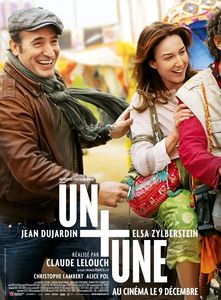
    (On TV, July 2020) Some movies leave you with a thumbs up, others with a thumbs down, but Un + une goes for the question mark. It feels stuck in a position where it could become good, or ridiculous, or unintentionally funny, or boring. It’s from veteran French director Claude Lelouch, stars Jean Dujardin (perhaps France’s biggest star of the twenty-first century so far) as a French composer, the beautiful Elsa Zylberstein as a love interest, and even features Christophe Lambert in a veteran actor’s role as a French ambassador. Much of the film is set in India, as our protagonist travels there to score a movie and has an affair with the French ambassador’s wife. The setting is colourfully portrayed, and the first few minutes are an intriguing blend of fiction within fiction. Other things don’t work as well. There’s a significant plot point that has to do with the main characters meeting Mata Amritanandamayi, an important religious figure in India—it feels heartfelt and admirative, but it comes across as a bit extraneous to the movie. (It was notably filmed semi-secretly, the figure participating but not knowing those she embraced were movie actors.) The third act gets, for lack of a better word, increasingly French as infidelity is met with attempted infidelity, then implied conception leading to a years-later epilogue that stops just when things were getting interesting. Am I supposed to laugh at the piled-up incredulity that the film creates, or moved by some kind of love story? Or be cowed into admiration at the presence of a major spiritual figure? Or simply annoyed that this doesn’t seem to lead anywhere?

  • Brice de Nice (2005)

    Brice de Nice (2005)

    (In French, On TV, July 2019) I had to watch Brice de Nice because some of its comic stylings had made it overseas all the way to the former French colonies—namely, the title character’s tic of loudly proclaiming, “Cassé!” (“Broken!”) after successfully insulting someone (or making them speechless). Then there’s Jean Dujardin as well, one of the better-known French actors of the twenty-first century so far. Alas, there isn’t much more to Brice de Nice than “Cassé!”: As the film laboriously sets up its half-dozen recurring gags, there’s a growing dread that it will just keep going in that vein for its duration, and unfortunately it doesn’t: It gets worse. The jokes are slight, the protagonist is obnoxious and even the flights of fancy away from the real world don’t work. The film actually gets exasperating thirty minutes in, as the protagonist is stripped of most assets and loses much of the rich-boy humour that unlimited means can provide. The rich-boy-becomes-poor comedy just keeps adding to the character’s humiliation, and to our exasperation. Part of it may be a very French sense of humour, but I suspect that even on the other side of the Atlantic, Brice de Nice is just a lame film.

  • Lucky Luke (2009)

    Lucky Luke (2009)

    (In French, On TV, November 2018) As a Francophone North-American viewer, French cinema can be frustrating in its lack of tonal control. For lack of discipline or cultural reasons, French movies often can’t bother to maintain a consistent tone from beginning to end, leading to a curiously scattered approach where a film’s approach seems to vary by accident rather than by design. This is particularly striking with comedies, one of the best demonstrations being 2009’s live-action adaptation of Lucky Luke. As a childhood fan of the original comic book series, I was favourably predisposed toward a film adaptation. But I wasn’t necessarily expecting this one, in which Lucky Luke flirts with girls, suffers a mental breakdown when he thinks he’s killed a man, and ends up in a psychedelic villain’s lair in time for the climax. It’s been too long since I’ve read a Lucky Luke album to demand exact fidelity to the source material, but even as a mere movie this Lucky Luke goes everywhere and anywhere. While reviews in France were (and continue to be) harsh, it’s not a complete failure due to the impressive visual polish of the film and the sight of Jean Dujardin as Luke. The cinematography, set design, special effects and costumes are as good as one would expect for this kind of film, while Dujardin has the square jaw required of the role. I’m also generally upbeat about Sylvie Testud as Calamity Jane. But it’s in the script that film falls flat, not quite managing to balance the comedy with the action with its numerous digressions and substandard writing. Even as a comic western, it doesn’t know what it’s supposed to be, and this lack of focus quickly becomes grating. In doing so, Lucky Luke become one of a growing line of disappointing comics-to-movie French adaptations. Too bad. I’m sure they’ll figure it out eventually.

  • OSS 117: Rio ne répond plus [OSS 117: Lost in Rio] (2009)

    OSS 117: Rio ne répond plus [OSS 117: Lost in Rio] (2009)

    (In French, On TV, October 2018) The premise of the OSS 117 series is strange but simple: adapt older French spy novels as comedies by repurposing their plot and pushing their sexist and racist content to an absurd degree. It wouldn’t work if Jean Dujardin wasn’t headlining the cast, and in fact it works markedly less well in OSS 117: Rio ne répond plus than in the first film of the series. It turns out that even when exaggerated for comic purposes, sexist and racism aren’t that funny … and the film doesn’t have much more in its sleeve to get viewers laughing. Dujardin does have the comic timing (and the square-jawed looks) to take the parochialism into comic territory, but there the jokes fall flat as being irritating and repetitive. It’s no surprise if the female characters, played by Louise Monot and Reem Kherici, are far more likable than the misogynistic hero. Director Michel Hazanavicius replicates the original’s self-consciously old-fashioned filmmaking, but he can’t strike gold twice, and the film often becomes an ordeal rather than an enjoyable parody piece. At best, OSS 117: Rio ne répond plus is best seen right after the original film, but I expect that the growing exasperation with the character is liable to grow even worse when they’re watched back-to-back. Too bad, because there’s a kernel of interest here that could have been developed better.

  • The Artist (2011)

    The Artist (2011)

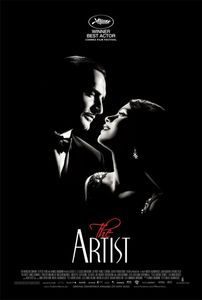
    (On-demand video, July 2012) The Artist’s success at the 2012 Oscars may, at first, have seemed like a fluke: A silent film featuring French lead actors and director?  What would be the odds?  But it doesn’t take a long look at the actual movie to understand why Hollywood would embrace the film so enthusiastically.  It is, after all, a celebration of one of cinema’s golden age, a painstaking recreation of a time best remembered through a haze of nostalgia.  Set during the last years of silent film, The Artist really doesn’t trouble itself with a complicated plot: It’s a straight fall-from-grace tragedy for the protagonist, mirrored by the rise of another type of performer.  The subplots and plot beats are all familiar, but they’re not the reason to see the film.  Jean Dujardin makes for an exceptionally capable lead (with Bérénice Bejo as a capable foil) , but The Artist’s greatest asset is the way director Michel Hazanavicius apes and recreates the style of silent cinema in all of its jittery glory, occasional dialogue cards making intelligible what the over-acting can’t establish.  By going back to the old, The Artist feels like something new, or at least something sufficiently different from routine that it’s hard not to be charmed.  It has a few lengths (especially in the dog-days of the protagonist’s fall on hard times) but it’s a crowd-charmer throughout, and it ends as it should –on a very high note.  No wonder that Hollywood propelled it to the top of the Academy Awards—along with Hugo, which also featured a mixture of French exoticism and early movie-making nostalgia. The Artist is that kind of film-for-film-lovers, designed to reward cinephiles for doing nothing more than watching a lot of movies.  It’s a curio, but a pleasant one.