Jean Harlow

  • Dinner at Eight (1933)

    (On DVD, November 2021) Some movies make for fascinating viewing because they’re dated, and so much of Dinner at Eight’s charm comes from some witty writing showing early-1930s Manhattan socialites trying to put together a fancy dinner party. This is an excuse to go and explore the lives of the invited guests, as the ever-changing line-up of the dinner party features archetypes and preoccupations of the time. Unlike many films of the 1930s, Dinner at Eight does not ignore the Great Depression, nor (as a Pre-Code film) does it shy away from upsetting sensibilities with subplots of adultery, suicide, desperation and terminal illness. Although clearly put together as drama, the script has some exceptional dialogue that makes it feel vastly funnier than it ought to be. (It’s a logical link between the comedies-of-manner from the Edwardian Era and the Screwball Hollywood comedies.)  Conceived as a star-studded epic drama in the footsteps of the previous year’s Grand Hotel, the film can boast of an impressive cast if you’re up to your early-sound film superstars: Marie Dressler, John and Lionel Barrymore, as well as Jean Harlow are the standout names, but the more you know about the era, the more the cast will seem impressive. While technically rough in the way most early-sound-era films were, the dialogue and acting are still exceptional (with a few allowances made for how standards have evolved) and manage to impress. But it’s still Dinner at Eight’s look at circa-1933 New York that works best, with a thick web of contemporary allusions, characters of their times, and assumptions that almost feel alien today.
  • Hell’s Angels (1930)

    Hell’s Angels (1930)

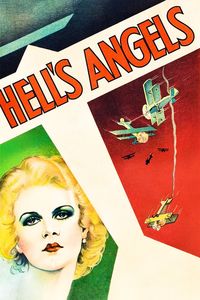
    (On Cable TV, April 2021) For movie buffs and viewers of Martin Scorsese’s The Aviator, his 1930 war epic Hell’s Angels doesn’t need much introduction: It was Howard Hughes’ ambitious fusion of his interests in aviation and moviemaking and (perhaps apocryphally) the movie in which he realized the use of clouds in filming exciting aerial sequences. The film’s famously long production process straddled the silent and the sound era, meaning that the film aesthetically feels a bit weird, especially in its use of title cards for the German dialogue. It’s hard to avoid comparisons with that other WW1 aerial war film Wings — both in topic matter and in approach, although Wings is probably the best overall film. What Hell’s Angels does have going for it, though, is spectacle. Even for modern viewers, the film’s action sequences still pack a punch. Stuff blows up real good, to borrow a phrase (oh, that zeppelin sequence!) and the aviation footage does look exciting—considering that three people died filming it and Hughes himself got seriously injured flying one of the scenes, you have to appreciate the result. Jean Harlow shows up in her feature film debut, and she’s directed by the noteworthy James Whale, whose next films would be classic Universal Monster movies. The Pre-Code nature of the film (especially coming from Hughes, a known huckster) can be seen in unusually frank dialogue and sexual refences. All of this boils down to a film that still holds quite a bit of thrills and interest even today — it’s clearly an early sound film, but you can see (especially in the colour sequences!) how it was pushing the envelope of what was possible at the time and how it was meant to be a blockbuster from the get-go. Hell’s Angels, despite its significant narrative shortcomings, completely deserves its reputation as an essential film of its era.

  • Reckless (1935)

    Reckless (1935)

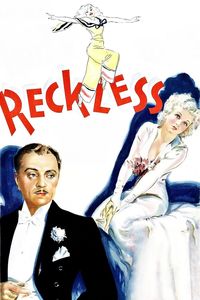
    (On Cable TV, March 2021) Discussing Hollywood’s refusal to acknowledge the Depression is probably not best tackled in discussing slight drama Reckless, but watching the film in all of its rich-person melodrama leads to thinking about the lifestyle that much of Hollywood presented as normal during that decade’s movies. Offering escapism to a cash-strapped nation, Hollywood spent far much more time talking about the problems of the Manhattan upper-class than the working people, and that was somehow completely acceptable. So it is that Reckless features famous signers, oil billionaires, regrettable marriage, sudden suicide, public scorn and musical numbers — in other words, nothing like life. It definitely feels artificial, and the charm of stars Jean Harlow and William Powell (who were a real-life couple at the time) doesn’t do much to save the results — both of them were far better used in comic vehicles rather than overwrought dramas such as this one, and as a result Reckless feels like a joyless production, another studio product with very little heart to it. The star-power does make the film more interesting, but only just.

  • Red-Headed Woman (1932)

    Red-Headed Woman (1932)

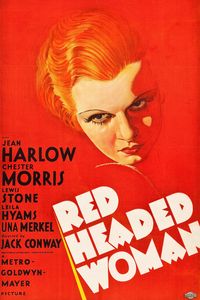
    (On Cable TV, October 2020) If you want a full-blown illustration of where Hollywood cinema was headed in the pre-Code era, go no farther than Red-Headed Woman, a salacious drama in which our heroine systematically goes about improving her social position by seducing increasingly important men, all the way to a climax where she tries to gun down the man she once seduced because he dared reconcile with his ex-wife. Jean Harlow is ferocious in the title role, clearly announcing her bombshell status of later years. There is a little bit of comedy to the proceedings, but Red-Headed Woman really is about shocking mainstream audiences, and it still does—despite some much-harsher material in the intervening years.

  • Libeled Lady (1936)

    Libeled Lady (1936)

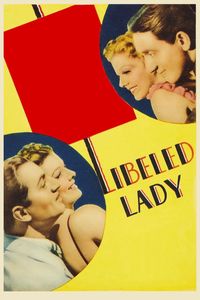
    (On Cable TV, January 2020) If someone tells you that Libeled Lady is one of the top comedies of the 1930s, believe them—there aren’t many better ones. Firmly ensconced in the screwball subgenre, this is a film that plays into the whole weddings-don’t-mean-much (but they do!), harebrained-schemes-are-better-than-honesty, let’s-see-who’s-the-craziest ethos of those kinds of films. The cast alone is a solid treat, what with the legendary William Powell/Myrna Loy screen duo, bonified with Jean Harlow (who was romantically involved with Powell at the time, adding another layer of interest) and a dark-haired Spencer Tracy to round off the main cast. Everything takes place in a gloriously escapist Manhattan upper-class society setting (with a bit of newspaper journalism thrown in) where people have no better things to do than to pursue demented schemes, maintain misunderstandings and riff off quips at each other. It’s a hugely enjoyable film [April 2024: And one that appreciates upon subsequent viewings] because director Jack Conway’s execution is so smooth, not to mention the acting—Powell being Powell, his line delivery is perfect, but every main player has three other gifted comedians to play with, and the result is a small triumph. Even the outdated period detail becomes charming or at least easy to forgive. (There’s a bit of casual racism at the very beginning of the film, but it’s early, quick and more annoying than insulting.) The cavalcade of last-minute twists that serve as resolution is part of the joke: having no reasonable way to untangle the plot, the writers added more things and called it quits while daring anyone to say anything about it. Libeled Lady was, upon release, a box-office hit and an Academy Awards Best Picture nominee. It’s still a marvel even today—easily worth a watch.