Jean Simmons

  • The Grass Is Greener (1960)

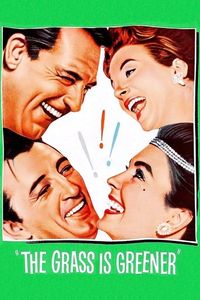
    The Grass Is Greener (1960)

    (On Cable TV, September 2021) The cast alone would make The Grass is Greener worth a look: Robert Mitchum playing the cad trying to romance Deborah Kerr away from Cary Grant, while Jean Simmons looks on in amusement? Yes, that is the kind of film that even twenty-first viewers can enjoy. It’s not that good of a movie, but it has enough high moments to be fun. Grant isn’t quite in his persona here, as a British aristocrat fallen on hard times that must find a way to keep his wife away from a charming American oil baron while keeping the decorum we expect from his social class. As expounded in long but enjoyable soliloquies to other characters, too forceful a response would drive her farther away — he’s looking for a better solution. That eventually leads him to invite his rival to the estate for a weekend, and eventually initiate a pistol duel (!) in the corridors of the mansion. Mitchum plays an interesting mixture of wolfishness in a meek presentation, being utterly charming even as he tries to steal a wife away from her husband. Kerr does modulate carefully between her temptation and her duties as a rather bored wife, while Grant couldn’t have been better in a tricky role. It’s all presented in the very entertaining style of the 1950s looking back at the sophisticated Lubitschian comedies of adultery of the 1930s, but clearly anticipating the more permissive 1960s. There’s one standout sequence from director Stanley Donen in which split screens are brilliantly used to show parallel conversations taking place by phone — the rest of the film is far more sedate from the directorial aspect, but that one scene is terrific. The cast is great, but the story also works well. The Grass Is Greener all wraps up in schemes revealed, the lead couple reuniting and the oil magnate getting a quirky American heiress for his trouble. In other words, the kind of amusing romantic comedy that pokes at temptation but makes sure everyone goes home happy.
  • Elmer Gantry (1960)

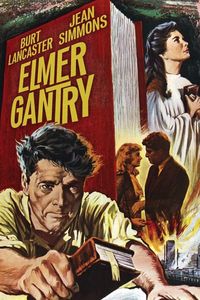
    Elmer Gantry (1960)

    (Criterion Streaming, March 2020) If you’re the kind of person to seek optimism in the most desperate situations, you can take a look south of the border in these desperate times and remind yourself that America isn’t solely composed of idiots—and more pointedly, there have always been sane voices in the wilderness highlighting the mistakes of the nation (past, ongoing and inevitable). Go back to 1960, for instance, and we already have Elmer Gantry as a mature, full-throated warning about the similarities between conmen and preachers. Burt Lancaster, never afraid to use his good looks in the service of questioning traditional masculinity, plays the titular Elmer, a fast-talking huckster who turns his talents to revivalist religion in order to woo a fetching young woman (Jean Simmons). Loosely adapted by writer-director Richard Brooks from a muckraking novel by Sinclair Lewis (Brooks won an Academy Award for the screenplay), Elmer Gantry isn’t content with merely making a link between confidence games and small-tent religious revivals—it’s a film that digs and digs into the characters, their unsavoury pasts, impure intentions, zealotry and mob vengeance to deliver a sobering statement on being taken by fast words and empty promises. Lancaster is terrific as a salesman turned fire-and-brimstone preacher, easily capturing audiences on both sides of the screen. (He also won an Oscar for it.) Elmer Gantry greatly benefits from his presence, and he helps the film overcome its excessive length. It probably doesn’t help that while Elmer Gantry confronts issues important to circa-1960 America, much of what it has to say is now common wisdom… or is it?

  • Guys and Dolls (1955)

    Guys and Dolls (1955)

    (On Cable TV, August 2019) I remain amazed at how some movies can produce some consistent reactions for decades. If you look at contemporary accounts of Guys and Dolls prior to its release, the themes are similar: “What? Joseph L. Mankiewicz directs a musical featuring Jean Simmons and Marlon Brando? What craziness is this?!”  Considering that neither Mankiewicz, Simmons nor Brando ever went back to musicals after this one-off, you can get the exact same reaction well into the twenty-first century. Of course, we now have fairly entertaining stories of rivalry on the set between Brando and co-star Frank Sinatra, the latter of which was not impressed by Brando’s mumbling or singing deficiencies. (I’ll agree with Sinatra on this one.)  Guys and Dolls, seen from today’s perspective, is not entirely as slick as other musicals of the era—and Brando has the double disadvantages of not being in his element either as a singer or a comedian, his mumbling quickly becoming annoying. Sinatra is far more comfortable in going from song to jokes. The cabaret numbers are fun: I enjoyed the “Pet me Papa” cat-girl number a bit too much. Mankiewicz does relatively well in helming the production: The introduction is great, the conclusion makes good use of its impressive Times Square stage and the dice gambling scene is not bad either. The result is a bit too long at 150 minutes, but Guys and Dolls did scratch my itch for a lavish musical … and I look forward to future generations of cinephiles also asking themselves what Brando was doing in a musical.

  • Black Narcissus (1947)

    Black Narcissus (1947)

    (On Cable TV, July 2018) I’m not quite sure what I expected from a forties “nuns set up a school/hospital in the Himalayas” film (something with nuns and Nazis?), but Black Narcissus exceeded my expectations to deliver something I couldn’t have imagined. It is about nuns setting up a school/hospital in an abandoned building at the base of the Himalayas. But it is also about a man setting off erotic jealousy among the nuns, and Englishwomen thinking themselves at the vanguard of civilization being utterly defeated by India. It ends up with a nun casting off her habits, putting on lipstick, attempting the seduction the only white man within walking distance and trying to kill her superior. Considering that his film was made in 1947 England, you can imagine that it did push a few boundaries. Black Narcissus was ahead of its time in at least another aspect—the Oscar-winning colour cinematography is impressive, with bright colours and subdued tones orchestrated in a conscious effect. The film wasn’t shot on location despite impressively deceptive trompe-l’oeuils. Oh, there are certainly a bunch of issues with the film. Shot and released shortly before Indian independence, the film is redolent with colonialist rhetoric, and features at least two performers in brownface. (Much as I’d like to praise Jean Simmons for her role, there’s no getting around that she’s a white girl playing an Indian girl under layers of makeup.)  Still, as noted, the ending finds the British nuns retreating from India, completely defeated. More interesting is the romantic triangle between two nuns (Deborah Kerr and Kathleen Byron) and a local fixer played by David Farrar. Byron is particularly striking once she removes her robe and goes on a rampage toward the end of the film—an authentically shocking moment that almost pushes the film toward horror. By the end, Black Narcissus delivers quite a bit more than what we could have expected from post-war English movies. It’s quite a surprise, and thanks to Jack Cardiff’s cinematography it’s still worth a look today.