Jean Vigo

  • Zéro de conduite : Jeunes diables au collège [Zero for Conduct] (1933)

    (On Cable TV, September 2022) As with many influential films, Zéro de conduite has been imitated so often that it feels hackneyed. The idea of portraying school life with a jaundiced eye is now commonplace, but in the early days of cinema is seemed like a small revolution, and indeed Jean Vigo’s film was quickly banned upon release and rediscovered later, thus inspiring the French New Wave (most notably, and visibly, Les 400 coups). So, there’s definitely some historical interest there—but if you’re taking the film at face value, it’s perhaps duller (certainly shorter, at 49 minutes) than expected. The tale of schoolboy rebellion feels at once familiar and still a bit upsetting, far removed from the sentimentality of childhood and making clear parallels between prison and the schoolyard. It’s short enough that it doesn’t eat up time… but, at the same time, leaves less of an impression. If I’m not enthusiastic about Zéro de conduite, it’s probably because I have the feeling I’ve seen it elsewhere, with much slicker technical credentials.
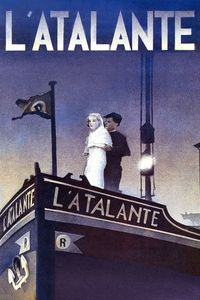
  • L’Atalante (1934)

    L’Atalante (1934)

    (Criterion Streaming, March 2020) While I’m not and probably won’t ever be a big fan of L’Atalante, there are a few things about the film that are worth noting. The first, outside the film’s frame of reference, would be to acknowledge the very romantic idea of the film and its place in the regrettably short life of its writer-director Jean Vigo—After barely managing to complete its production, Vigo died at 29 years of age… shortly after seeing the film’s less-than impressive initial release. It would take another generation for L’Atalante to be regarded fondly as a fundamental piece of poetic realism and lionized by the French New Wave filmmakers. That’s a lot of history for what is rather a simple film, at least from a narrative standpoint: a couple marries, splits up and reunites—all set against the somewhat romantic world of French canal barges. But everything is about execution, and even twenty-first century audiences have to recognize Vigo’s stylistic flourishes in telling his story. There’s quite a bit to like here—including many very cute cats—but the test is whether it’s still interesting, and it is: the Poetic Realism movement has aged rather well, and L’Atalante can still comfortably fit next to a viewing of Pépé le Moko. It’s not hard to see how that specific style would come to influence American film noir, the French new Wave and other significant subgenres.