Jennifer Baichwal

  • Watermark (2013)

    Watermark (2013)

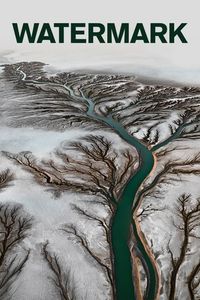
    (On Cable TV, October 2021) Follow-up to the somewhat similar Manufactured Landscapes, Watermark reteams filmmaker Jennifer Baichwal with photographer Edward Burtynsky for a widescreen look at the impact of man on nature. This time, the focus is on water—how it’s used, how it’s controlled, and how it’s threatened by human activities. As with the first film, we’re taken to incredible landscapes, most notably the Chinese Xiluodu Dam and the eerie flooding of its reservoir. The strengths of the filmmakers’ first film remain intact—a dispassionate but provocative eye for striking images, a non-preachy but convincing environmentalist message, a willingness to dig under the surface of the world to reveal its underpinning—but two notable flaws have been addressed: The images are now shot in high definition (ensuring their longevity with modern home viewing equipment) and the subject matter is not as overexposed today, also ensuring its continued interest. It’s also somewhat closer to visual documentaries à la Koyaanisqatsi than the unwieldy half-lecture/half-visuals format of the first film—there’s still some narration, but it’s less intrusive and unafraid to quiet down in order to let the images speak for themselves. The result takes us in real places that were new to me—places where humans interact with bodies of water, or try to control it through striking man-made architecture. It’s quite amazing in places—I’m not sure I would have imagined the manufactured inland waterfronts of Discovery Bay, California had Watermark not shown it from above, for instance. It does amount to a quietly impressive documentary, as much feast for the eyes as it’s fodder for thinking about our place in the world. An improvement over Manufactured Landscapes in nearly every way, Watermark sets high expectations for their third film Anthropocene.
  • Manufactured Landscapes (2006)

    Manufactured Landscapes (2006)

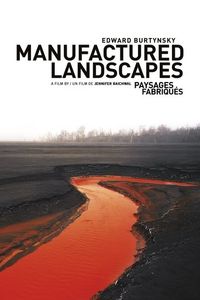
    (On Cable TV, September 2021) As much as I liked watching Manufactured Landscapes, its impact is blunted by two unfortunate factors outside the film, both of them tied to its very nature. As a documentary attempting to show the amazing changes taking place in China over the past few decades, it’s clearly going for big images and even more mind-boggling concepts. Based on the photography of Edward Burtynsky, it’s a film that takes a look at waste reclamation, massive engineering projects, vast manufacturing plants and the amazing growth of Chinese cities. It goes back and forth between impressive footage shot on location, and excerpts of Burtynsky’s public speaking providing context. The story being told here, on its more factual level, is how China was able to use its vast population and a steady influx of waste from the West to build itself up into a superpower — and the environmental consequences of such a shift. Electronics discarded by affluent Americans are here reclaimed for metal in the most primitive means imaginable; factories turn repetitious assembly lines into works of art; nature is beaten down in submission. So far so interesting — but Manufactured Landscapes is now fifteen years old, and it has aged visibly in at least two areas. Notionally, the idea of China’s resurgence is not nearly as fresh today as it was back in 2006 — China is now comfortably a superpower, no longer interested in Western recycling, and its weight over global affairs is now a household discussion topic. (Well, at least in my household.)  More significantly, however, is how the film has aged visually. Shot on Super-16mm instead of higher-resolution film or the current state of digital, it now looks underwhelming and washed-out. The substance of the images is good, but the film can’t compare to more expressionist films covering similar ground such as Samara. It’s certainly not uninteresting, but you can feel the film becoming a period piece. Fortunately, Manufactured Landscapes was not the last word from Burtynsky or director Jennifer Baichwal — two more similar films have followed since then, and I’ll be having a look at those next. (CanCon requirements being what they are, they all play on heavy rotation on Canadian TV channels.)

  • Anthropocene: The Human Epoch (2018)

    Anthropocene: The Human Epoch (2018)

    (On Cable TV, July 2020) Don’t watch Anthropocene: The Human Epoch if you want to feel any better about the human species’ mindless ant-like appetite for consumption. A striking visual collage of various places around the world where humans are altering—nay, terraforming—the natural landscape, this is a film meant to surprise and sadden. Among the film’s biggest asset is some great footage, made even better by the shock of discovering those faraway places where the landscape itself is being altered in unrecognizable ways. The copious use of drone footage is an asset — “what am I looking at?” is a frequent question for viewers, leading to amazing answers. It does fit with the Koyaanisqatsi-inspired genre of visual documentaries, even with its voiceover (usually a dispassionate enunciation of depressing statistics) and far fewer lyrical moments. It’s definitely worth a look, but it is made for people who already understand that environmental issues are important. There’s a bit of hope at the end… but not that much.

    (Second viewing, On Cable TV, October 2021) It probably doesn’t bode all that well for Anthropocene: The Human Epoch that I didn’t remember seeing it in the first place—it’s only in rewatching the film that many of its striking images got me thinking (and confirming) that I had, in fact, seen it once already. But I wasn’t coming to the film at the same angle for this second viewing—this was the third in my self-imposed viewing program of documentaries by Jennifer Baichwal and Edward Burtynsky, here jointed by Nicholas de Pencier. Having seen the progression of their technique from Manufactured Landscapes to Waterways and now Anthropocene, I was far better primed to appreciate the result. The visual splendour of the film is even more striking this time around, using drone photography to truly show the magnitude of the images shown here. The theme is familiar (perhaps too familiar, contributing to my memory lapse) but the execution is terrific. Here are awe-inspiring examples of how humans are transforming the planet to suit it to our needs—from a colossal open-air coal mine in Germany to lithium drying pools to forest razing to vast dumps of industrial waste. Not that this is a new thing for humans, as the vertiginous pullback of the Carrera marble open mine made clear. I’m also a bit less bothered by the environmental message here—in fact, some of the images had me feel a weird sense of special pride for what humans can do when enough of them throw themselves at a specific problem—and if we are able to shape the planet to our specifications in the name of resource extraction and waste, can we do the same to ensure our survival? In other words, Anthropocene is worth a second look.