Jennifer Jones

  • Cluny Brown (1946)

    (On Cable TV, December 2021) The obvious reason to see Cluny Brown is that it’s master director Ernst Lubitsch’s last film before his untimely death — the last go-around for “The Lubitsch Touch,” this time taking aim at British social conventions. But the unexpected delight of the film is Jennifer Jones’ performance as the titular Cluny — a bright, scattered young woman who clearly has no intention of learning her place, let alone keeping it. Compared to other Lubitsch pictures, it’s true that Cluny Brown feels like a second-tier result — not bad, still amusing, but clearly not in the same category as his better-known films. Still, it amuses: its look at stuffy British class conventions is clearly meant to upset upper-class British viewers by showing them as so out of touch on vital issues. (British reviewers reportedly weren’t kind to the film.)  The romantic shenanigans between Cluny and a foreign intellectual (revered by the British characters, but seen as a mere man by the protagonist) end up making up most of what passes for plot here, although —typically—much of the fun of the picture is in the small details, exchanges and observations rather than the overarching plot. Lubitsch was gone far too soon, but at least we got Cluny Brown before he went.
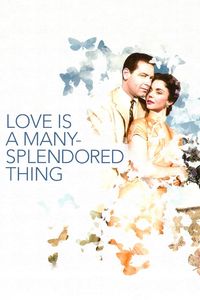
  • Love Is a Many-Splendored Thing (1955)

    Love Is a Many-Splendored Thing (1955)

    (On TV, May 2020) To say that Love Is a Many-Splendored Thing is okay may not seem like a ringing endorsement, but compared to what it could have been, it’s almost a complete triumph. Consider that it’s a romance between an American journalist and a Eurasian woman in the late 1940s, as seen from mid-1950s America. Plus, it features all-Caucasian Jennifer Jones playing a character of mixed ethnicity through heavy makeup that she herself disliked. (The film’s production history is rich in anecdotes about how Jones did not get along with anyone on set, least of all co-star William Holden.) Also consider that the film dealt directly with adultery (well, “they’re separated” degrees of adultery) and interracial relationship in the waning years of the Production Code (a special dispensation was obtained, almost solely because the story was adapted from a popular novel). There are all sorts of ways in which Love Is a Many-Splendored Thing could have gone as wrong as other films of the time and… it didn’t. The sensible treatment of cross-ethnicity romance was somewhat daring for its time, and doesn’t feel all that terrible nowadays. What it does feel like is an overwrought romantic drama, but that’s not such a bad thing: it still feels romantic, and it still feels important. It’s easy to see why the film was nominated for eight Academy Awards (snagging three for song, score and costume design)—including some splendid colour cinematography of mid-1950s Hong Kong. Could it have been better? Absolutely, and that would be near-certain for any contemporary remake. Could it have been worse? Also, yes—this film is held together almost entirely by its sympathy for both of its lead characters.