Jerry Lewis

  • King of Cool (2021)

    (On Cable TV, November 2021) It took me a while to understand the true appeal of Dean Martin. Not because he wasn’t remarkable — his leading-man presence in well-known films such as the original Ocean’s Eleven is obvious even today, and few people won’t have heard at least one of his crooner songs. But the more you dig, especially in material that hasn’t been as well-preserved as his classic movies, the more you discover the true breadth of his achievements. That he was Jerry Lewis’ straight-man partner in their comedy duo days is something that isn’t as prominent now than seventy years ago (especially given the evanescence of cabaret comedy), but then you have plenty of lesser-known films to show the effectiveness of their act. There are plenty of films and songs to testify as to his careers as actor and singer, but his remarkably long-lived variety show is now best remembered for the celebrated “Tony Martin and Frank Sinatra Christmas Special.”  Oh, and he was a leading member of the celebrated Rat Pack, alongside Sinatra and Davis. In other words, Martin did a lot and had at least four separate careers that would have been enough for anyone else. Trying to put this in a single documentary is a lot, but the filmmakers behind King of Cool do about as well as anyone else could have been expected. (One could quibble as to whether Steve MacQueen is the King of Cool, but the film explains that this was a moniker bestowed upon Martin by none other than Elvis Presley.)  Taking a largely chronological approach to Martin’s life, the film chronicles his early days as the son of Italian immigrants (and whose mother tongue was not English), his early days as a boxer, his struggling debut as a cabaret act, the spark of his partnership with Jerry Lewis, the factors that led to their breakup (simply put: Lewis hogging too much of the spotlight), his reinvention as a boozy crooner in the footsteps of Joe. E. Lewis (albeit with practised casualness and apple juice in the glass), his family life across three wives and several children, and his later years, as they included a reconciliation with Lewis. It’s quite a bit and King of Cool does best when it focuses on the nuts and bolts of his career, testimonies from contemporaries and more recent celebrities (including some surprisingly poignant material from RZA) and testimony from family members. There’s a good line in there about how death gives back the dead person at their best rather than the sometimes-sad old person they have become. Where King of Cool overreaches is in trying to find the hidden key to a man who was far less of a boozy cool crooner than his persona became — in trying to find the “Rosebud,” they end up with a dish representing family, which is not bad but presented with perhaps a bit too much enthusiasm to be credible as the answer. Still, it’s a good thing that the documentary could capture the recollection of several people who knew him or people associated with him (including some effective moments with Lewis’ son). It goes without saying that this is not a documentary fit to question its subject: as a friends-and-family thing, it doesn’t poke too much as Lewis’ tumultuous marital history nor portrays him as anything but a victim of Lewis’ solo ambitions. But so it goes in that subgenre — the film becomes a pointer to more in-depth material rather than an in-depth analysis. Even then, there’s a lot to like in the result — Martin was indeed the King of Cool, and the contact high of even a quick overview of his career is still impressive.

    (Second viewing, July 2022) Hmmm. The good thing about King of Cool is that it made me interested enough in Dean Martin to read more about him. The not-so-good thing is that now that I’ve dug deeper into the topic (most notably through Karina Longworth’s magistral ten hours You Must Remember This podcast series on Martin and Sammy Davis Jr.’s careers), I’m far less impressed by the documentary’s deceptive conclusions. I should not be surprised. Movie biographical documentaries are highly selective at best, and often hagiographic by their nature. When you’re building something on footage of friends and family reminiscing on camera, there’s a built-in incentive to be nice about the subject of those fond memories. No one will accept sitting down to talk about their father if the documentary is going to be a warts-and-all piece. (It gets worse when the family produces the film.) All of this to say that asking for second opinions about Dean Martin blows up the “family man” narrative offered in King of Cool. Martin was in many ways an admirable figure — not all that interested in partying to excess with his Rat Pack fellows, consciously not drinking even as he played up a boozy crooner, a savvy investor who eventually provided generational wealth to his children after making some terrible financial decisions early in his career, and someone who — being King of Cool — always maintained a distance between his true self and his public persona. Alas, that same distance could mean that Martin was aloof and uninterested in deeper connections: Other biographical sources highlight the carefully metered time he’d spend with his kids, then retire to watch TV alone; the many romantic dalliances amounting to nothing; the rift with Jerry Lewis being partially a reflection of his reluctance to communicate; the inglorious final years of Martin’s life in which he preferred television and alcohol to his family. Very little of this makes its way to King of Cool, with some omissions looking like deceptions — after their infamous on-air telethon reunion late in their lives, it took months if not years before Lewis and Martin regularly spoke again, for instance. And its concluding idea of the key to Martin’s character being a baked dish representing family seems even more like a stretch born out of desperation by filmmakers trying to provide an emotional climax. Make no mistake: Dean Martin was a fascinating figure defined by his cool. But going to the end of that idea means going to some darker places that this documentary is not interested in exploring. It’s selling us a romantic, glamorous image of a figure that’s far more interesting with his flaws than some sanitized family-man portrait. It’s an entertaining portrait, but it should be approached as a stepping-stone to a more thorough understanding of Dean Martin.
  • At War with the Army (1950)

    (On TV, September 2019) If anyone is looking for proofs of the United States’ history as a martial society, I’d like to provide a very long list of film comedies that only exist because a good chunk of the paying public was intimately familiar with how military service worked. Such comedies are meant to appeal to veterans, conscripts and their families in affectionately ribbing the habits of the army. By 1950, a good chunk of the American male population had still-vivid memories of their wartime service, and that’s clearly what At War with the Army was relying on, with its portrayal of barracks life with overbearing superiors, nonsensical bureaucracy, obstacle courses, family trouble and relationship between fellow soldiers. By the time the film launches into a mess-hall musical number titled “Beans,” well, you already know everything about the film. For generations of viewers, much of the draw of the film is in seeing Dean Martin and Jerry Lewis in the lead roles, playing off their stage persona to sing, goof-off or parody other movies along the way. Lewis is silly, Martin is suave and that’s quite enough to power the entire thing. Of course, some of the material is only funny in the abstract today — most of the twenty-first century audience has no direct knowledge of military service other than through films. But At War with the Army still works because Lewis and Martin are good at what they do: entertainers simply using military service as a scaffolding on which to hang their comic set-pieces.

  • Three on a Couch (1966)

    Three on a Couch (1966)

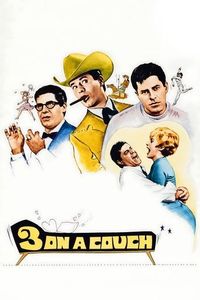
    (On Cable TV, September 2021) One of the lesser-known Jerry Lewis vehicles of the 1960s, Three on a Couch sees the shameless comedian play five roles — or rather an artist who starts impersonating fictional people in a convoluted attempt to get his girlfriend to come spend a year in Paris. The complications arise from the fact that the girlfriend (played by Janet Leigh) is a psychiatrist with three female clients and she can’t leave them until they’re cured of their hang-ups about men — so naturally his best course of action is to impersonate their ideal mates, get them cured and then they can go to Paris. As I said: convoluted. Inevitably, the identities converge and the whole scheme explodes, but in the meantime, we get Lewis play four other roles spanning a variety of archetypes, plus some cross-dressing thrown in for good measure. The 1960s sex comedy aspects have not aged particularly well, but it’s hard to get worked up about it when it’s such a transparent way to get Lewis up and impersonating. Lewis isn’t just an actor here — he also directs and must shoulder some of the blame for the lacklustre result. It’s not that Three on a Couch isn’t funny; it’s that it’s not funny enough: given the premise, the talent and the era of much better sex comedies, Three on a Couch feels like a limp effort, so determined to get its plot points in order to the big role-switching finale that it doesn’t seem to have thought about the moment-to-moment fun of the film. It’s watchable enough if your tolerance for Lewis’ mugging and showboating is up to it. But I can think of half a dozen comedies of the time (some of them also starring Lewis) that are significantly more entertaining.

  • Hollywood or Bust (1956)

    (On Cable TV, July 2021) The Martin and Lewis comedy duo may have been legendary during the ten years it ran, but today is usually a footnote to Dean Martin and Jerry Lewis’ later solo careers. Hollywood or Bust came at the very end of their decade-long partnership, past the point when Martin was itching to get out of their contract considering that Lewis was getting all of the attention as the more overly comic half of the pair. That pressure is clearly at play here, as the film features Martin as a fast-talking hustler who is forced to partner with nerdy Lewis when they jointly win a car and decide to head southwest to Los Angeles. There are a few obvious resonances with the later Rain Man, but much of Hollywood or Bust is self-obviously about seeing Martin as the smooth talker and having to real with the insufferable Lewis along the way (and his big dog, because big dogs are comedy). There are plenty of period references for those well-versed in the period (including some worshipful shots of Anita Ekberg) and perhaps the best feature of the film is the capture (in colour!) of what a country-spanning road trip could mean before the rise of affordable commercial aviation. The gags are all over the place — if you’re the kind of person who laughs at Jerry Lewis antics, then the film will go over much better than otherwise. I liked it well enough (especially as the film reaches Hollywood and reaches into self-referential gags on the Paramount studio lot), but part of it is seeing earlier incarnations of familiar actors known for subsequent roads. You can certainly see echoes of Matt Helm and the Buddy Love here — although now that I know that Hollywood or Bust was made during a period of considerable tension between Martin and Lewis, I’m curious to see them at their best.

  • The King of Comedy (1982)

    The King of Comedy (1982)

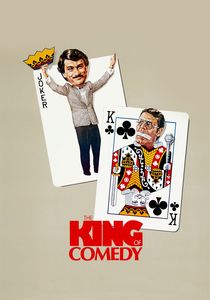
    (Google Play Streaming, December 2019) The tricky paradox of dark comedy is that you can manage to handle everything perfectly from a technical viewpoint, only to have audiences shrug and dismiss the result. It’s part of the deal—dark comedy pushes people out of their comfort zone and they don’t have to like it. That’s how I feel after watching The King of Comedy: I can’t fault director Martin Scorsese’s work here—he gets the material’s ironic darkness, executes it as well as it can be, and delivers a pretty good New York City movie as part of it. Robert de Niro is at his iconoclastic best as a psychopathic loser who hatches a plan to get his spot on a major TV show. Jerry Lewis and Sandra Bernhard also do well in the other main roles. But at the end, The King of Comedy plays its cards: the audience feels their heart sink as they realize that the psychopath is actually pretty funny, and that he gets rewarded for his actions. That may be just a bit too much to take, and perhaps just as dispiriting now than it was forty years ago. Great movie—but I’ll use my reviewer’s right to shrug and dismiss the result.

  • Boeing, Boeing (1965)

    Boeing, Boeing (1965)

    (In French, On TV, March 2019) If you’re looking for a uniquely specific example of 1960s sex comedies, you probably can’t do much better than Boeing, Boeing, which wallows in the atmosphere of the then-trendy jet-set in order to set up a classic French bedroom farce with stewardesses getting in and out of doors with split-second timing. As the film begins, we find ourselves in swinging Paris as our Lothario protagonist (a perfectly well-used Tony Curtis) is a journalist who has figured out how to keep three girlfriends going at once: Thanks to a thorough knowledge of airline schedules and operating procedures, he’s able to have them in and out of his apartment like clockwork. Everything comes crashing down when the airlines get faster planes, and as a colleague (Jerry Lewis, less annoying than usual) comes to stay for a while, completely wrecking the careful scheduling and bringing all the spinning plates crashing down. Adapted from a French theatrical play, much of Boeing, Boeing is in the tradition of bedroom farces, one difficult situation escalating into an even more complicated one with some great bits of physical comedy along the way. Alas, the disappointing ending cuts away to a retreat that takes away the moment of reckoning and spares the protagonists getting their full comeuppance. If Curtis and Lewis get good roles, one can’t say the same for their female co-stars—aside from the much-funnier matron played by Thelma Ritter, all of the female characters are cut from the same 36-24-36 mould and are practically undistinguishable save from superficial physical attributes. Still, Boeing, Boeing itself remains fascinating: the period atmosphere alone is terrific, and the film reflects the evolution of social mores in the past sixty-five years—thankfully, few movies today would dare include the measurements of its female stars on-screen as part of the opening credits!

  • The Nutty Professor (1963)

    The Nutty Professor (1963)

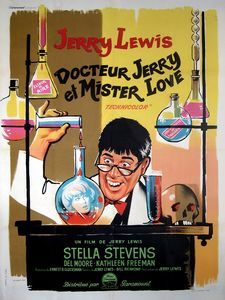
    (In French, On TV, October 2018) Jerry Lewis is often portrayed as an acquired taste (“The French love him!” etc.), but I wonder how much of this perceived difficulty has to do with crucial miscalculations in his best-known films. It’s not uncommon, for instance, to watch The Nutty Professor and being extraordinarily irritated at the nominal protagonist of this Doctor Jekyll and Mr. Hyde parody. Lewis, as the Julius Kelp counterpart of the dual role, is grating, infuriating, intolerable and abrasive. You really don’t want to spend any more time with him. On the other hand, his “monster” persona of Buddy Love is charming, suave, debonair and rather likable despite being an obnoxious egomaniac with a tendency to verbally abuse others. (One suspects that if this wasn’t a movie, we’d feel differently about him.) The jokes in the film are fairly standard (although they sometimes jump the strict limits of realism, meaning that there isn’t a lot here that we haven’t seen elsewhere). The period atmosphere can be interesting, though, and Lewis’ performance does have a few good moments even when they come at the expense of the character we’re supposed to cheer for at the end. Despite the feeling that at least some of this loathing for the protagonist is intentional, the result seems at odds with itself. As a result, The Nutty Professor isn’t quite as good as it could have been with some self-awareness and slight characterization alterations. And much of Lewis’s comic genius gets lost in the transition.