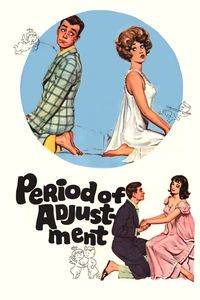
Jim Hutton

  • Period of Adjustment (1962)

    Period of Adjustment (1962)

    (On Cable TV, April 2021) Tennessee Williams left quite a mark on American cinema of the 1950s–1960s, but one thing he wasn’t known for was comedy—his focus was more on hard-hitting dramas, gay subtext and explosive confrontations. (Even at his most bowdlerized, modern audiences can still watch films like Cat on a Hot Tin Roof and wonder, “Hey, is this character supposed to be…”)  While Period of Adjustment can’t very well be called an outright comedy with its focus on two couples having marital problems, it is considerably lighter than many other Williams adaptations. Featuring Jane Fonda and Jim Hutton, the story contrasts a newlywed couple with another with more mileage but different issues. It’s certainly atypical Williams — far looser and at least putatively funny. But even as a comedy, it’s a bit more serious than the norm, as it puts characters through a wringer they don’t especially appreciate (especially not in that typical-comedy fake annoyance way) before making it to the other end. On the other hand, there’s a happy ending and plenty of comic set-pieces, not to mention better-than-average dialogue for this kind of film and some interesting characterization in this tale of uncomfortable couples. Fonda is a southern doll here, which explains why this film is often mentioned as one of the ones that led her to stardom. The result is not exactly easy to classify — Period of Adjustment is not as intense as other Williams films, and it’s not as carefree as other romantic comedies of the era. But it’s got an interesting quality of its own, especially if (like me), you’ve started paying interest to Tennessee Williams through the films adapted from his work.
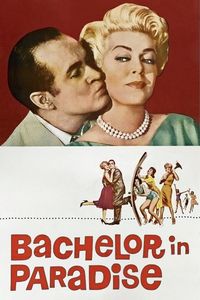
  • Bachelor in Paradise (1961)

    Bachelor in Paradise (1961)

    (On Cable TV, February 2021) If you believe the movies, Americans woke up in the 1960s and starting to notice all sorts of new phenomena around them. What is that sex thing? ask the movies of the time. The truth is somewhat less revelatory — it’s the movies that unshackled themselves from a prudish reflection of American society, and it had to be done in a very gradual way, as so not to shock the masses. A first step along the way were the cute sex comedies of the early 1960s, in which the films barely hinted at naughtiness — which, to be fair, was a step up from the previous decade. It’s in the vein that Bachelor in Paradise features Bob Hope as a salacious best-selling playboy author who infiltrates a suburban community in the hopes of researching a new book. While over there, he’s confronted by the prejudices of neighbourhood gossip queens, especially when he, a single eligible bachelor, finds himself surrounded by lovelorn housewives. As usual for films of the time, Bachelor in Paradise is as interesting for its unspoken presumptions and period detail than for the elements of its narrative. The sequence set inside a grocery store is a fascinating throwback to how people shopped at the time, while the various social taboos being broken are often more revelatory of 1961 American than the filmmakers would care to admit. Bob Hope does make for a funny protagonist — and seeing Lana Turner as his romantic foil doesn’t hurt, even though I find Turner more generic than many other commentators. (I rather would have liked Paula Prentiss in the role, but that would have broken her expected on-screen pairing with Jim Hutton.)  While Bachelor in Paradise remains quaintly sexist, is not built for social commentary and pales in comparison of more groundbreaking films later in the decade, it’s intriguing, cute, charming, and quite a bit of fun to watch even today.