Jim Jarmusch

  • Dead Man (1995)

    Dead Man (1995)

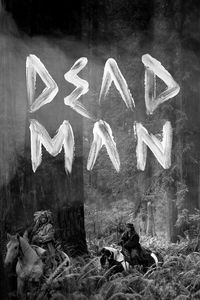
    (Criterion Streaming, December 2020) After going through much of writer-director Jim Jarmusch’s filmography over the past few months, I’m no closer to liking his films… but I think I can begin to understand where he’s coming from, and maybe even be satisfied with what he’s doing. Dead Man is like that: Surprisingly, I do like quite a bit of it, but the longer it goes on, the more exasperating it becomes… even if I get what Jarmusch is going for. It’s a western, certainly – it starts on a train where an accountant is about to begin a job in a frontier town; later, most of the action takes place in the woods, as three bounty hunters pursue the protagonist and the Native American who saved him. Other than that, though, it gets a bit weird: The frontier town of Machine is a proto-steampunk nightmare of industrialization leading to decay, and the protagonist spends a lot of time in a delirious state of mind, spurred to consider himself the reborn poet William Blake. Casting counts for a lot – a young Johnny Depp plays the accountant-turned-murderer, while the legendary Robert Mitchum has his last role here as a patriarch. Notables such as Crispin Glover, Lance Henriksen, John Hurt, Iggy Pop, Gabriel Byrne, Jared Harris, Billy Bob Thornton and Alfred Molina all turn up at some point, sometimes very briefly. It’s all shot in black-and-white, with strange visions from time to time. I greatly preferred the opening half-hour of the film – the arrival in town, the walk through the dangerous main street, the nightmarish vision of a factory and the complications of meeting a pretty girl. After that, Dead Man runs out of steam until the ending as it walks deep into the woods and loses itself in pontification. Quirky to the extreme, it zigs where every other western zags, and that’s reason enough to have a look even for those who can’t stand western or remain dubious about Jarmusch.
  • Night on Earth (1991)

    Night on Earth (1991)

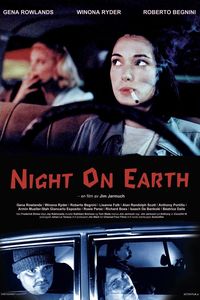
    (On Cable TV, August 2020) I can’t say that I’ve been able to make myself like Jim Jarmusch’s work, but at least I’ve warmed up enough to not dread his name every time he ends up on my must-see lists. Night on Earth is, as usual for Jarmusch, an interesting concept that offers something new, but doesn’t always work in its execution. The high concept is this: five vignettes about taxi drivers and their passengers, more or less happening at the same time, but in five different cities during one single night. The span of the cities (Los Angeles, New York City, Paris, Rome, and Helsinki) is different enough to offer different sights, but also different moods from comedy to tragedy. Is Night on Earth interesting? Sure. Does it have a good cast? Of course, in-between Winona Ryder, Gena Rowlands, Giancarlo Esposito, Armin Mueller-Stahl, Rosie Perez and Roberto Benigni. Is it well directed? Yes, although it doesn’t have any particularly energetic style. But is it any good? Well, that depends – Jarmusch fans don’t need to be told what to think of it, but for everyone else it will depend on how you react to the individual vignettes. Benigni is, of course, a specific taste, and the Helsinki sequence feels like a downer every time it pops up. The Los Angeles and New York segments will feel most familiar, although the Paris one does work quite well. In the end, as with most of Jarmusch’s films, the only way to find out how you’ll feel about his movies is to watch them – at least Night on Earth is distinct enough to be picked from any lineup.

  • Mystery Train (1989)

    Mystery Train (1989)

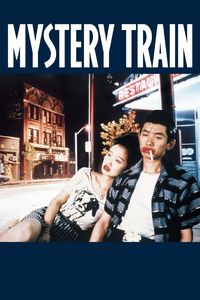
    (On Cable TV, June 2020) Not everyone likes writer-director Jim Jarmusch’s filmography, starting with myself. But compared to what else I’ve seen from him, Mystery Train is somewhere in the middle, perhaps even itching up toward the upper tier—a mixture of experimentalism in keeping with his early oeuvre. Its narrative is built on three stories about around a Memphis hotel and strangers who are in the city for a specific purpose. The first story is about a Japanese couple constantly arguing while visiting Elvis’s legacy. Another is about an Italian widow spending a one-night layover while waiting for her husband’s body to be brought home. Then, finally, a third aimless narrative is about three small-time criminals. It barely comes together at the end, but this is really a film of atmosphere and small moments and isolation and what it feels to be somewhere that’s not home. The playful chronology and repeating motifs may charm viewers. Casting includes such notable as Screamin’ Jay Hawkins and Steve Buscemi. Jarmusch fans ought to like this, but that’s not guaranteed for those who fall outside his appeal.

  • The Dead Don’t Die (2019)

    The Dead Don’t Die (2019)

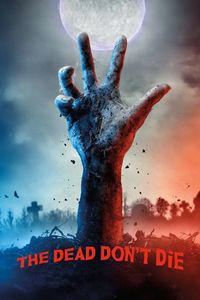
    (On Cable TV, March 2020) As far as I can remember, writer-director Jim Jarmusch has never made a conventional film, and it’s not because he gets to do a zombie movie that he’s going to change his ways. Set in a small town with characters played by a large ensemble cast of known names, The Dead Don’t Die is as proudly atypical as the rest of Jarmusch’s filmography, with odd plot beats, utterly deadpan dialogue, bewildered characters, bizarre gags, nonsensical worldbuilding and increasingly frequent fourth-wall breaking. (So much so, in fact, that I was able to call out the character saying, “because I read the script!” Other choice quotes include “Are we going improv?” and “This is the theme song.”) With an ensemble cast that begins with Bill Murray, Adam Driver and Chloe Sevigny as police officers, it would be hard to single out one specific performance—at least if it wasn’t for Tilda Swinton, who consistently steals scenes as a mortician-turned bladed executioner named Zelda Winston. Whatta Tilda! (She’s not the only one with an actor-related name, as Rosie Perez plays a news anchor called “Posie Juarez”) It’s all quite amusing, but the comedy may be more relative than anything else: we don’t usually expect Jarmusch to go this zany. But as amusing as it can be in moments, The Dead Don’t Die is not all that finely controlled as a comedy. The comic pacing is uneven, the ending sort of quits without a strong or satisfying climax and it’s not too clear how much improvisation took place. Still—and I’m grading on an unfair curve, here—this is probably my favourite Jarmusch film so far.

  • Coffee and Cigarettes (2003)

    Coffee and Cigarettes (2003)

    (On Cable TV, July 2016) This is not a conventional movie, being composed of several black-and-white vignettes in which two (occasionally three) characters argue over caffeine and smokes. The first two segments were shot as short films years before the others, and it shows as latter instalments become more textured and creative. Director Jim Jarmusch is obviously going for something experimental here, and the result will be far more interesting to those with a fondness for art-house cinema. Coffee and Cigarettes features an impressive group of thespians, with particular acknowledgements for Cate Blanchett’s double performance, Alfred Molina trying to get through to Steve Cooghan and Bill Murray for his innate Bill Murrayness. (Strangely enough, two of the film’s most striking actresses, Joie Lee and Renée French, haven’t done many other roles.) As intriguing as the central concept may sound, Coffee and Cigarettes doesn’t quite achieve its potential. The low-grade hostility between its characters is wearying, everything stays too mild-mannered and the philosophical tangents are profoundly uninteresting. (Although I’ll make an exception for “I know how a Tesla coil works!”) Fortunately, the film doesn’t have to be watched straight through: it’s easy (and even fun) to take it in a piece per day every day for a bit more than a week. There isn’t much to link the segments together, and this way you avoid the “that again!” feeling from watching too many similar short films.

  • Broken Flowers (2005)

    Broken Flowers (2005)

    (Netflix Streaming, November 2015) Mill Murray’s career took a very stranger turn after Lost in Translation, fulling embracing a sad-clown phase that probably reached its epitome in Jim Jarmusch’s Broken Flowers.  Here, Murray plays eccentricity on an almost entirely melancholic register as a rich but sad computer businessman who learns from an unknown source that he’s got a son.  Driving around to see his exes in an effort to find out who sent the letter and what happened, Murray’s hangdog charm is just about what saves Broken Flowers from overpowering sadness.  Shot blandly and featuring a deliberately maddening ending that doesn’t solve anything, this is the kind of film that either works as a succession of moments between actors, or simply infuriates.  (The road-movie structure of the film, in which the narrator travels, meets an ex, escapes and repeats, doesn’t help.)  It’s the kind of stuff that some people like a lot.  On the other hand, it’s about as dull as Murray has been on-screen, and it may help explain why ten years would go until (in St-Vincent), he’s take another lead role: the sad-clown phase of his career being fully realised, what else was there for him to do?  Certainly not go back to the earlier anarchic brat phase of his career; onward, then, to respected elder statesman of comedy, best used in small roles by quirky directors such as Wes Anderson.