Joan Blondell

  • The Cincinnati Kid (1965)

    The Cincinnati Kid (1965)

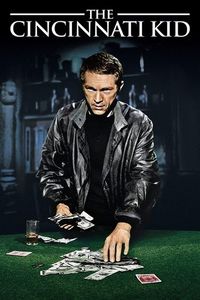
    (On Cable TV, October 2021) My disadvantage in watching poker movies is that (and hush, because this passes for a dishonourable secret), I don’t really understand poker. Not being a gambler nor having any poker-playing friends to entertain, I get the basics of the game and some of the better hands, but don’t ask me to explain the finer details of the game. And yet, the paradox is that I generally like poker movies: you don’t have to know exact odds to be fascinated by bluffs and high stakes. It helps that The Cincinnati Kid has plenty to offer even to non-poker players: Steve MacQueen in fine roguish form as a hotshot player about to rub shoulders with the best; Ann-Margret as a seducer; Edward G. Robinson in a great late-career performance as a notorious card shark; a rather convincing portrayal of New Orleans’ atmosphere. The period detail is interesting as well, but it quickly fades into the background once the cards are dealt and we’re back with the timeless high stakes of romance, cheating, deception and showmanship. Classic Hollywood legend Joan Blondell shows up in a small but memorable role, while director Norman Jewison marks this film as the one that broke him out of light comedies into the unpredictable blend of genres that marked the rest of his career. The similarities with the near-contemporary The Hustler are numerous, but despite knowing a lot more about pool than poker, I like The Cincinnati Kid best: the colourful cinematography is more appealing, MacQueen outdoes Newman in this specific case, and the ending seems gutsier and more meaningful as well. While not as compelling or steadily entertaining as other similar films, The Cincinnati Kid has nonetheless aged rather well, and remains accessible even to those who can’t quite distinguish their flushes from their suits.
  • Nightmare Alley (1947)

    Nightmare Alley (1947)

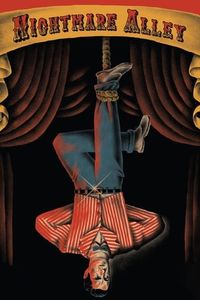
    (On Cable TV, September 2021) Among film noir fans, Nightmare Alley is perhaps best known for being a rare A-list production with first-rate stars and a decent budget — most crime thrillers we now associate with the noir tradition were B-grade productions, not meant for prestige nor posterity. But this film had one of the most famous actors of the time, Tyrone Power, and the production crew required to do justice to its ambitious setting, from the underworld of carnival shows to Chicago high society… and back. If the essence of noir was poking at traditional American values and pressuring its characters until they did unspeakable things, then Nightmare Alley couldn’t be more representative — our hero chooses to be a conman and associate with others who share his lack of morals. This all backfires a few times, and the film clearly patterns itself along the lines of a classical rags-to-riches-to-rags tragedy, the hero doomed by his own personal failings. Power is better than average here, with such notables as Joan Blondell, Coleen Gray and Helen Walker providing good supporting performances. It’s not pleasant stuff (although the ending isn’t quite as dark as it could have been) but the heightened nature of the carnival environment does lend a welcome off-kilter quality to the result. The other role of the carnival is to create parallels between it and larger social issues — viewers will easily make the parallels between the carnival’s naked artifice and how it’s more honest than Chicago high society about its deceptions. It’s not surprising to learn that the film was not a hit upon release, but that its critical reputation has considerably improved since then. It remains somewhat harsh and merciless, which is a flavour of cinema that’s better digested today — not to mention that only confirmed classic Hollywood fans know much about Power these days. In any case, the film remains worthy of a look, and is set in the coming months to get a big-budget remake as an enduring homage.

  • Two Girls on Broadway (1940)

    Two Girls on Broadway (1940)

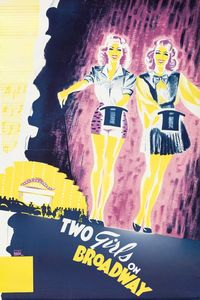
    (On Cable TV, December 2020) If there’s a slightly familiar quality to Two Girls on Broadway, it’s not as much due to it being a loose remake of the Academy award-winning Broadway Melody of 1929 than being very similar to countless other Broadway musicals. At the time, much of the media attention on the film was on Lana Turner – she was fast rising as a sex symbol, and the film showcased her (largely unfulfilled) potential as a musical star. Little surprise, then, if the film is more remarkable for its musical numbers than its overall narrative – as a story of two sisters trying to succeed on Broadway while not meeting the wrong men, it’s slight, adequate and just enough to bring this film to feature-film length. Joan Blondell is featured as Turner’s sister, but much of the emphasis of the film is on big production numbers, even if they don’t quite leave much of an impression once the film wraps up. It’s definitely not one of the most striking musicals of the era – it pales even when compared to its more daring and less technically accomplished inspiration. Still, Two Girls on Broadway is amiable enough and fits squarely in the idea we have of circa-1940 Hollywood musicals riffing off Broadway’s mystique.

  • Make Me a Star (1932)

    Make Me a Star (1932)

    (On Cable TV, September 2020) I am an avowed sucker for movies about movies. I will record nearly everything that has to do with movies about Hollywood, and that goes double for older films showing us older depictions of Tinseltown in its glory days. In other words, I had to see Make Me a Star, a satirical film in which a young man (in an unusual gender shift from the usual young woman) goes to Hollywood with big dreams. Unfortunately for him and unfortunately for us, the lead character is a dim-witted clerk whose ambitions greatly outstrip his talent—and he doesn’t learn much over the course of the film. Inexplicably taken under the wing of a star (Joan Blondell, the best thing about the film), he’s tricked into being unintentionally hilarious by comedy film producers who make him think that he’s starring in a serious drama. It would be a nice story if we actually cared about the main character, but Stuart Erwin has a detestable screen presence playing a dumb character without much to redeem for it. Cloying, naïve and barely tolerable, his protagonist is a very weak anchor for the film and it becomes even worse when they turn his pitiable character into a romantic hero. (A 1947 remake, Merton of the Movies, is sitting on my DVR right now—I’m hoping that it will do justice to the story.) I did, to be fair, like the look at early-1930s western filmmaking, inside the studio and among the superstars of the day through plenty of cameos. There’s also a provocative comparison here in having the lead being a man—it substantially changes the equation regarding gender-specific exploitation. But much of Make Me a Star itself is just grating beyond its strengths.

  • Topper Returns (1941)

    Topper Returns (1941)

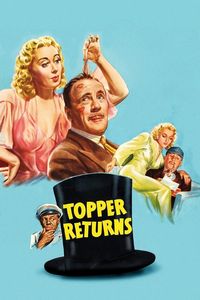
    (On Cable TV, September 2020) As much as I’ve grown allergic to overly laborious origin stories in other circumstances (for instance, in movies about already widely-known characters), there is a definite strangeness in stepping into a series through the third instalments, with many series characteristics already established and in play without much justification. Topper Returns is the third instalment in a series featuring a mild-mannered banker with the power of seeing ghosts, and the complications that ensue when his wife doesn’t understand what’s going on. Clearly playing into its established mythology, it does move at a fairly fast clip—our heroine gets killed (taking it rather well), then finds Topper and recruits him to both solve her own murder and prevent her friend from being murdered as well. The tone of the film is semi-comic—despite the violence inherent in the premise, the characters are upbeat, and the film can’t help but feature a befuddled wife and a bewildered black servant. (I’d like for the servant character to be less stereotyped, but it’s a 1941 film, and the character goes gets a decent amount of screentime.) There’s a pleasant, well-oiled quality to the way the film runs through its paces, exploiting its spooky house setting (always a favourite of mine) and actually going through a surprising amount of plot in less than 90 minutes. The optical special effects are quite good in their own way. Topper Returns is arguably more popular today than its predecessors thanks to accidentally ending up in the public domain, but it’s a reasonably good movie in its own right.

    (Second Viewing, On Cable TV, October 2021) The third instalment of the supernatural comedy Topper series, Topper Returns, abruptly takes a different tack than the previous two. After a pair of romantic comedies fuelled by ghostly intervention, this instalment takes on a murder mystery as a deceased woman (the beautiful Joan Blondell) collaborates with series protagonist Cosmo Topper to find out who killed her. But that’s an overly simplistic description of what goes on in this film, as it blends elements of haunted mansions (with numerous twisty back-passages), crime comedy (with an exasperated police inspector), traditional romance, bickering couples, and even a small star vehicle for noted black comedian Eddie “Rochester” Anderson. Far denser than the previous two films, Topper Returns is also significantly more fun. As someone who loves mysterious old mansions with back passages, the setting has a clear appeal. I still don’t like the series’ inconsistent approach to its ghosts able to appear or materialize at will, but at this point it’s funnier to focus on the vivacious Blondell, helping resolve her own murder with a very striking lack of angst. There’s so much going on that the same plot could have been, with minor revisions, be used to focus on three or four different protagonists—Topper not being the most interesting of them. Still, there’s quite a bit of fun here—Anderson’s portrayal of a black chauffeur will strike some as insufferably racist, but by 1941 standards it’s not that bad, and by having incredulous reactions to the ghostly weirdness around him, he becomes the character through which the audience channels their own reactions. Some special effects still impress. The plotting gets slack toward the end, but the integration of murder mysteries (which were a big B-movie genre at the time) with the series’ ghostly elements works better than expect. Topper Returns is an unexpectedly entertaining film, worth viewing even if you haven’t seen the first two in the series.

  • Will Success Spoil Rock Hunter? (1957)

    Will Success Spoil Rock Hunter? (1957)

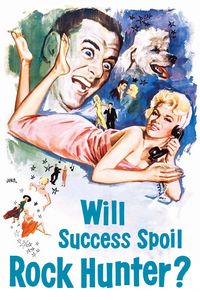
    (On TV, July 2020) We often think of 1950s America as this unthinking haven of conformity, and that is nonsense—people back there were as smart as today, as skeptical as today, and as intent on satirizing the excesses of the day. From the get-go, with a scene in which Tony Randall addresses the audience and introduces the film (after a commercial break), Will Success Spoil Rock Hunter? is meant to be a satire of everything bothering the screenwriters about the then-modern era, and most specifically the burgeoning advertising industry. Midway through the film, it even stops its story for another interjection directly from Randall to the audience, this time lampooning the way audiences were increasingly turning to TV rather than the movies. It also, significantly, takes aim at materialism and corporate success at a time when such values were more likely to be championed, in Hollywood or elsewhere. As a social satire, Will Success Spoil Rock Hunter? is often hilarious—although some of the references can need a handbook of the era to be understandable—I mean, it’s amusing to have a character read Peyton Place in the bathroom, or see Groucho Marx in a long-awaited cameo. Randall is quite good as the lead, although the film is perhaps equally notable for being Jayne Mansfield’s definitive film, and showcasing why she was such a bombshell (even though her appeal may not be as obvious if you’re not into vapidly-portrayed blondes à la Monroe). Seeing an older Joan Blondell in a supporting role is one of those jokes you may need a handbook for. Still, the film remains quite funny—lines like “I’ll be a writer’s subplot!” have a lovely metatextual quality decades before spoof comedies. They help the film feel substantially more modern than it is—even Frank Tashlin’s direction gets into it with imaginary sequences that weren’t the norm at the time. Will Success Spoil Rock Hunter? does suffer a bit from a lack of a clear climax, and a rather flat ending, although some of it does play into the film’s comedy. It’s an utterly fascinating film for those who would like another look at the 1950s—I put it up there with A Face in the Crowd and Sweet Smell of Success (both also from 1957, as is Silk Stockings and its “Stereophonic Sound” rant-number) as an informal cynical trilogy showing that some people in the 1950s knew exactly what the decade was about.

  • The Crowd Roars (1932)

    The Crowd Roars (1932)

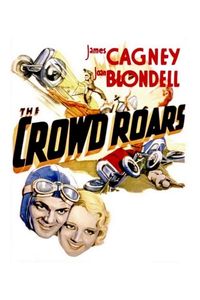
    (On Cable TV, December 2019) There’s a blend of familiarity and strangeness at play in The Crowd Roars that I find quite interesting. On the familiar side, this is a racing film, and it’s directed by Howard Hawks. You get much of what we’ve come to expect from both Hawks (action, tough men and articulate women) and from car racing films. The dramatic arc is intensely melodramatic, but we know where we are and there aren’t many surprises along the way. But there’s an alien quality to The Crowd Roars that makes it interesting as well. As one of the first sound films to look at auto racing, it reflects the rougher, sometimes fatal nature of such events—different cars, different attitudes toward accidents as well. It’s clear that the film comes from a Pre-Code time when the grammar of racing sequences was still being defined—there’s some surprisingly good racing footage here, as well as some jarring rear-projection work that does not do any favours to the actors. James Cagney stars as a borderline-unlikable protagonist, but he doesn’t quite fit the role and isn’t as intense here as other films of the era. Ann Dvorak and Joan Blondell are more interesting as the romantic interests (spurned by the men!)  Hawks’ work here is decent but not overly impressive: he gets the importance of thrilling audiences, but his interest in the film doesn’t seem to extend to the dramatic moments. The Crowd Roar is not an essential film—in many ways, it feels like the kind of material that Warner Brothers churned out by obligation at the time. But it does present an interesting glimpse into racing at the dawn of the 1930s, perhaps the best we have captured on film. Given this, it may be worth a particular look for those interested in cars and their portrayal in Hollywood history.