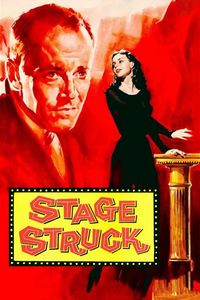
Stage Struck (1958)
(On Cable TV, May 2021) It took me about ten minutes too long to figure out that Stage Struck was a remake of the 1933 Katharine Hepburn vehicle Morning Glory, but that’s the least of the film’s problems. No, the problem with the film is one you rarely expect — an overacting, over-articulating, falsely cheerful, badly cast (or directed) lead actress: Susan Strasberg. I get that the film is the story of an overeager girl from the sticks heading to the big city and finding out that reality doesn’t measure up to her dreams. In that context, it makes perfect sense for the character to be exuberant, annoyingly upbeat and pretentiously mannered… at least at first. Similarly, you don’t need to point out that Hepburn was doing even more overacting back in 1933: that was the acting style at the time, and she made it work for herself. The problem with Strasberg is that she stays at eleven out of ten on the theatricality scale during the entire film, well after reality should have brought her down to earth. What a wasted opportunity, and an inexplicable lack of directorial judgment from Sidney Lumet, who would go on to direct several much-lauded films. It’s all the more regrettable, given how the rest of the film (filmed in colour on location) offers a rather wonderful look at Broadway circa 1958 in its grittiness and vitality. Henry Fonda is on hand as an older producer who, inevitably, falls in love with the half-as-young woman; other notables include Christopher Plummer as a writer (his first film) and Joan Greenwood as an acting rival. Stage Struck itself would be fine if it wasn’t for the way Strasberg uses highly stylized theatrical acting in an otherwise normal film — she stands out in a bad way and actively harms the rest of the film.
