Joanne Woodward

  • Paris Blues (1961)

    (On Cable TV, February 2022) Few filmographies are as rock-solid as Sidney Poitier’s work in the 1960s, and Paris Blues is certainly a great, if lesser-known, entry in the list. Like a few other Hollywood films of the time, it goes overseas to make a point about American racism—this time to Paris, where two expatriate best buddies (played by Poitier and Paul Newman) have fun playing jazz music… until two vacationing American women (Joanne Woodward and Diahann Carroll) lead to a reconsideration of their lifestyle. The richness of the film means that you can appreciate it in many ways. There’s the jazz angle, obviously, with Louis Armstrong even dropping by briefly for a cameo. There’s the romantic aspect of it, with an attractive cast of lead characters against the strong Parisian atmosphere—and some romantic conflict bubbling into wider societal considerations. There’s the matter-of-fact interracial friendship between Newman and Poitier’s characters—still a rarity in American cinema at the time. There’s the strong discussion of American racism, obviously, with two characters arguing about whether it’s best to live a happy life abroad in Paris’ relatively accepting environment, or go back home and become an activist despite the unpleasant consequences. While Caroll looks stunning here, Newman and Poitier competing with each other to see who’s cooler means that the clear winner is the audience. But even if you strip all of those qualities, Paris Blues still remains a story about two young men figuring out what they want out of life and measuring facility against achievements. I didn’t expect much from Paris Blues (and I maintain that its Parisian décor would have been much more effective with colour cinematography), but director Martin Ritt has an underappreciated success here: perhaps not as striking had the story retained the interracial romance angle of the original novel, but still a quietly effective piece of work that acts as a lead-in to the more engaging material that would follow later during that decade. I’m also noting a strong kinship between Paris Blues and the 1950s Italian dolce-vita Hollywood-on-the-Tiber subgenre, which may be enough of another incentive to watch the film. No matter why, it’s worth a look.
  • The Fugitive Kind (1960)

    The Fugitive Kind (1960)

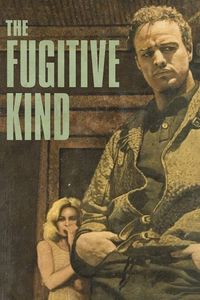
    (On Cable TV, July 2021) It’s not hard to see how The Fugitive Kind was an envelope-pushing film back in 1960 — Tennessee Williams writing, Sydney Lumet directing and Marlon Brando in the lead role, with a plot that has a drifter arousing passions in the small town where he stops for a while. (That plot summary also covers Picnic five years earlier, which was also considered edge-of-the-envelope.)  If you’re familiar with films of the time, it does remain a bit shocking to see Joanne Woodward make her entrance, dishevelled, unmannered and quite possibly inebriated: while unremarkable by today’s standards, female leads simply didn’t do that kind of thing back then. As the film advances, malevolent undercurrents suggest that it’s not going to end well… and it doesn’t. Still, what was effective sixty years ago is not always as fresh now, and it doesn’t take a long time for The Fugitive Kind to show its limits. Brando’s acting almost feels like a parody of itself, and Williams’s writing isn’t among his best. As with many films of its era, its desire to push the edge of permissible subject matters in an environment where the Hays Code was holding back honest drama lands it in a weird demimonde of unsatisfying compromises. It amounts to a film that’s certainly interesting as a representative of its era, but not completely satisfying as a viewing experience these days.

  • The Long, Hot Summer (1958)

    The Long, Hot Summer (1958)

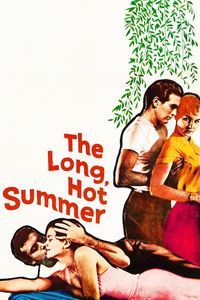
    (On Cable TV, April 2021) Long before becoming a respected Hollywood icon and salad dressing tycoon, Paul Newman was the designated bad boy of the late-1950s-early-1960s and The Long, Hot Summer clearly takes advantage of that persona. A rural melodrama featuring a drifter (Newman), a rural patriarch (Orson Welles!) and his daughter (Joanne Woodward, soon-to-be Newman’s wife), it breaks no new grounds in narrative matters. We can guess how these things go, but the film’s biggest asset is its sense of rural atmosphere, and actors such as Welles and Newman playing off each other. There are links here with Tennessee Williams plays (especially if you follow Newman’s filmography at the time), with later films such as Hud and with a certain kind of rural southern-USA drama that would periodically pop up in Hollywood history later on. For twenty-first century viewers, Welles is a bit in a weird transitional persona here — overweight and no longer young but not yet bearded nor all that old. The melding of three Faulkner stories into one film actually works well into getting to a coherent whole with plenty of interesting side-details. While The Long, Hot Summer does not amount to an essential film (well, except for those Newman and Welles fans), you can see the way it worked back then, and an archetypical kind of southern rural drama.

  • Rachel, Rachel (1968)

    Rachel, Rachel (1968)

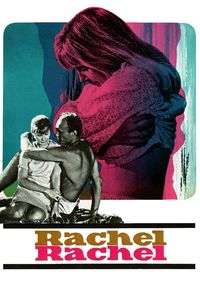
    (On Cable TV, March 2019) Oof: It’s not because films are nominated for an Academy Award that they’re worth a look. Case in point: The grating, annoying, irritating Rachel, Rachel—a story of a small-town mid-1930s spinster rediscovering herself that ends up being more boring than anything else. Sadly directed by Paul Newman, with his wife Joanne Woodward in the lead role and their daughter playing the heroine at a younger age. I’m not necessarily claiming nepotism here—Woodward was hailed for tackling a difficult role, won a Golden Globe and was nominated for an Academy Award. But keep in mind that Rachel, Rachel is a product of the late 1960s, a time more concerned with gleefully pushing the limits left unguarded by the end of the Production Code and audiences thirsting for neorealism. While it worked at the time, it hasn’t necessarily aged well. It’s not a bad film, but it feels slow, long and dull. The herky-jerky flashbacks anticipate more modern non-chronological technique and grammar, but feel like unpleasant experiments to twenty-first century audiences—the added padding on a small story feels more grating than enlightening, with an inexplicable slowness to everything. But Rachel, Rachel remains in the pantheon of Academy Award-nominated movies, so there’s that.