John Boorman

  • Zardoz (1974)

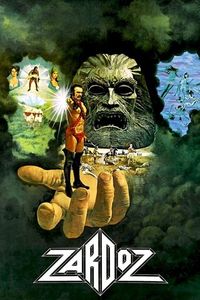
    Zardoz (1974)

    (On DVD, November 2021) For years, Zardoz taunted me from my unseen-DVD shelf. A gift from a definitely mischievous friend, the film’s reputation fascinated and repelled me in equal measure. The early 1970s were not the best years for big-screen Science Fiction: New Hollywood only had a use for SF as a post-apocalyptic backdrop, and if you only had 1970–1976 to pick from, you would quickly understand why mainstream audiences and pop-culture commentators positively hated SF prior to Star Wars: films both naïve and downbeat showing a tiny flash of the genre’s possibilities, seemingly designed either for kids or masochists. Zardoz, seen from one angle, is exactly that. It’s stupid, untrustworthy of its audience, wallowing in brain-dead clichés and stealing everything from other better films. It has Sean Connery in a red leather thong outfit, and it doesn’t take five minutes for the immortal quote “The gun is good. The penis is evil.” to gobsmack any audience. Writer-director-producer John Boorman goes for some truly strange yet bland material here, taking a dull dystopian story and wrapping it up in weird surreal execution. Which ends up being the film’s saving charm, because despite the considerable silliness of its premise, Zardoz is often rescued by its over-the-top ridiculousness or from some genuinely interesting moments of craft. Boorman wasn’t a neophyte even at that early stage of his career, and that often shows in some still-interesting visual effects, oddly compelling scenes, fractured storytelling and audacious bets that don’t quite pay off. The film is bookended by an intriguing opening narration and a rather effective flashforward coda, but what’s in between varies quite a bit. The images are often of the I-can’t-believe-I’m-seeing-this (“Connery, how could you?” only rivals “Charlotte Rampling, how could you?”) and while that doesn’t make Zardoz a good movie, it does lend it an unforgettable quality that does elude many of the better Science Fiction films of that era. Now seen, I’m shifting Zardoz to the seen-DVD shelf… but it’s not done taunting me.
  • Point Blank (1967)

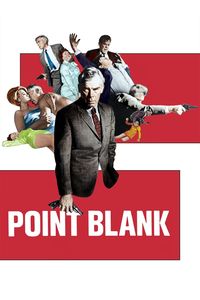
    Point Blank (1967)

    (On Cable TV, June 2020) Anyone studying how 1967 was the year movies changed from Classical to New Hollywood can add Point Blank to their viewing list, because it’s a film that could not have existed a few years earlier, and yet belongs far more to the cinema of the 1970s. A near-perfect starring vehicle for gray-haired Lee Marvin, it’s a solid piece of neo-noir tempered with European avant-garde style. A dark, moody, violent thriller in which a left-for-dead criminal wants his stolen share of money, Point Blank has a nice sense of late-1960s Los Angeles. Director John Boorman benefits immensely from Marvin’s impassible performance and glum face—it’s hard to imagine anyone else being as good in the same role. The modernity of the film still resonates—determined to place scenes unlike traditional cinema, the plot jumps in time and doesn’t always make easy sense. But that’s not necessarily an issue, considering how much fun it is to watch the protagonist fight gangsters in one scene after another. When a film is as stylish as this version of Point Blank, plot understanding takes a backseat to the moment-to-moment thrills.

  • Excalibur (1981)

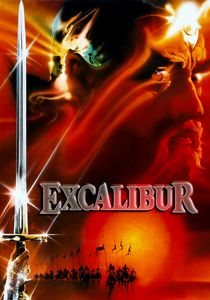
    Excalibur (1981)

    (Google Play Streaming, December 2019) Coming at the intersection of Arthurian legend and the early-1980s fantasy film boom, Excalibur chooses to hold nothing back in presenting the knights of the round table in a decidedly fantastic context. Helmed by John Boorman, the film goes for maximal rule of cool—even limited by the special technology of the time, it’s meant to be spectacular with shiny armoured suits, grander-than-life soliloquies and a strong magical element. The cinematography makes great use of its Irish location, and the local casting means that this is not only one of Liam Neeson’s earliest screen credits, but also an early big-screen showcase for Gabriel Byrne, Ciarán Hinds and Patrick Stewart. Nigel Terry does well as Arthur and so does Nicol Williamson as Merlin, but it’s Helen Mirren who looks simply spectacular as Morgana Le Fay, eclipsing even Cherie Lunghi as Guenevere. The result is more impressive as a collection of nice scenes and images than a coherent plot—although my lack of enthusiasm for the Arthurian myth-making may be showing here. Still, I had a reasonably good time watching Excalibur in its overblown grandeur—it has its own strengths that manage to overcome many of its limitations.

  • Hope and Glory (1987)

    Hope and Glory (1987)

    (On Cable TV, May 2019) There have been many movies about WW2, many movies about the bombing of England and many movies about civilian populations suffering from war. But don’t think there are that many movies like Hope and Glory. Writer-director John Boorman’s biggest conceptual leap here (in semi-autobiographical mode) is to see the home-front devastation from the eyes of a kid—a nine-year-old boy for whom war is just part of life, with bombed-out buildings offering plenty of opportunities for adventure. What jolly good fun it is to play in the rubble, watch dogfights in the sky, encounter parachuting Nazis and have Hitler bomb your school! Yes, the irony is palpable throughout the film, and its message even more potent because it avoids the expected mawkishness of such films. In fact, Hope and Glory is best experienced thoroughly spoiled: Knowing that nothing really bad happens to the protagonist and his family is a key to appreciating this off-the-wall take on the Blitz. It works as a kid’s comedy, it works as a testament to the resilience of the human spirit, it works as an affectionate family portrait. While Sebastian Rice-Edwards gets a lot of screen time as the young boy, Sarah Miles (as the mother) and Ian Bannen (as the grandfather) are quite strong in their roles. There are more essential war movies than Hope and Glory, but there aren’t as many that try to do something true and different with that kind of material. It’s well worth a look.