John Cassavetes

  • A Woman Under the Influence (1974)

    (Criterion Streaming, August 2021) I don’t particularly like A Woman Under the Influence, but I have to recognize that writer-director John Cassavetes has achieved something remarkable with the film, something as of yet not quite duplicated. It’s essentially a slice-of-life narrative of a housewife with a mental illness, but it defies any attempt to make the narrative (or the illness) fit in easy Hollywood conventions. Our protagonist, in a rather brave performance from Gena Rowlands, has a lot of problems, and they’re not the cute Hollywoodized version of a mental illness. It escapes easy categorization, and it’s not neatly resolved or even managed by the end of the film. Her husband, in another bravura performance by Peter Falk, is not the saint to her sinner — he’s ill-tempered, ill-suited to take over the kids when she is sent away, ill-prepared to deal with what’s going on with her. In other words, A Woman Under the Influence avoids most attempts to transform it into something that can be neatly squared away after the credits roll. There’s a painful realism to it, and while that still makes it a remarkable movie nearly fifty years later, it’s also the kind of film that gets practically zero repeat value: it ends on such a note that few will get the impression of a conclusion. Clearly a product of the New Hollywood, it’s practically impossible to imagine something this being backed by a major studio today — sure, I’d see independent films tackling something close to it… and then be ignored by nearly everyone.
  • The Night Holds Terror (1955)

    The Night Holds Terror (1955)

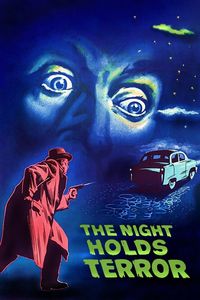
    (On Cable TV, March 2021) To find interesting movies in Hollywood history, it pays off to get away from the classics and take a look at the B-grade material that was also produced at the time. Forced to work without the lavish budget of bigger productions, those second-rate filmmakers had to be inventive and stick closer to reality than the lavish spectacles that headlined theatres. So it is that The Night Holds Terror does a few really interesting things. For one, it tackled a home-invasion premise that seems to belong to later decades rather than the image we hold of the mid-1950s. For another, writer-director-producer Andrew L. Stone uses a lot of practical location shooting as a substitute for studio sets, managing along the way to portray a sense of realism that also feels ahead of its time. Thirdly, it goes into its story with a procedural mindset, using narration and plenty of exposition footage to show us policemen using then-high technology to close the net around the criminals. Speaking of which — the most likable of those hoodlums is played by John Cassavetes, years before striking out on his own as a director. Adapted from a real story to such a degree that the criminals sued the production company (which led to a courtroom hearing where the victim punched one of criminals in the face), The Night Holds Terror does feel a bit more immediate and more contemporary than similar films of the era.

  • The Fury (1978)

    The Fury (1978)

    (In French, On Cable TV, July 2020) As someone whose skepticism came of age at a time when parapsychology still had a semi-scientific veneer of plausibility, it actually gives me great pleasure to be able to watch films such as The Fury and wonder at the dated psi-power nonsense contained therein. It’s not necessarily a condemnation of the material itself—it takes a director with a flair for the crazy, such as Brian de Palma, to give full force to the kind of wackiness that the material requires, and at its best The Fury is a rollercoaster ride of special effects, crazy ideas, unrestrained plotting and over-the-top performances. The plot has to do with a CIA agent (Kirk Douglas!) using a young girl with psychic powers to find his missing son from the clutches as an evil ex-colleague (John Cassavetes), but don’t worry about the plot when the film is one set-piece after another, ending up with exceptionally violent imagery by the end of the film. It’s all handled in typically over-the-top fashion by late-1970s Brian de Palma. It would be a splendid double feature with Firestarter or Scanners for reasons too obvious to explain. Frankly, The Fury is crazy in good ways, and even more enjoyable now that parapsychology has been relegated to a proven heap of nonsense.

  • My Sister’s Keeper (2009)

    My Sister’s Keeper (2009)

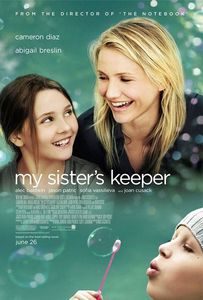
    (On Cable TV, February 2017) I expected much, much worse from My Sister’s Keeper. On paper, it reads as the kind of weepy manipulative Hollywood drama that got satirized out of existence decades ago: a mixture of cancer-afflicted kids, precocious protagonists and ineffectual adults manipulated into melodramatic actions. On-screen, though, it’s not quite as bad … even though its nature as a tearjerker remains intact. Part of it has to do with good actors and small moments where the script doesn’t quite go as expected. I quite liked Alec Baldwin’s lawyer character, for instance, and the ways in which an entire movie’s worth of motivations is suggested for Joan Cusack’s judge character. Professionally directed by Nick Cassavetes (no stranger to weepies) from Jodi Picoult’s eponymous novel (apparently changed to much better effect), My Sister’s Keeper also benefits from a great performance by Abigail Breslin in the lead role, and a borderline-unlikable Cameron Diaz as the mother antagonist. But perhaps less identifiably, the film does have a good moment-to-moment watchability that can often doom less well-executed attempts on similar material. It remains a straight character drama, but one put together with some skill. And that makes all the difference between something that sounds terrible, and something that’s engaging.