John Cena

  • The Suicide Squad (2021)

    The Suicide Squad (2021)

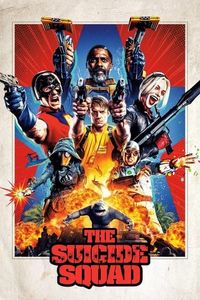
    (On Cable TV, December 2021) Considering that the house brand of both the Suicide Squad as a concept and writer-director James Gunn as a filmmaker is being provocative, it makes no sense to complain that The Suicide Squad is alternately gross, gory, profane and vulgar. That’s all true. But unlike a number of similarly down-and-dirty movies lately, this one is actually funny, entertaining and a sharp improvement over the 2016 David Ayers Suicide Squad. Going into the film completely cold, I was pleasantly surprised by an opening sequence that really messes with audience expectations, then goes on to introduce the real characters. Consciously aiming for the bottom of the barrel of DC universe villains, Gunn does feature more than the usual fare. At the exception of fan favourite Margot Robbie as Harley Quinn, Viola Davis and Joel Kinnaman, the only elements judged salvageable from the previous film, the film focuses on new characters and sends them into a Central America situation somewhat reminiscent of 1980s action movies. But Gunn clearly intends to surprise audiences because nothing (from the opening sequence onward) ever goes to plan. Perhaps the film’s highlight is Harley Quinn’s reaction to being attracted to another bad boy — a perfect relationship that she nonetheless recognizes as being terrible for her. Margot Robbie once again steals the show, but she has a lot of competition — not necessarily from Idris Elba’s rock-solid performance as a professional killer, but John Cena once again grabbing the spotlight. The change of scenery to a fictional Central American capital brings a lot of colour and flavour to the film, and allows a city-smashing climax to feel different from North American metropolises. As usual whenever R-rated Gunn movies are concerned, I have a number of issues with some specific aspects of the execution — the gore, the coarseness, the quasi-nihilism. But The Suicide Squad works well in spite of them, even though I would be wary of recommending the result to anyone but a jaded viewer. I was expecting much worse anyway from a soft reboot of a film few people even liked.
  • F9 aka Fast and Furious 9 (2021)

    (Video on-Demand, September 2019) Regular readers will remember that I’m an undying devotee of the Fast and Furious series of vehicular action movies: Even after ten movies in twenty years, they remain one of the most dependable experiences you can have at the movies, with an ensemble cast of characters enduring death-defying stunts in service of evermore-ludicrous stories. While I have a feeling that the series may have peaked around instalments 5–7, ninth mainline entry F9 is still operating in the same vein, with the same cast and top-line crew at the helm. Ludicrously powerful (and selective) magnets power the film’s last-half action sequences in a fender bender of practical effects and unapologetic CGI. Oh, and two characters go to space aboard a rocket-powered Pontiac Fiero, but that’s almost to be expected considering the style of the series to date. Once again, F9’s plotting brings a new episode’s worth of melodramatic soap-opera-worthy revelations, this time resurrecting another character from the dead and uncovering a long-forgotten brother who proves to be a match for the protagonists. Never mind the late-sequence revelations — the fun here is in believing that Vin Diesel and John Cena can play halfway convincing brothers without the rest of the crew cracking up. Not that the film is that far away from self-commentary, as it dawns upon one character that far too much has happened to them without serious harm that they must be freakishly invincible. One of the keys of the series has to be the cast — not necessarily in terms of fine acting (even with Helen Mirren showing up for a brief and delicious car heist-and-chase sequence with her at the wheel), but in terms of sheer likability. As much as I like Nathalie Emmanuel’s usual curly bob, for instance, she here looks adorable with twin Dutch braids… but best of all, she gets a lead role in an action scene of her own playing off the series’ presumption that every character is a superior driver. Cena is his usual charismatic self — there’s never any doubt that he’s meant to join the family by the end. Meanwhile, Diesel looks a bit off, perhaps as a side effect of making the series too much about him. Fortunately, F9 is the kind of film that just keeps getting better and better. I would have been disappointed at the halfway mark (too much soap opera, not enough action), but the ending sequence redeems it all. It’s amazing that we’re ten films in a series at this point, so I’m inclined to be lenient about the creakiness of the “revelations” at this point. Let’s face it — as long as we’re having fun in the action scenes, this series still has plenty of miles left in it.

  • Bumblebee (2018)

    Bumblebee (2018)

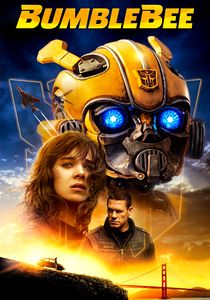
    (Netflix Streaming, September 2019) I have a vivid imagination, but even I wouldn’t have predicted that the sixth entry in the modern Transformers franchise would be a teen-oriented back-to-basics “a girl and her robot” period piece that is a marked step upward for the franchise. Having finally acknowledged the inherent awfulness of the franchise and managed to sedate Michael Bay long enough to put Travis Knight in the director’s chair, the series producers surprisingly shifted gears to a smaller-scale story and Bumblebee is better than its predecessors. I wouldn’t exactly call it a good movie, but it fits together better than the other entries and doesn’t quite insult the audience in the process. Taking place in 1980s northwestern America, Bumblebee details how robots land on Earth and one of them is deactivated long enough for a teenage girl to discover him in car mode and get to work in getting it to work. Much to her surprise, she discovers the robot and you can write the rest of the film yourself as both the eeeevil Decepticons and human military forces take an interest in her yellow robot friend. Liberally borrowing from many 1980s coming-of-age movies, Bumblebee does manage to understand and portray a broader emotional range than the rest of the series, and to create some attachment to the film as more than a series of grandiose blurry impressionistic action sequences. Knight slows down the pace, lengthens the average shot and ends up showing more than random colours and movement for five minutes. It’s not quite satisfying—what with its dropped subplots, inconclusive relationship with the rest of the series, and overly precious moments, but I enjoyed it a bit more than the increasingly punitive series so far. Even the visual design of the robots has undercome a much-needed streamlining, bringing them closer to my own formative G1 ideal of what they should look like. Hailee Steinfeld and John Cena are quite sympathetic in generic roles, but generic is far better than cliché. While I’m more reserved about the result than many other reviewers (I do love Bay-made explosions), the result is encouraging in showing the way the inevitable future instalments should be headed. I’m still not a fan, but I’m open to further developments.

  • Ferdinand (2017)

    Ferdinand (2017)

    (On Cable TV, February 2019) Considering that I’m usually game to watch any kind of animated movie, I took a surprisingly long time to make my way to Ferdinand, a talking-animal comedy about a bull destined to a matador bout. That’s not exactly the most heartwarming premise for a film, but it does work. The key is in making the title character as nonviolent a protagonist as possible, and surrounding him with oddball characters. By the time we have a car chase throughout Spanish highways and city streets, we’re in very familiar, very funny territory. The film may be by-the-numbers in overall plot terms, but what makes it shine are the comic details and supporting players. Who cares if the formula is followed as long as we get plenty of chuckles along the way? (I’m still giggling over the arrogant horses calling Ferdinand a “silly moo-moo”.) John Cena is featured as the title bull, but Kate McKinnon predictably steals the show through her hilarious goat character. It may not be a great, classic or groundbreaking movie, but Ferdinand is up to what we’ve come to expect from contemporary animated movies.

  • Blockers (2018)

    Blockers (2018)

    (On Cable TV, December 2018) In the pantheon of comedy characters, the icon of a parent trying to stop their daughters from getting in trouble (for euphemistic values of “trouble”) ranks highly enough that Blockers not only based its entire premise on it, but multiplies the parent/daughter pairing by three for good measure. The film’s success starts with a decent script, but is fully realized by great casting with none other than Ike Barinholtz, Leslie Mann and the ever-dependable John Cena as the parents, as well as newcomers Kathryn Newton, Geraldine Viswanathan and Gideon Adlon are the daughters. (Viswanathan, in particular, makes an impression.) The plot itself goes back to the good old prom day premise, as the daughters plan on losing their virginities and the parents vow not to let that happen. The rest is one comic episode after another, punctuated by such things as a spectacular car crash, wild parties, and bonding between the parents chasing their daughters. It all ends on a surprisingly mature note (especially by notoriously juvenile sex comedy standards), reflecting contemporary morality rather than questionable old-fashioned standards. The fast pace helps, as does a script that seeks to go beyond the easiest answers. Expectations may count for much here, as the film is significantly better than expected. Still, a good movie is a good movie, and Blockers does have the advantage of feeling like a 2018 movie, and not a 1980s one dressed-up with cell phones and new car models.

  • Tour de Pharmacy (2017)

    Tour de Pharmacy (2017)

    (On Cable TV, July 2017) After the relatively successful 7 Days in Hell, HBO is back with Tour de Pharmacy, another 45-minute comedy special tackling a pseudo-historical sports event—in this case, the 1982 Tour de France, in which so many athletes were disqualified for doping that only five participants remained … and special participants they were. A mixture of talking heads reflecting upon the event and low-budget mockumentary footage, Tour de Pharmacy is in line with the inspired lunacy of 7 Days in Hell: the humour is often absurd, taking off in tangents whenever it feels like it. A bunch of good comedians help sell the results, from Jeff Goldblum to John Cena to Andy Samberg (who also produced and whose signature on the result is obvious) to Will Forte to Orlando Bloom to Maya Rudolph and many, many others. As you’d expect from a modern R-rated comedy, there is a lot of full-frontal male nudity. More daringly, the film does have a string of gags revolving around Lance Armstrong as an “anonymous” source who ends up blatantly revealed early on. It all works relatively well, but largely because the film doesn’t overstay its welcome—at barely 41 minutes, it delivers the jokes and concludes without too much slack. For HBO subscribers, it’s a small tasty summer treat.

  • Trainwreck (2015)

    Trainwreck (2015)

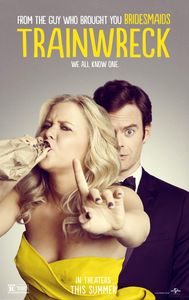
    (Video on Demand, November 2015) Much has been said about how Trainwreck is director Judd Apatow’s first film for which he did not write the screenplay; the prevailing hope being that writer/star Amy Schumer’s script would avoid a number of Apatow’s most problematic tics, in particular his tendency to meander and deliver bloated films with largely-unnecessary third acts.  Now that the film is here, though, critics have a good proof that all scripts are filtered through their director’s quirks, and so Trainwreck doesn’t exactly improve a whole lot on the indulgent ramblings, tangential subplots, improvised dialogues and low stakes so characteristics of other Apatow films.  Do note that his strengths also carry through: it’s a convincingly naturalistic exploration of modern relationships, with some good set-pieces, persona-stretching performances, frank discussions and down-to-earth situations.  Trainwreck should appeal, as labeled, to fans of Apatow’s previous films or Schumer’s increasingly familiar comic persona.  Plot-wise, there isn’t much to see here: It’s a fairly standard romantic comedy formula, used as a foundation on which to play character-driven comic moments.  As the philandering, weed-using, underachieving lead, Schumer navigates a tricky line as a somewhat unlikable protagonist who gets to grow a bit during the course of the film.  Far more likable are some personalities in bit-parts: John Cena is unexpectedly hilarious in a small but merciless role, while Lebron James (of all people) gets more than his share of laughs playing himself.  Still, much of the film is pretty much everything you’ve come to expect from the Apatow laugh factory: Those who aren’t fans (or worse; those who aren’t fans and are not in sports), may not find themselves as entertained by Trainwreck as those who are.

  • The Marine (2006)

    The Marine (2006)

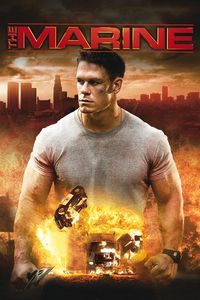
    (In theaters, October 2006) For once, the trailers weren’t lying: If you thought that dumb action movies starring bodybuilders went out of vogue with the end of the eighties, take heart in this renaissance. The Marine is exactly the type of movie where stuff blows up real good, allowing the hero to escape with only nanoseconds to spare. The plot is as simplistic as it can be (robbers kidnap hero’s wife; chase ensues) and the action never attains a superior level of interest, but the film proves to be relatively enjoyable on its own terms. The car chase is particularly fun, and the dozens of explosions never get old. What helps is the film’s self-awareness: It’s stuffed with small inconsequential scenes that almost act as self-parody, from a car-shop discussion on the inappropriateness of minivans to the villain flirting with the heroine in the middle of a chase. Small nonsense touches such as an Iraqi “Al Quaeda compound” with tanks and the South Carolina Highway patrol force using a high-performance sports car as a cruiser (!) add to the fun. Two of the film’s best gags come from a mirror glance and a small musical cue, both meant as references to classic films. Robert Patrick chews scenery like he’s enjoying the raw taste of it, while John Cena doesn’t have to do much but look stoic. Still, what keeps The Marine from being considered a classic guilty pleasure is that despite the potential of its elements, it keeps holding back on its own insanity. Worse: it’s never entirely tonally consistent, goofing up by (for instance) making a bad guy somewhat sympathetic before killing him thirty seconds later. Oops. Action fans craving some old-school payback action will find a lot to like here, but I suspect that the film will have no cross-over appeal for anyone else.