John Cromwell

  • Algiers (1938)

    (On TV, November 2021) Having seen French classic Pepe le Moko a few weeks ago, I was unaccountably happy to see its Hollywood remake, Algiers, show up on the TV schedule, even if it was the battered public domain version complete with low-contrast audio, washed-out video and frequent scratches. The remake sticks so closely to the original that it’s not as if I had to pay attention to follow along: Almost a scene-for-scene remake with a few accommodations for language and American censors (the biggest one being at the end of the film, although it doesn’t affect the result all that much), it very much feels like the same film. Considering how similar it is, it’s tempting to directly compare each actor in their roles:  Charles Boyer is no Jean Gabin, but the outsider’s spin he puts on Pepe Le Moko’s character was striking enough to inspire Looney Tunes lothario Pepe Le Pew. Hedy Lamarr, in her Hollywood movie debut, is a clear upgrade over the original actress in sheer sex-appeal, and matches far better with Sigrid Gurie as her romantic rival than in the original. (In Pepe le Moko, the two women are so different that it’s a dull-blonde-versus-exotic brunette scenario, whereas the American remake has them looking very similar, significantly changing the meaning of the triangle to its thematic essence.)  Then there’s Joseph Calleia, who does surprisingly well as the slimy inspector Slimane, something I would not have expected given the very specific appeal of the actor playing the character in the original film. But then again — legend has it that Algiers’ director John Cromwell showed scenes of the original film to the remake’s actors and instructed them to hit the same marks. Amazingly enough, and cinematographer James Wong Howe gets all the credit for it, the film was entirely shot in Hollywood, with a few inserts very cleverly used to give some sense of place to the studio production. The result, though, is distinctive enough in the details. Made for mass appeal rather than poetic realism, Algiers is almost as good as Pepe le Moko, but focused more on straightforward entertainment than cinematic art. The differences are slight, but they’re fascinating to study in their cumulative impact. If forced to choose one for a second viewing, I’d probably go for Algiers… but only for Lamarr and Gurie.
  • Caged (1950)

    (On Cable TV, October 2021) Women-in-prison exploitation films are nothing new, especially when they’re toned down just a little bit to become social dramas: I’ve seen examples dating back to the 1930s. Caged is nothing new when compared to later examples of the form, but the harshness of its treatment combined with its film-noir production era does lend it a curious kind of respectability. (People at the time agreed—the film was nominated for three Oscars.)  Much of the film is a story of corruption—terrible prison conditions, of course, but also the corruption of its lead character (a rather good performance by Eleanor Parker) as she goes from naïve young woman to hardened criminal during her time inside. The film spares no plot devices—whether it’s prison-born babies, killed kittens, inmate murder or desperation suicide—to keep viewers incensed and involved. It’s grim and effective all the way to the final merciless line of the film. It’s tautly made at barely 96 minutes, and director John Cromwell keeps things grim and simple. There’s exploitation to Caged, of course, but it’s cleverly crafted and disguised as a socially conscious description of how the prison process itself dehumanizes its victims.

  • The Enchanted Cottage (1945)

    The Enchanted Cottage (1945)

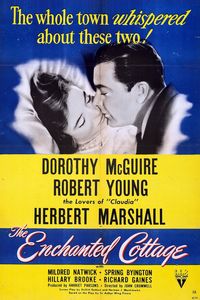
    (On Cable TV, April 2021) If you want a comfort movie, The Enchanted Cottage has to be right up there with the greats. A fantastical romantic drama, it features two drab, wounded newlyweds who arrive at, well, an enchanted cottage that helps both see each other as their idealized selves. Notwithstanding the troubling issues of equating physical beauty with personal values, director John Cromwell’s film is a comforting fantasy in which everything is slated to go right for its well-deserving protagonists. There isn’t much to the story (one suspects that a modern film would cut to the chase, but would anything be left for a feature-length film?), but that doesn’t matter — The Enchanted Cottage is a film made to be re-watched more than watched, secure in the knowledge that everything will be all right. It would have been fun to delve more deeply into the cottage’s history and accompanying mythology, but that’s clearly a wish from someone who’s more comfortable with fantasy tropes than romantic ones — others will argue that The Enchanted Cottage is exactly what it means to be, and that it’s catnip for movie-watching couples. That it has endured for decades as a well-regarded romance says it all — timeless stuff even in comfort.