John Erick Dowdle

  • The Poughkeepsie Tapes (2007)

    The Poughkeepsie Tapes (2007)

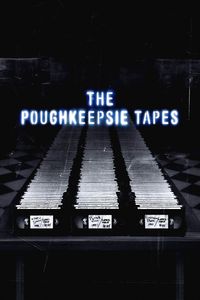
    (On Cable TV, June 2021) If there’s a movie subgenre that I specifically hate, it’s those grainy found-footage horror films featuring an omnipotent serial killer. (It’s a surprisingly robust subgenre, as any idiot filmmaker with a camera, a knife and red syrup can try it.) I find those films pointless and repulsive on several levels. As a result, you can imagine that I was really not looking forward to The Poughkeepsie Tapes, a rather prominent title in modern horror. Part of the film’s infamy is that it took a surprisingly long time for the film to be available for public viewing. An early film from writer/director John Erick Dowdle (who ended up with a short but interesting horror filmography), it was briefly screened at a festival in 2007, was scheduled for theatrical release in 2008 but ended up yanked at the last moment, was briefly made available as video-on-demand in 2014 but had to wait until 2017 for release on home video. The ten-year window of unavailability is the kind of thing that really fuels cult interest in a film widely described as extreme horror, so it was inevitable that I’d steel myself for the results and have a peek. After seeing the film, I have good and bad news to report, although the mixed reaction is a good review in itself. At its best (which is to say its first and last 15 minutes or so), The Poughkeepsie Tapes is a surprisingly unnerving mockumentary detailing the actions of a supremely competent serial killer who left behind hundreds of tapes detailing his violent torture and murders without revealing his identity. The way Dowdle grounds his horror in reality is clever enough, with talking heads discussing serial killers, and gradually revealing the horror of the film’s specific villain. The shot in which the very long lineup of tapes is revealed is really good… but rather wasted in-context. The ending is as expected (with the killer still running free, albeit after a particularly audacious frame-up), but the film’s meta-narrative in referring to itself as an instrument for the killer is not bad. (Hilariously, one of the talking heads predicts that the killer will see the film repeatedly once it shows up in theatres and that the police will be paying attention — for a film that ended up with only a handful of theatrical showings!)  What’s in between those strong introductions and conclusions is not quite as good, with the credibility of the mockumentary being harmed by sensationalist “found footage” obviously manipulated, and talking heads that speak of the killer in dramatic, even admiring terms stopping just short of “…and he sounds really handsome!”  (There’s a good bit where the FBI profiler reads from contradictory profiles of the killer, the final one being “…he may be an FBI profiler.”) This misogynistic semi-glorification of the psychopath is what bothers me about the subgenre and specifically about this film (why should we be gawking at the near-omniscient cleverness of a serial killer?), although it has just enough substance to otherwise keep me engaged: This aside, Dowdle’s imperfect control over his material in the film’s middle section is vexing, considering the better start and ending. The basic problems with the subgenre are muted but not eliminated: it’s still a film that takes far too much delight in presenting violence in lavish voyeuristic detail, proposes a preposterously genius-level villain and features far too many sequences of actresses sobbing and screaming. Still, the fact that I haven’t dismissed The Poughkeepsie Tapes out of hand is a strong indicator that it’s one of the best examples of its kind, as damnable as it may be. I’m not a fan, but there’s an audience for this and you can see how many of the film’s elements could be recycled into something superior.

  • As Above So Below (2014)

    As Above So Below (2014)

    (In French, On TV, August 2019) I’m usually able to give mixed reviews even to terrible movies — If the premise doesn’t work, maybe I’ll praise a few good moments, or stop to talk about the performances, or discuss elements of the plot that were promising. But with As Above So Below, I fear we’ve reached a perfect trifecta of failure. The premise is dull, the cinematography is terrible, the characters are unlikable and the rest of the film is unremarkable except when it’s trying its best to exasperate its audience. Somehow, we’re meant to be interested in an expedition that goes deep in the Paris catacombs to find a magical device of some sort. Except that they keep going deeper and deeper into hell (or whatever), encountering mysterious things and being killed along the way. This already-uninteresting premise is made worse by its execution as a found-footage film (despite some of the footage being quite obviously inaccessible) with the camera constantly jerking around. But writer-director John Erick Dowdle then makes things even worse, because even the characters are terrible people upon whom the worse fates are actively wished for. The protagonist spouts some incomprehensible mystical jargon in between self-flattering moments that only made us dislike her more. (Tellingly, she describes herself seriously as a PhD “symbologist,” something not found outside Dan Brown novels.)  I rarely complain about horror movies in which the main characters survive, but I’ll make an exception in this case: I was really disappointed when three of them made it out alive of the catacombs in what may be the film’s only halfway-effective visual. The scares are dull, the claustrophobia not nearly as effective as The Descent, and whatever weirdness the film throws on-screen quickly makes the film jump into “anything can happen, whatever I don’t care” territory. Sometimes, you have to take some time away from a genre to appreciate its most average entries, but as it turns out I don’t miss found-footage movies in the slightest and the past five years haven’t done As Above So Below any favours.

  • No Escape (2015)

    No Escape (2015)

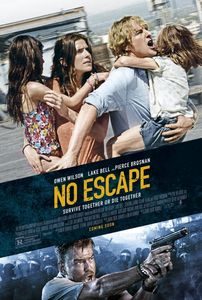
    (Netflix Streaming, April 2016) There’s not really any way to say this nicely, so let’s get it out of the way first: No Escape may not necessarily be a xenophobic film by xenophobic people, but wow does it play the xenophobia card heavily. What is problematic here is not a film in which an innocent American family finds itself stuck in a popular uprising hours after arriving in an anonymous Southeast Asian country. It’s a film in which the family seems to be facing hordes of anonymous foreigners that are specifically targeting them for violent rape and death. Even worse: Help usually comes from other foreigners, or natives that are in service to foreigners in a film. It’s hard to avoid a bit of unease at the way the film makes its points—especially in recognizing that some sequences work well exactly because of the way the film uses faceless hordes of bloodthirsty opponents. Amusingly enough, part of it probably isn’t due to intentional racism as much as a genre tool mismatch. Writer/Director John Erick Dowdle has a few well-received horror films to his credit, so it’s worth noting that some of No Escape’s best moments (an escape from a hotel under siege, soon followed by an escape from a bombed-out office) are straight out of zombie horror filmmaking. The equivalence of foreigners to zombies is disturbing, but that it works at a basic level may be most disturbing of all. Elsewhere in the movie, Owen Wilson and Lake Bell’s performances are sympathetic enough to paper over thinly written character and gain them some sympathy as parents in a horrifying situation. (The kids are also very good and believable as kids.) Meanwhile, Pierce Brosnan shows up in a role that should be more substantial but somehow isn’t. No Escape does show a basic ability at presenting thrills and chills, but it would be so much better had it taken more care with its depiction of foreign characters. Then, at least, we’d stop feeling guilty for whatever qualities the film has.

  • Devil (2010)

    Devil (2010)

    (On DVD, January 2011) I missed this film in theatres due to a combination of unfortunate timing and so-so reviews, but the film is significantly better than I expected.  A blend between high-concept thriller and supernatural horror (ie; Five people are trapped in an elevator… but one of them is Satan), Devil is a snappy 81-minutes B-movie that’s effective and up-front about its own intentions.  Devil keeps up its energy by hopping back and forth between the trapped elevator, frantic investigators and a grim catholic legend.  It moves fast enough not to let things go stale, and takes care to establish its supernatural elements early so that we don’t get misled into thinking that this is a pure thriller. While the catholic mythology is significant and at times slightly overbearing, it doesn’t take a theology degree to appreciate the film, especially given how much of the framework is made-up for the film. The ending isn’t as strong as it could be and the moral lesson of the film smacks of other pat M. Night Shyamalan resolutions, but John Erick Dowdle’s efficient direction confirms that his work on Quarantine wasn’t a fluke and the cinematography keeps things interesting even as five characters are stuck in a box.  For a film with a significant body-count and a pick-off-the-characters structure, Devil remains intriguingly restrained in the presentation of its deaths: We will often see the events leading to the death and their aftermath, but not the actual gruesome moment; I wish more horror movies were as coy.  While this may not be anything more than a chills-and-thrills thriller, it’s a well-made, reasonably entertaining low-budget film.  That’s already more than we have been able to say about most Shyamalan projects in a long while.