John Goodman

  • Marilyn Hotchkiss’ Ballroom Dancing & Charm School (2005)

    Marilyn Hotchkiss’ Ballroom Dancing & Charm School (2005)

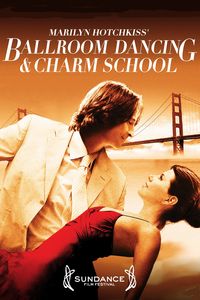
    (On Cable TV, June 2021) I’ve been paying close attention to movies for a quarter-century by now, and yet I still get surprised at some of the films I’ve missed along the way. A look at the cast of Marilyn Hotchkiss’ Ballroom Dancing & Charm School will have anyone wondering why it wasn’t a bigger film. Featuring not only Robert Carlyle close to his career peak, but actors such as John Goodman, Sean Astin, Mary Steenburgen and Marisa Tomei (plus a few other surprises in smaller roles), it’s a bit of a time capsule of interesting mid-2000s actors. I have a specific fondness for Steenburgen and Tomei, so my surprise at the film is even less explicable. On the other hand, it just takes a viewing of the film to understand why it didn’t catch fire at the box office nor stayed in mind as a success. A mash-up of three timelines, it’s a film about 1) a man finding love on the dance floor as he tries to execute the dying wish of 2) a man dying of a car crash, who tells us about 3) his experiences as a young boy learning to dance. Unexplainably filmed in dreary almost-monochrome black-and-blue, it’s an amazingly ugly film to watch for no reason at all — and that, more than the age of the actors, may date the result as being from the overprocessed mid-2000s. While the film is meant to be a meditation on life and death, the result is often far too ridiculously overdone to be effective. It also calls to mind the more successful Strictly Ballroom, which is to no one’s advantage. When Hotchkiss works, it does so in bits and pieces: The montage in which our protagonist learns dance is a lot of fun, but it’s hard to mess up something to the tune of Cherry Poppin’ Daddies’ “Dr. Bones.”  Steenburgen and Tomei are as lovely as ever, but the heavy hand of the writer-director Randall Miller barely lets the characters breathe as one ludicrous coincidence after another is trotted out until the protagonist can achieve his quest. If I correctly understand the film’s production, part of the dislocation between the film’s three narrative strands can be explained by how the historical segments are from an earlier 1990 short film and were not shot specifically for the feature film. (That theory does not, however, explain the overprocessed look of the rest of the film, or the drawn-out nature of the middle segment that could have been handled in five minutes.)  In the end, Marilyn Hotchkiss’ Ballroom Dancing & Charm School leaves us with an ambitious but half-successful result — certainly likable, but constantly pulling audiences back through some weird narrative choices and disconcerting stylistic features. See it for the dancing or for your favourite actors, but keep your expectations in check.

  • Once Upon a Time in Venice (2017)

    Once Upon a Time in Venice (2017)

    (In French, On TV, June 2020) It pains me to be critical of Once Upon a Time in Venice—I still believe that Bruce Willis has at least one more great performance left in him, and he seems like a reasonable match for a crime comedy set against the eccentric characters of Venice, Los Angeles, during which our protagonist gets embroiled in escalating criminal enterprises as he seeks to get his dog back. There’s some promise here, in-between the sunny scenery (even when the film sticks to the lower-class of the neighbourhood) and the casting of both John Goodman and Jason Momoa. But there’s something about Once Upon a Time in Venice that feels off, a series of small mistakes and awkwardness that accumulate and keep making it worse. Willis looks significantly older than usual here, but he still can’t be bothered to do more than sleepwalk through his role like too many of his twenty-first century performances. Then there is the tone of the film, which reaches too self-consciously for wacky elements that fall flat because we’ve seen them far too many times in similar films (and maybe novels as well—if I was in a better mood, I would compare Once Upon a Time in Venice to Hiaasen or Westlake comic novels where dognapping is a common plot element, but this film doesn’t deserve to be mentioned in the same breath as those novels). The very small stakes don’t help either, and the result just feels like a combination of lazy and dull that doesn’t even manage a convincing sense of place. Even with low expectations, the film doesn’t quite satisfy—and we’re left waiting for Willis’ return to form.

  • Always (1989)

    Always (1989)

    (In French, On Cable TV, March 2020) In any examination of Steven Spielberg’s filmography, Always usually gets short thrift. There’s a two-hour-long Spielberg documentary out there that barely spends a few seconds on it, and it seldom pops up in any casual discussion of his work. There’s a good reason for that: standing awkwardly at the intersection between action movie, supernatural fantasy and romantic drama, Always is not ready for easy packaging. It’s also, perhaps understandably, a bit scattered in-between paying homage to its 1940s inspiration, delivering 1980s action sequences and trying to find a satisfying dramatic arc in a bone-simple story. Based on WW2 fighter pilot drama A Guy Named Joe (which shares much of the same awkwardness), Always updates the setting to modern-day firefighting bomber flyers, and kills off its lead character so that he becomes a ghost able to assist another pilot who grows closer to his ex-fiancée. There’s not a whole lot for the film to do beyond the grieving dramatic arc, and the second half of Always peters out into a far less interesting path to a predetermined conclusion. From a relatively strong start, the film progressively loses steam and doesn’t keep its most spectacular moments for the end. Still, there’s quite a bit to like in seeing how a veteran director like Spielberg tackles even substandard material. From the very first shot, we’re clearly in the hands of someone who likes to play with film narrative, and carefully composing his images to choose what the camera will or won’t show. Richard Dreyfuss is not bad in the lead role despite his typical 1980s arrogance, and Holly Hunter also does well as the female romantic lead. (Still, it’s John Goodman who shines in a comic supporting role.) Audrey Hepburn is an angelic vision in her last film role—she simply looks amazing at sixty. There’s a pair of good action flying sequences in the first half of the film, and the atmosphere of a firefighting camp is so vividly rendered that it’s a shame we couldn’t spend more time there. Still, Always makes a strong case for being Spielberg’s most ordinary, least distinctive film. It doesn’t have the glorious misfires of 1941, it’s not a kid’s film like The BFG, it’s not animated like The Adventures of Tintin—it’s just there, in all of its shortcomings, muddled execution and decreasing interest.

  • Captive State (2019)

    Captive State (2019)

    (On Cable TV, February 2020) Despite the slew of underwhelming movies about life under alien occupation, I continue to think that there’s something really powerful about that promise—at least if it’s used to comment on social issues, or reflect the contemporary feeling of life under (human) 1% oligarchs. Unfortunately, you’re not going to find that kind of material in Captive State, which struggles to become interesting even as it studies various characters as they react to life under a repressive alien regime. While the story does score a few points by focusing on the human enablers that prop up the alien regime and aping classic Resistance movies, much of Captive State struggles to gather any kind of interest.  You can see the ending (even the twist of the ending) coming far in advance and there really isn’t much more to the conclusion to make it stand out. The film can rely on a few veteran actors for quality, John Goodman and Vera Farmiga being the standouts—even though Farmiga feels underutilized. Captive State is a narrative and thematic dud as well: it alludes to class issues without engaging with them, and its low budget means that there’s very little visual kick to the story. In fact, some of it comes across as silly: As the characters suit up as if for a space flight only to take an elevator down, it’s easy to think that the film has overplayed the elements to its disposal. When Captive State showed up on Cable TV, I was convinced that it was a direct-to-digital production (and even more convinced of it after watching the film), but it turns out that it did have a wide theatrical release… which miserably bombed. The box-office failure is completely understandable while watching the final result. Writer-director Rupert Wyatt has a few good ideas up his sleeve, but his execution is messy, blurry, cold and boring. Worse yet: it doesn’t know what to do with what it has.

  • Sea of Love (1989)

    Sea of Love (1989)

    (On Cable TV, January 2020) Prime-era Al Pacino is always a treat, and seeing him at work in a neo-noir thriller like Sea of Love is even better. It was a significant film in his career: the first after a four-year hiatus following a significant box-office bomb, it also set the stage for the grander-than-life hoo-ha Pacino streak that was further developed in his next few movies, lasted for the next ten-fifteen years and is still what we think about when we think about Pacino. As far as narrative goes, Sea of Love is simple, nearly archetypical stuff, what with Pacino playing a cop tracking down a serial killer preying on men posting Lonely Hearts classified ads, and then falling for the primary suspect. Violence and lust, with a bit of an unexpected ending to shake things up. Pacino’s quite good here—not quite as intense as later movies, and slightly forlorn around the edges by looking for love in all the wrong places. Ellen Barkin is surprisingly attractive here—and even looks like Helen Hunt at times. John Goodman is not bad in a supporting role, and there are a few more known names in the roster. While I’ll maintain that the 1990s were a golden age of sorts for mid-scale thrillers, you can see Sea of Love pointing the way, and bridging the gap between the 1980s neo-noir movement (plus the reactionary “killer women” streak of the late 1980s) and the later surge of suspense films. Sea of Love is not the best at anything, but it’s certainly watchable without effort, and as I said—Pacino plus neo-noir is a great mixture.

  • The Flintstones (1994)

    The Flintstones (1994)

    (Second Viewing, In French, On TV, January 2020) I remember seeing The Flintstones in theatres upon release… in its original English version. The distinction is important because the French-Canadian dub of The Flintstones’ TV series achieved near-legendary status due to its refusal to adopt even the semblance of a mid-Atlantic French accent—it’s pure Québec joual, meaning that generations of French-Canadian kids felt that the series somehow came from not too far away. (Twenty years later, The Simpsons did the same trick.) I was reminded of that distinction all over again while stumbling over a French-Canadian broadcast of The Flintstones movie—I generally prefer to watch films in their original language, but this was almost a welcome exception, as the characters speak with a pronounced Montréal-area accent. Sound aside, there is something magnificent about The Flintstones’s late-analogue-era dedication to recreating the funhouse visual representation of Bedrock. Nearly every single frame of the film is strongly art-directed with custom sets, costumes and gadgets. There is some clunky CGI used here for some of the supporting animal characters (including a surprisingly fluffy big cat), but much of The Flintstones heroically does its best with painted foam and practical effects. The commitment to the visual humour of the original series is admirable, and it almost compensates for a fairly dull family-sitcom story and the outdated social conventions taken straight from the early-1960s TV show. The portrait of the nuclear family that was straight parody in 1960 felt creaky in 1994 and now looks increasingly dumb… but that’s what you get. At least, from an acting talent, John Goodman is picture-perfect as Fred Flintstone. The rest of the casting is… debatable. Halle Berry (as “Sharon Stone”) is a delight to watch but she seems to belong in a different, racier movie. Elizabeth Taylor seems just as misplaced as a prototypical mother-in-law, although she’s good for a few laughs. Elizabeth Perkins is fine as Wilma, Rick Moranis is borderline acceptable as Barney but Rosie O’Donnell continues to mystify new generations of movie reviewers when miscast as Betty. The Flintstones is nowhere near being a good movie, but I can practically guarantee that a twenty-first-century watch (especially for new viewers who have no idea about the original TV show) will be a can’t-stop-looking experience.

  • Atomic Blonde (2017)

    Atomic Blonde (2017)

    (On Cable TV, April 2018) We’re at the tail end of eighties nostalgia now, but I won’t complain if it brings us as finely crafted action movies as Atomic Blonde. Set against the inevitable fall of the Berlin Wall in 1989, this is a deliciously retro piece of work that nonetheless embodies 2010s attitude and filmmaking prowess, with Charlize Theron once again burnishing solid action credentials as an English spy trying to stabilize a dangerous situation where no one can be trusted. She is intensely credible as a capable heroine, holding up against waves of assailants: Atomic Blonde’s centrepiece sequence is an impossibly long sequence in which she fights her way out of a building against countless assailants, a virtuoso demonstration of what’s now possible with personal trainers, audacious directors, seamless CGI and clever techniques. This sequence is made even better by how it leaves visible marks and bruises on the heroine, dramatically reinforcing the realism of the sequence even in a generally fantastic film. (David Leitch directs, solidifying his resume after John Wick.) Other actors also impress, from an increasingly credible James McAvoy as an action star, to Sofia Boutella playing a very unusual “soft” role going against her established screen persona. (We’re really sorry to see her go.)  John Goodman and Toby Jones help complete the triple-crossing framing device that fully plays out Cold War mythology tropes. A terrific new wave soundtrack helps complete the package, adding much to the film for those who even dimly remember the late eighties. Aside from its intrinsic qualities, Atomic Blonde is also a further salvo in how the eighties are being digested into mythology, ready to be re-used as second-generation pop-culture elements. Even if you don’t care about that, Atomic Blonde is a solid action movie fit to make any cinephile giggle with joy at how well it works.

  • Arachnophobia (1990)

    Arachnophobia (1990)

    (On TV, May 2017) Twenty-seven years later, I still remember the ads for Arachnophobia and especially it’s “thrill-omedy” neologism, coined at a time when hybridizing horror and comedy was still a daring concept. We’re far more familiar with the form nowadays, and that does play a part in appreciating the movie today: While some of the film’s methods seem a bit obvious now, the general concept is more easily accepted and the substance may seem more accessible now than in 1990. Arachnophobia, from its title, makes no pretension about what it means to be: a scare-ride for people who are even slightly disturbed by spiders. As the volunteer (and designated) spider-catcher in my household, I’m not really the prime audience for the movie … but I can recognize that it makes a decent effort to be entertaining. While the first half-hour is too long, the rest of Arachnophobia works well as a B-grade comic thriller. Jeff Daniels is suitably sympathetic as a doctor who gets far more trouble than he expected in moving his family from the city to the countryside, while John Goodman is remarkable as a slightly disturbing and incompetent exterminator. Arachnophobia is not a great movie, but it doesn’t have to be. See it with Eight-Legged Freaks for a good spider-movie double feature.

  • 10 Cloverfield Lane aka Valencia (2016)

    10 Cloverfield Lane aka Valencia (2016)

    (Netflix Streaming, November 2016) Much has been written about how 10 Cloverfield Lane started life as a small bunker thriller named Valencia (in fact, hilariously enough, on the film’s first day of availability on Netflix Canada, the only way to find it was to search for “Valencia”), only to be radically altered by the addition of a special-effects-heavy ending to tie it to the so-called “Cloverfield” mythos. That certainly explains the weird change of pace toward the end and the feeling that the result doesn’t entirely belong together. Still, there’s a lot to like in the Valencia part of 10 Cloverfield Lane, as a small-scale thriller located in a confined space, with three characters that are only too willing to inflict harm on each other. Mary Elizabeth Winstead is fine as a young woman on the run who wakes up from a car accident to find herself stuck in a bunker, but John Goodman is impressive as the bunker’s owner, hovering at the edge of sanity with a dangerous streak of aggression. Director Dan Tratchenberg knows how to milk suspense out of a confined environment, and clearly establishes the setting before using it to good effect. (I’ll be honest: That bunker is so nice that I wouldn’t mind spending a few days in there.) The suspense is handled well, and the film plays nicely with unanswered questions for those who don’t know where it’s going. Still, the ending does stick out quite a bit, and I really don’t care if or how or why this film relates to 2009’s Cloverfield. “Anthology series” seems promising, but it would work better if they didn’t play games with the audience. Frankly, I wouldn’t have minded just getting Valencia.

  • The Gambler (2014)

    The Gambler (2014)

    (Video on Demand, June 2015)  There’s a fundamental miscalculation in casting blue-collar persona Mark Wahlberg as an academic, let alone a novelist teaching English Literature.  Fortunately, The Gambler is about, well, a gambler: someone so addicted to the thrill of gambling that he has embarked on a one-way trip to self-destruction.  That’s the part of the role that Wahlberg seems to be interested in playing.  Never mind the ominous hints that this is a thriller – The Gambler is best understood as a character study, with mild threats and unsolvable debt problems thrown in.  Is it successful?  Partly so: It’s often interesting to watch, features a great scene-stealing turn by John Goodman, coasts a long time on the inherent tension of being indebted to unsympathetic people, and some of the cinematography is quite nice.  Still, there are a lot of parts to The Gambler and they don’t necessarily fit together very well.  The protagonist goes out of his way to be self-destructive, which doesn’t help in establishing audience sympathies.  The romantic sub-plot isn’t handled particularly well, as are the familial complications of the story.  The ending abruptly remembers that there is a semi-criminal thriller element to the film and wraps up quickly (followed by a semi-ridiculous run out of downtown Los Angeles).  It’s hard not to feel that, as interesting as The Gambler can occasionally be, it could have been made stronger and more memorable with a few changes.

  • Red State (2011)

    Red State (2011)

    (On Cable TV, May 2014) With every new Kevin Smith movie, it becomes harder and harder to remember why I liked his first few movies. It may have been the sheer novelty of the sharp irreverent dialogue (at a time where this wasn’t as commonplace) coupled with the conspicuously lousy directing. But Red State is so far from the example set by his earlier better movies that Smith’s name as a director is now more cause for a double-take than anything else. A dull and unpleasant departure in C-grade thriller-land, Red State doesn’t quite know what to do with itself, and becomes less and less pleasant the longer it goes on. What looks at first like a cautionary tale about the dangers of Internet hook-ups quickly turns into an interminable sermon about right-wing conservatism, followed by yet another siege film in which the government agents play the trigger-happy just-as-bad guys. This Westboro-meets-Waco setup is pointless enough, but what makes it even less interesting is the sadism through which the characters are mowed down, the violent one-note caricature of the cult and the pointless resolution cloaked in anti-government clichés. Some actors manage to do good work: Michael Angarano could have been the protagonist of the film had it been better-conceived, John Goodman almost manages to acquit himself honorably and for all of the interminable duration of his monologues, Michael Parks is curiously compelling at the bloodthirsty cult leader. Smith’s direction has gotten better over the years but not that much better, and Red State‘s naturalistic atmosphere feels uglier than anything else, not exceeding the standards set by most Direct-to-Video thrillers. You can see the gleeful iconoclasm behind some of the film’s initial intentions, but the execution is simply too dull to be effective, and the film spares no time turning its audience against itself. As unpleasant as it is, rumors about an alternate rapturous ending as originally scripted would have made the film even worse, so I suppose we have that to be thankful about. Still, there is no excuse for the lengthy sermon scene or the trigger-happy violence. Where has Smith’s gift for witty dialogue, sympathetic characters or comic set-pieces gone? He keeps threatening retirement, and after Red State it’s easy to look forward to him keeping his promises.

  • Barton Fink (1991)

    Barton Fink (1991)

    (On TV, June 2013) Barton Fink’s reputation as a mystifying piece of cinema precedes it by years, and after watching the film I’m no wiser than anyone else in trying to explain what I’ve just seen.  It starts simply enough, as a New York playwright moves to Los Angeles to write scripts for Hollywood.  The initial satire of the industry can be amusing at times.  But then the film moves in another direction entirely with a run-down hotel, a threatening next-door neighbor, a brutal murder, more symbolism than anyone can use, and enough references to other things that one can profitably mine the film for endless analysis.  John Turturro is compelling as the title character, while John Goodman is surprisingly menacing as his neighbor/id.  What Barton Fink does not contain, however, is a simply digestible experience: It’s a hermetic film that seemingly delights in throwing off its audience and multiplying contradictory interpretations.  As such, it’s kind of fun: The Coen Brothers’ skill in putting together the film mean that individual scenes are compelling to watch, even as it’s maddening to piece them together in a coherent whole. 

  • Revenge of the Nerds (1984)

    Revenge of the Nerds (1984)

    (Second Viewing, On DVD, February 2011) The early-to-mid-eighties saw their share of college-set comedies, but few of them became part of popular culture.  If Revenge of the Nerds is any exception, it’s probably because of its outright pro-nerd message: Nerds have the fortunate tendency to take over the world’s technical infrastructure, and so it’s no accident if the film would be fondly remembered during an era where the Internet has made intellectuals kind of admirable.  (Nah, I kid: it’s all about the underdog, and everyone thinks they’re the underdog.) As a film, Revenge of the Nerds isn’t much to celebrate: everything about the production shows its age and low-budget origins and the direction is no better from countless other B-grade comedies.  In terms of subject matter, however, the screenplay is clever enough to marry geekery with college debauchery and underdog plotting (sometimes coming a bit too close to trivializing the plight of other minorities): the result hasn’t aged well, but it has held up a lot better than other films of its era.  There are even a few surprises in the casting, from John Goodman as a bullying coach, to James Cromwell as the protagonist Robert Carradine’s very-nerdy dad.  Dramatically, the film falls a bit flat toward the end without a clear climax (the beginning of the third act seems tighter than its end), but with such an amiable film, who’s to nit-pick?  Die-hard nerds may quibble at the questionable nerdiness of some of the members of Lambda Lambda Lambda (and their readiness to take up ordinary college antics), but that’s part of the film’s inclusiveness: Everybody’s a nerd now!  The “Panty Raid Edition” DVD contains the kind of audio commentary track that reflects the good times the filmmakers had in making the film, as well as a few featurettes to reinforce the feeling.  More amusingly, it also has a wretched sitcom pilot from the early nineties that shows everything that’s wrong with cheap scripted TV comedy.