John Huston

  • The Night of the Iguana (1964)

    The Night of the Iguana (1964)

    (On Cable TV, April 2021) I wasn’t expecting much from The Night of the Iguana (what a dull title!)—but from the opening moments, in which a priest (Richard Burton) completely loses it in front of his congregation, the film gets more and more interesting. Once past the prologue, we find ourselves in Puerto Vallarta, alongside the disgraced priest now acting as a tour guide for a busload of tourists. The film kicks in high gear once our protagonist mechanically strands the bus near a small hotel run by an old acquaintance — and the tourists aren’t happy despite his manic explanation that this is simply the best vacation spot around. But the real reason to watch the film is obvious as soon as we enter the hotel — Ava Gardner looking her best with barely restrained curly black hair, a pleasant roundness to her face and some interesting wrinkles. But her appearance is nothing compared to the strength of her character—a reluctant tough-love saviour, perpetually amused by the protagonist’s mounting problems and capable of taking care of herself all the way to a beach frolic with two young men. When her character encounters the protagonist, sparks fly and do justice to the script based on the Tennessee Williams play. It’s combustible mixture, and I found myself increasingly invested in the film as it went on, as the complications pile up for our poor protagonist, as his face crumbles, as Gardner’s acting becomes better and better, and as the finale ekes out a bit of hope for everyone (well, except for that Miss Fellowes because she doesn’t deserve any). It’s a surprising film — most film historians have extensive notes about its shooting and how intricate psychosexual dramas played out between much of the cast and director John Huston. But what shows up on screen is really good, and it’s the film (more than The Barefoot Contessa) that really cements Gardner’s appeal for me. I still think that The Night of the Iguana is a bit of a weird title for the kind of supercharged theatrical drama that the film is, but go past the title: it starts out strong and keeps getting better.

  • Angel Has Fallen (2019)

    Angel Has Fallen (2019)

    (Amazon Streaming, December 2020) I’ve been saying since London has Fallen that the wrong White-House-in-Peril movie got a sequel (White House Down should have been the one to get follow-ups), and now we’re adding insult to injury with an even less remarkable third film in the series. Sure, you could warm up to Olympus has Fallen and even London has Fallen because whatever their faults were, at least they aimed big: White House under attack by terrorists? G7 meeting attacked by terrorists? There’s some fun there. But in this instalment, the plot hook is just… our hero being framed by mercenaries. Oh. The much smaller scale of the action fails to impress, and it’s not as there is that much character to develop in between the action sequences – writer-director Ric Roman Waugh is content simply getting something bankable to the screen. Sure, Angel Has Fallen is watchable. Whether it will hold your interest in between other things, though, is highly debatable. At least it’s honest about what it’s trying to do: Gerard Butler is making a career out of mediocre films that know perfectly well what they’re all about, and it’s not with this third film in the series that he’s striking off in unexpected directions. At least the supporting cast also understands what kind of movie they’re playing with: John Huston makes a great heavy as usual, and Morgan Freeman plays a president like no one else can — oh, and Nick Nolte brings a welcome bit of craziness in a far too staid film. But none of this really elevates Angel Has Fallen over disappointing mediocrity. Go ahead and go rewatch White House Down instead.

  • Moulin Rouge (1952)

    Moulin Rouge (1952)

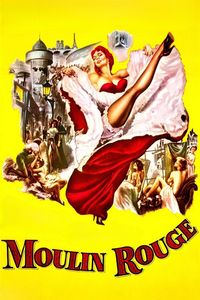
    (On Cable TV, December 2020) There is a particular charm to the way Hollywood used to make biopics – a mixture of caricature, big stars in famous people’s roles, mannered filmmaking and some very specific idea of what a “prestige” picture could be. So it is that in Moulin Rouge, we head to late 19th-century Paris to learn about the life of Henri de Toulouse-Lautrec, as played by José Ferrer. The attraction to the topic should be obvious: Toulouse-Lautrec was a genius and a tortured man – physically stunted due to a childhood accident, unlucky in love, spectacularly alcoholic and perpetually living close to poverty. He incarnated much of what many people imagine when they think about troubled artists in the 1890s. For 178cm Ferrer, taking on the role of 152cm Toulouse-Lautrec meant undergoing a physical transformation and making good use of unusual filmmaking techniques such as trenches, fake knees and body doubles. Then there’s the visual attraction of the topic: It would have been unthinkable, even in the 1950s, to shoot Moulin Rouge in anything but colour. The musical numbers are, of course, very can-can: I strongly suspect that most of what we think of as being the aesthetics of the Moulin Rouge (or that period), including the 2001 version of Moulin Rouge!, can be traced back to this film. Absinthe shows up (naturally), as do dark stockings and garter pants. The character of Toulouse-Lautrec perfectly fits the colourful, seedy, exhilarating world created here: Director John Huston knew what he was doing, and the result is a film that deserved its Academy Award nominations. Ferrer is quite good, and there are other known names, such as Zsa Zsa Gabor, Peter Cushing and Christopher Lee in the cast. The 2001 Moulin Rouge! (which doesn’t share much than the title and the setting) is one of my favourite movies of all time, but this 1952 title is perfectly likable in its own way.

  • Moby Dick (1956)

    Moby Dick (1956)

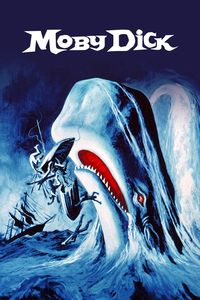
    (On TV, October 2020) Considering the central place of Herman Melville’s Moby Dick in the American literary canon, any film adaptation would be an ambitious undertaking, roughly akin to Captain Ahab’s maniacal quest for the Great White Whale that maimed him. It’s hard to imagine a better director for that gigantic endeavour than a middle-aged John Huston, considering the ways his directorial style has been described. In some ways, this adaptation is quite good: With novelist-screenwriter Ray Bradbury cracking the case of adapting a very long book into a movie, the script is not bad. Some very good production means (for a mid-1950s movie) have gone into recreating the world of a whaling ship and the gigantic animal they intend to fight. Where Moby Dick doesn’t do as well is in a small but crucial detail—casting. Specifically, the casting of Gregory Peck as Captain Ahab—look, no one ever dislikes Peck, but he is far too well-mannered to be an effective Ahab. You want someone able to spittle around their grandiose rants, with crazy eyes and stabby hands. In other words: Not Peck. It’s not that he’s bad, it’s just that he’s not close enough to the ideal version of the character. This is driven even deeper with the knowledge that John Huston was right there, behind the camera rather than in front of it. Or that Orson Welles shows up briefly for a cameo but not as Ahab. Too bad—with a fresh coat of CGI paint and another lead actor, this Moby Dick could be much, much better.

  • Beat the Devil (1953)

    Beat the Devil (1953)

    (On TV, September 2020) I’m a bit surprised at how Beat the Devil doesn’t work as well as I was expecting. On paper, it looks like a slam-dunk: a comic adventure starring Humphrey Bogart (plus Jennifer Jones, Gina Lollobrigida and Peter Lorre!), directed by John Huston and co-written by Truman Capote, all taking place in exotic British East Africa. It’s explicitly made as a parody of earlier films, and concerns swindlers trying to claim uranium-rich lands. I mean, how can this fail to deliver? But it does—the herky-jerky script struggles with consistent tone (a likely artifact from having been reportedly rewritten on a daily basis), the comedy is weighted down by bland direction and the visual flourish of the film is nothing worth reporting on. Some of the film’s production history suggests that it was almost treated as a vacation by Huston, Bogart and others, and this lack of discipline clearly shows—it’s also unclear if Huston had a sense for comedy, as demonstrated by what Beat the Devil tries to pass off as funny. This being said, I’m putting an asterisk (*) here to revisit this film in a while, just to see if I either understand more about what it’s reputedly trying to parody, or if I’m in a potentially better mood to accept what’s going on here.

    (Second Viewing, On TV, December 2021) This is my second go-around on Beat the Devil, and I’m still as dumbfounded (or disappointed) as during the first. At another glance, this still feels like a can’t-miss film: A group of shady characters; striking actors such a Humphrey Bogart, Peter Lorre, Gina Lollobrigida and Jennifer Jones; directing by John Huston; and a script by Truman Capote. Better yet – the film is often presented as comedy, spoofing the kind of character-based adventure films that Hollywood was churning out at the time. The problem is that none of these things quite add up. It’s clearly not serious, but it’s not all that funny either, and the florid dialogue doesn’t add up to a compelling storyline. Some of this weirdness can be explained by taking a look at Beat the Devil’s production history – with the director ripping up the script on the first day of shooting and Capote churning out material as the shoot went on. The disjointed aspect of the film isn’t helped by actors goofing off when the goofing off doesn’t have a point. I gave the film a second look hoping that it would make more sense a second time around, but merely found my interest wandering again for what I feel are the same reasons. Oh, the occasional bon mot perked up my interest from time to time, but it’s not enough, not sustained into a coherent narrative nor a coherent comic tone. Maybe I’ll give it a third try. Maybe I’ll just ignore Beat the Devil as something that simply doesn’t work on me.

  • Victory aka Escape to Victory (1981)

    Victory aka Escape to Victory (1981)

    (On Cable TV, September 2020) No matter how you slice it, “Sylvester Stallone, Michael Caine, Max von Sydow and Pelé” is a really interesting cast for a WW2 movie. One of those fun war movies absolutely not adapted from real events, Victory posits an exhibition football match between Nazis and allied prisoners in Paris, who set in motion a complex escape plan. Sylvester Stallone stars as an American (captured while fighting with the Canadians) with plans to escape who’s recruited into the resistance for an even bigger escape plan. Cleverly playing both the underdog sports tropes and the war movie escapes one, Victory may not be believable or coherent, but at least it’s distinctive from most other WW2 films you’ve seen. John Huston directs with his usual late-career competence, and the production means are generally sufficient for the film’s scope. But here’s the thing: despite the high potential of the film, its built-in comfort zone, and good performances from Stallone, Caine, Sydow and Pelé, Victory all feels curiously… dull. The execution is fine, but there’s a spark missing: the suspense is slight, the episodes on the way to the ending feel perfunctory, and the entire thing can be almost immediately forgotten. Which is weird considering how unusual a blend of elements it is. Ah well—I suspect Victory is one of those films that begs to be rediscovered periodically: not quite as an enduring gem, but as a curio.

  • Across the Pacific (1942)

    Across the Pacific (1942)

    (On Cable TV, June 2020) What looks like one more WW2 propaganda film is given slightly more interest by featuring none other than Humphrey Bogart. Not stepping too far away from his persona in Across the Pacific, he plays a dishonourably discharged soldier who ends up on a ship going to Panama and gets involved fighting a dastardly plan by the Japanese. Far more of a thriller than an outright military film, much of it plays on-board the confines of a ship, with Bogart investigating a Japanese sympathizer on-board. There are clear echoes of The Maltese Falcon here, given that both movies share Bogart, the always-menacing Sidney Greenstreet, Mary Astor and director John Huston. A decent-enough adventure, Across the Pacific (which never even makes it to the Pacific), is nonetheless dragged down by uneven pacing and too-late narrative development. As a propaganda film, don’t expect much subtlety in its depiction of Japanese characters—in fact, expect to be very uncomfortable whenever they appear on-screen and the xenophobia gets roaring. Still, Bogart is Bogart and if you can stomach the stereotypes, the film is interesting enough.

  • The Asphalt Jungle (1950)

    The Asphalt Jungle (1950)

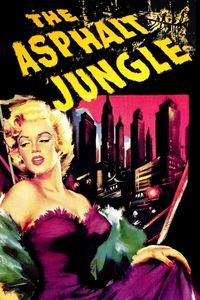
    (YouTube Streaming, May 2020) There is something both familiar and comfortable in the very enjoyable film noir heist movie The Asphalt Jungle. It was a bit of a sensation at the time—a film that stripped away the glamour of Hollywood to approach cinema-vérité and spent more of its running time with the criminals planning a heist than the policemen hunting for them after the crime. Those are now standard features of crime movies, of course—and this may mask some of the impact of the film as it was perceived back then. Fortunately, John Huston’s direction here is masterful and has aged very well. While The Asphalt Jungle can’t escape a certain scattered effect in the midway section, it tightens up in time for the conclusion. The mid-century Midwest atmosphere is very convincingly rendered, and it’s supplemented by the corrupt characters and unescapable fatalism so beloved of the film noir genre. Sterling Hayden turns in one likable lead performance in an otherwise fairly grim cast—although there’s an early turn by Marilyn Monroe to make things even more interesting. The Asphalt Jungle makes for compelling viewing even with the familiarity of its narrative—when something works, it works well enough decades later.

  • The African Queen (1951)

    The African Queen (1951)

    (In French, On Cable TV, July 2018) If you’re even a casual fan of classic cinema, The African Queen is a must see, even for no other reason than it features Humphrey Bogart and Katharine Hepburn playing off each other in familiar roles—Bogart’s kind-hearted rogue, and Hepburn later-career matriarch. The story takes place deep in Africa during World War I, as a Canadian adventurer (Bogart) rescues an English nun from German attack. Escaping to friendly territory is not a certainty, especially when their tiny boat is faced with the threat of a German warship blocking their way. The adventures build up to a pretty good finale. While the innovation of shooting much of The African Queen on-location deep in Africa has paled a bit for today’s audiences, the results are clearly appreciated on-screen with a film that looks quite a bit more realistic than many of its studio-shot black-and-white contemporaries. (Legend has it that most of the crew suffered greatly from the shooting conditions, except Bogart and director John Huston who mostly drank alcohol rather than water.)  Bogart got an Academy Award out of the film (a lifetime achievement reward in all but name) while Huston and Hepburn got nominated for their efforts. The result is a product of its time, but The African Queen has aged rather well and significantly better than many other films of the time.

  • Annie (1982)

    Annie (1982)

    (On Cable TV, June 2018) There are a lot of not-so-good things about the bombastic, almost-chaotic musical Annie: It moves more slowly than it should, has a number of overly cute moments, doesn’t quite know what to do with Carol Burnett as the film’s main antagonist and places a lot of weight on the shoulders of young Aileen Quinn. Aaaand, I don’t care. It’s a perfectly serviceable musical at a time when musicals were considered passé, and its best numbers (“Tomorrow”, “It’s the Hard Knock Life”, “Let’s go to the movies”, “Easy Street”) are memorable, hummable and likable. I like the exaggerated caricatures that fill the movie—but then again I like musicals best when they take on a grander-than-life quality that wallows in their particular nature. In that regard, Annie is nearly perfect: it’s a musical that knows that it’s a musical and never lets up an opportunity to exploit that fact to its fullest. Even the political commentary by way of a Roosevelt caricature meeting Daddy Warbucks is hilarious. Veteran director John Huston has fun with the whole thing, and while it could have been sped up a little bit, the result is fun enough. I’m not even bothering to do a better/worse comparison with the 2013 remake, so distinct are the two movies in my mind. 

  • Key Largo (1948)

    Key Largo (1948)

    (On Cable TV, February 2018) There are actors that elevate the material they’re given no matter the genre or how many years later you see the result, and so while Key Largo is in itself a perfectly serviceable thriller, having Humphrey Bogart in the lead role certainly doesn’t hurt. At times a small-scale thriller in which various people are trapped in a Florida hotel during a hurricane (showing its theatrical origins), the film eventually opens up to a boat-set finale. In another classic pairing with Bogart, Lauren Bacall plays the dame in distress, with strong supporting performances from Edward G. Robinson and Claire Trevor. Director John Huston keeps things tight and suspenseful as characters are forced to interacting in a small setting—you can see the influence that the film had over some of Tarantino’s work, for instance. Key Largo is not particularly remarkable, but it does have this pleasant late-forties Hollywood studio sheen, meaning that you can watch it and be assured of a good time.

  • The Treasure of the Sierra Madre (1948)

    The Treasure of the Sierra Madre (1948)

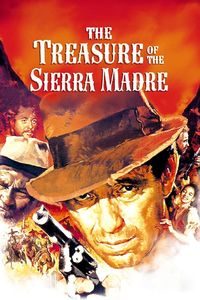
    (On Cable TV, February 2018) I was impressed to see how, even seventy years later, there is still such a strong narrative drive to The Treasure of the Sierra Madre and how well it balances character development with its plot. It helps that the film quickly sets up its core characters. Humphrey Bogart is fine as a downtrodden American willing to do whatever it takes to barely survive in Mexico, but the film’s highlight is Walter Huston (the director’s father) as an immensely likable grizzled prospector. Meanwhile, Tim Holt does serviceable work at the character who is tempted by various moral choices. With such good characters, the plot comes alive as our protagonist find a way out of a backwater Mexican town to explore a mountain for gold. That they find it so quickly only sets up more difficult choices later on, as gold fever grips the characters and paranoia sets in. Notable for having been shot on location, The Treasure of the Sierra Madre is one of those (surprisingly rare) black-and-white movies that I wish had been shot in colour, given how much importance the setting takes. In other areas, however, the film hasn’t aged a bit: the dialogue is still sharp, the plot generally unpredictable and the actors do fine work with the dramatic arc they’re given. Writer/director John Huston did exceptional work and the result still speaks for itself.

  • The Man Who Would be King (1975)

    The Man Who Would be King (1975)

    (In French, On TV, February 2017) Maybe I’m seeing the wrong movies, but it seems to me that the large-scale adventure film is a lost art in Hollywood. Those seas of extras, trips through treacherous remote locations and against-all-odds stories seem to belong to another time. Maybe that’s for the best, considering the iffy colonial content of The Man Who Would be King. It’s one thing for noted imperialist Rudyard Kipling (a man of his time, and I’ll be forever grateful for The Jungle Book) to write a cautionary tale about two British soldiers becoming god-emperors in a forgotten part of the world; it’s quite another to see this story today through post-colonial lenses. The Man Who Would Be King does have the considerable benefit of a decent third act in which the so-called civilized men are punished for their hubris, but much of the film’s first hour plays uncomfortably, as white men scheme their way to an empire. Still, as a white guy, I have the implicit privilege of being able to picture myself in the lead role, and once I manage to do that, what’s not to like? Michael Caine and Sean Connery together in a single movie, with Connery sporting glorious handlebar facial hair! Shakira Caine (Michael’s wife) in a pivotal role! Christopher Plummer playing Kipling himself! The film does get substantially more interesting in the third act as the façade of the white men’s deception falls away with real consequences. The ending is very good and justifies the framing device. John Huston’s direction is clean and makes the most of the means available to pre-CGI filmmakers. With a scope and sweep that defies even modern films, The Man Who Would Be King is remarkable even today, and the slight discomfort that the first three-quarter of the film may cause to a modern audience is more than redeemed by a conclusion that must have been sobering even to the original short story’s Victorian readers.