John Krasinski

  • The Hollars (2016)

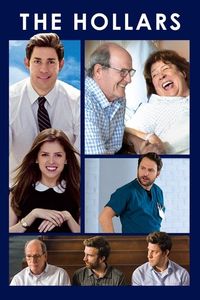
    The Hollars (2016)

    (In French, On TV, September 2021) While writer-director-actor John Krasinski earned rave reviews as director of A Quiet Place, he already had two feature-length movies in his filmography before his horror breakout. The Hollars is the second of them, and it falls squarely in that favourite playground of low-budget independent cinema: the dysfunctional family dramedy, coupled with a “city boy comes back to town” plot to tie it all together. A cherubic beardless Krasinski anchors the picture as the prodigal son coming back to his childhood home after his mom gets ill — only to discover a bankrupt father, bitter brother, clinging ex-girlfriend and the realization of the fears holding him back from marrying his pregnant girlfriend. This is thoroughly familiar stuff, only slightly elevated by decent execution and a rather good cast. While such familiar names as Anne Kendrick, Sharlto Copley, Charlie Day, and Richard Jenkins add to the film, it’s Margo Martindale who earns the most attention in a tough part as a sick matriarch. The rest of the film is not bad, but it is familiar enough to be forgettable, and there are enough half-sketched subplots to make anyone wonder if the film ended up stuck between comedy and drama, instead aiming for a half-satisfying compromise. Watchable but not memorable, The Hollars is an honourable result for Krasinski, but a pale precursor to his next films.
  • A Quiet Place Part II (2020)

    (Amazon Streaming, August 2021) The first A Quiet Place was one of the unexpected solid hits of 2018 — a solid blend of careful moviemaking (with an unusual emphasis on the use of sound weaved into its premise), a stripped-down premise, some good suspense sequences and some great work on both sides of the camera for John Krasinski and his wife Emily Blunt. With sequel A Quiet Place Part II, the novelty effect is clearly lessened, but the effectiveness remains high. Once more, we follow a family in a post-apocalyptic setting as it deals with murderous alien invaders with the keenest of hearing. A single sound can mean death, and so once more writer-director Krasinski deftly plays with sound and the absence of sound (one character being deaf, which is not always an advantage). Krasinski himself does appear on-screen thanks to the magic of flashback in an opening sequence that shows how much more comfortable he is in featuring the aliens in dynamic broad-daylight sequences. More action-oriented than the first, A Quiet Place Part II doesn’t completely avoid some plausibility issues, but is confident enough that they don’t matter. Emily Blunt does good work, but the spotlight is on young Millicent Simmonds, who exceeds expectations. Cilian Murphy and Djimon Hounsou join the series. The dual-track ending is cleverly constructed and if the film can’t avoid a certain repetitiveness, it wisely keeps things short with an intense 97 minutes and wraps up satisfyingly, but not enough to preclude another sequel. Proving that the success of the first film wasn’t a fluke, Krazinski now has the credentials to take on just any project — hopefully, we’ll see something other than another film in the same series.

  • A Quiet Place (2018)

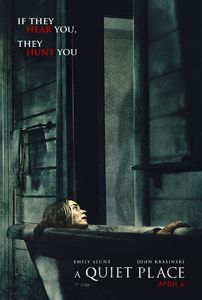
    A Quiet Place (2018)

    (Netflix Streaming, January 2019) There are quite a few things I don’t like about A Quiet Place from a strict logical standpoint. The premise of the Earth having been devastated by murderous aliens with a keen ear doesn’t survive a critical look. There are plenty of plot holes, dumb decisions and nonsensical implied backstory here, and by the time the normally quiet characters speak normally near a waterfall providing aural cover, one wonders why there aren’t human settlements near Niagara Falls, windy mountain passes, wavy beaches or heavy metal concerts. But A Quiet Place does a bit of essential misdirection in asking us not to think about those things—by focusing its story on an isolated family, paying careful attention to tactile details and featuring a soundtrack that could have been largely lifted from a silent movie, it sets up a simple but effective suspension of disbelief. Actor/writer/director John Krasinski, accompanied by his off-and-on-screen partner Emily Blunt, shows a clear and effective intention for his movie. He ends up making a very effective, very careful use of sound, especially in building up the suspenseful sequences. There is a lot of implied background in the way it simply shows us details about a family having been able to survive in a dangerous world. I’m not that happy with elements of the conclusion, nor the wider perspective of the imagined universe, but it works on a nuts-and-bolt level, and it certainly offers a different watching experience—there’s been a few sound-conscious horror movies lately (Hush and Don’t Breathe among others) but A Quiet Place has something slightly different to say by heading into the Science-Fiction realm. I’m not sure that the announced sequel has anything left to explore, but if this film is anything to judge, then we shouldn’t bet against John Krasinski undertaking further challenging projects.

  • Detroit (2017)

    Detroit (2017)

    (On Cable TV, June 2018) A social critique executed as a home invasion horror films, Detroit takes us back to the not-so-long-ago 1967, at a time when Detroit was wracked by the racially fuelled 12th Street Riots. Against this backdrop, we get a tale of innocent people terrorized and sequestered by racist policemen who invade a private home and threaten all occupants at gunpoint. The white women aren’t necessarily treated any better than the black men, and the theme of police brutality has an uncomfortably loud resonance. Katheryn Bigalow directs the thriller with her usual nervous energy, taking dry historical facts and making them as raw and frightening as any other horror movie. It’s really not an entertaining movie—it confronts us to abuses of power that still occur regularly, especially in racially divided 2018. Actors John Boyega and Will Poulter (unfortunately getting typecast as a villain) give rough performances, with notables as diverse as Anthony Mackie, John Krasinski and Jennifer Ehle in supporting roles. Still, this is Bigelow’s show, proving once again her standing as one of the finest directors working today. While Detroit often feels too much like a lesson, it’s a worthwhile lesson.

  • Aloha (2015)

    Aloha (2015)

    (Video on Demand, August 2015) Wait, what?  Cameron Crowe wrote and directed Aloha?  The rather competent filmmaker behind such films as Jerry Maguire, Almost Famous and Vanilla Sky somehow ended up putting together this grotesque mishmash of disparate story element forced together?  Huh.  The frustrating thing about Aloha is that it does feature some very strong elements: Bradley Cooper and Emma Stone are two highly charming performers and it’s maddening to see them struggle with a script that doesn’t serve any substance.  There is a provocative idea in trying to match Hawaiian mythology with the hard-edged world of military space technology, except when neither element seem to play off each other.  The film’s lackadaisical lack of plot isn’t necessarily a bad thing (in keeping with the setting) except when it flips out ten minutes before the end credits and then suddenly try to cram some artificially-urgent conflict with a deeply dumb resolution (“Let’s blast it with sound!  IN SPACE!”) with no built-up stakes at all.  It doesn’t help that, as adorable as Emma Stone can be, she is profoundly miscast in a role that should have gone to someone both older and more ethnically representative.  (I’m thinking of Tia Carrere, but lesser-known actresses would have been just as good)  There are some terrific scenes here and them (Specifically, I’m thinking about a pair of hilarious near-wordless scenes with John Krasinski), but the script goes all over the place with no discipline nor focus –I’m actually astonished that no one suggested a further rewrite to take better advantage of its strengths.  It amounts to a frustrating mess –not a bad movie to watch on pure undemanding entertainment value, but one that fails to reach even modest success at delivering what it should have been capable of achieving.  Cameron Crowe; what happened to you?