John Milius

  • The Wind and the Lion (1975)

    The Wind and the Lion (1975)

    (On Cable TV, November 2020) A tale of a president and an outlaw, The Wind and the Lion is unconventional—an adventure story about the rescue of a western woman from the Moroccan rebel who kidnapped her, but also a character portrait of that cultured rebel (played by Sean Connery) but also, half a world away, of Teddy Roosevelt in his eccentric glory, as the kidnapping hopes to upset geopolitics. Clearly a passion project from writer-director John Milius, this adaptation of the 1904 Perdicaris affair is deeply unconventional and, at times, a bit messy. My interest varied from scene to scene—while Connery is his usual compelling self, his storyline is often far too lengthy to be wholly interesting. Meanwhile, I couldn’t get enough of Brian Keith’s brilliantly oddball Theodore Roosevelt as he lives and reacts to the developing situation: much of his behaviour is of public records, but it’s fun to see it portrayed on-screen. The reconstitution benefits from a decent budget, and the film does have a few marquee sequences—perhaps most interesting being a scene in which troops march down the streets of Tangiers and intervene in the conflict in a rather surprising fashion. Still, the result feels quite uneven, with high highs and dull lows. The Wind and the Lion is more interesting than usual, but not necessarily successful.

  • Red Dawn (1984)

    Red Dawn (1984)

    (Second Viewing, On Cable TV, November 2018) Even by the ludicrous standards of 1980s action movies, Red Dawn is something special. After all, it’s built on nothing less a premise than an invasion of the United States by foreign forces, allowing ordinary high school students to turn into La Résistance. As far as power fantasies go, it’s a good one—there’s a chill at seeing concentration camps and executions on American soil that excuses nearly every excess in fighting back. Written and directed by John Milius, the premise makes no sense, but the execution manages to succeed in portraying the nuts and bolts of the story on the ground—the film never gets out of the vicinity of a small Colorado town, as it’s spectacularly invaded and taken over by foreign occupants. Our teenage protagonists are quickly driven to the countryside, where they plan and conduct semi-quixotic attacks against the invaders. There’s a lot of potential here to criticize American interventionism through ironic inversion and so … oh, who am I trying to fool? Of course Red Dawn is about American machismo writ large—even though the main antagonist has a surprising amount of character development, the film is about celebrating the militaristic values of fighting back, and no questioning of American military interventionism (which, if you look at the past sixty years, is about as bad as it gets from an international perspective) is allowed or even imaginable within the context of the film. The rah-rah-rah stuff gets tiresome after a while, especially since the film quickly backtracks to the heroic-sacrifice flag-waving rather than anything else. (The script-to-screen journey of the film is quite fascinating—read the Wikipedia article.) Seen from today, and easily ignoring the forgettable 2012 remake, Red Dawn seems like the fantasy of an ultra-right-wing cuckoo. It’s curiously less effective in the end stretch than it is at first—the film doesn’t seem to know where it’s going as the band of protagonists keeps dwindling, eventually settling for manly tears. And yet, even with all of this being said, it’s quite a movie—if it didn’t exist, there would be a hole in most 1980s film analyses of Reaganesque power fantasies.

  • Magnum Force (1974)

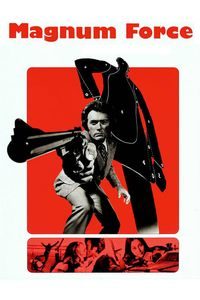
    Magnum Force (1974)

    (On DVD, April 2018) Considering how the first Dirty Harry movie made nearly everyone uncomfortable with how it glorified the vigilantism of its protagonist, there is something almost hilarious to see sequel Magnum Force try to distance itself from this position by pitting Harry Callahan against even worse rotten cops. From the first few moments of the film, with a credit sequence lovingly focus on the titular gun, it’s clear that this sequel regrets nothing and doubles-down on its assets. (Unsurprisingly, it was written by noted gun aficionado John Milius.) Here an entire group of killer cops is uncovered and while Callahan does get a few choice words about their methods, the film wants you to know and understand and appreciate that he’s nothing like those killer cops because reasons, that’s why. Or rather Callahan will gun down those that he determines to be bad rather than being told by some other guy. Or something. Perhaps it’s better to pretend that Callahan is the good guy and appreciate what he does in order to catch the designated bad guys. To be fair, Magnum Force does have its moments. The film isn’t as polished as the mean thrills of the original, but it does have Clint Eastwood (always an asset), Hal Holbrook as a no-fun superior antagonist, a detecting sequence that sees Callahan in a shooting contest with his enemies, and an interesting motorcycle chase climaxing on an aircraft carrier. The atmosphere of mid-seventies San Francisco is always worth a look even though the film itself is hum-drum. Magnum Force does build upon the first movie, though, so you might as well keep going through this one if ever you have the choice.