Jonathan Demme

  • The Truth About Charlie (2002)

    The Truth About Charlie (2002)

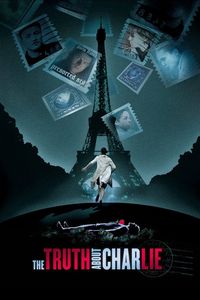
    (In French, On Cable TV, February 2021) I never bothered watching The Truth About Charlie at any point in the past eighteen years, discouraged by its lousy reviews and having missed it during its period of maximum hype. But having seen Charade (the 1963 film of which this is a remake) was enough to get me curious—and being reminded that Thandie Newton starred in the film didn’t hurt either—Mark Wahlberg is no Cary Grant, but I’d probably think a few seconds before choosing between Newton and Audrey Hepburn. Surprisingly enough, the remade script doesn’t mess all that much with the premise of the original: we still have a newlywed coming back to Paris to discover her husband gone and their apartment empty. We still have a mysterious stranger claiming to help despite being allied with three dangerous people. We still have the stamp thing and an American embassy official. It’s more in the directing style that The Truth About Charlie distinguishes itself from Charade — and really not in a good way. Director Jonathan Demme throws in a flurry of circa-2002 stylistic quirks, plus many more of his own (such as the staring-at-the-camera dialogue shots) and the result isn’t dynamic as much as it’s intensely irritating. While the basics of the narrative are still there, they’re made less comprehensible by the showy direction and the elided connective material. It gets worse once you realize that little of the film’s stylistic excesses really serve the thriller — a lot of them are actively distracting from the narrative, and some of them (such as Charles Aznavour showing up to sing) remain completely unexplainable — I happen to think that featuring New Wave director Agnès Varda in a small strange role is Very Significant in figuring out that there’s nothing to figure out. Tim Robbins is fine in the Walter Matthau role, Wahlberg is miscast and Newton is always a delight, but the film around them struggles to keep a coherent tone or even clearly presents its narrative. I suppose that remaking an intensely watchable suspense film as an arthouse experiment is more interesting than simply aping it verbatim, but it completely misses the point of why people loved the film so much in the first place: I’m not sure anyone ever watched the original Charade (which, to be fair, does have its moments of first-act weirdness) and thought, “You know, what this movie needs is more incomprehensible stuff.”
  • Caged Heat (1974)

    Caged Heat (1974)

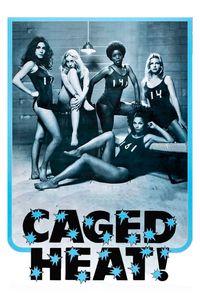
    (On Cable TV, September 2020) Not every Oscar-winning director has an immaculate high-art past, and so it is that the celebrated Jonathan Demme got his start on Roger Corman exploitation pictures, and exploitation thriller Caged Heat was his first directing credit. As a better-than-average women-in-prison film, Caged Heat has all of the nudity, violence, girl-on-girl fighting, anti-establishment screeds and sadistic wards that you’d expect from such films. The plot first goes where you think it will go (unjust arrest; meet the cast; early rebellion; punishment; greater rebellion; escape and so on) and then doesn’t, with the details along the way being little bits of titillation thrown to the audience. Where Demme does bring his touch is that the result is noticeably better than other films of the subgenre: there’s some humour to the proceedings, social critiques, scenes that go beyond the strict minimum, and the film minimizes (but does not eliminate) male-on-female violence to focus on female-on-female oppression (or rather system-on-women oppression). Some of the casting does work: Barbara Steele does have one weird role as the wheelchair-bound warden, and Juanita Brown is simply captivating. It’s not much, but it does work: most of the film plays according to exploitation expectations, but there’s enough going on here to keep interest if you’re committed to the film. I suppose that if you must watch a women-in-prison film, you could do worse than Caged Heat.

  • Something Wild (1986)

    Something Wild (1986)

    (In French, On Cable TV, February 2020) Much of Something Wild feels like a film on autopilot, as long as you account for one mid-movie swerve into slightly different territory. It doesn’t take a long time for the premise to be established: here’s a straight-arrow corporate guy who gets snagged in the schemes of a flighty bohemian-type girl and—somehow—goes along with her on a road trip away from Manhattan back to her small town. Stuff happens, lessons are learned, characters revealed, cars crashed and chuckles obtained but that only takes us to the middle of the movie, as the last half gets significantly darker as the female lead’s dangerous ex-boyfriend shows up to make trouble for everyone. Jeff Daniels and Melanie Griffith are the lead couple, while Ray Liotta makes an early bid at his tough-guy screen persona with his role as the ex-boyfriend. The casting seems appropriate; Griffith, in particular, gets to play a few roles all by herself and her chameleonic character. Still, much of the fun of Something Wild is in seeing what else it has in store for the pair’s difficult trip and how they will deal with the unbelievable coincidences that keep complicating their lives. I’m not sure about the darker shift in tone toward the end, but it does feel as if it lives up to its “anything can happen” credo. Not a bad choice for fans of the lead actors or director Jonathan Demme, but there have been quite a few similar movies since then.