Jonathan Kaplan

  • The Slams (1973)

    The Slams (1973)

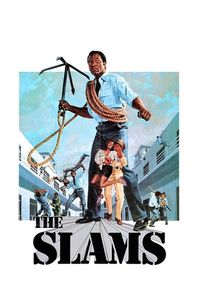
    (On Cable TV, July 2021) Straight from the height of blaxploitation, here comes The Slams, a prison film featuring former footballer Jim Brown as a criminal (but a principled criminal who doesn’t touch drugs) who stashes money from a heist, then gets sent to prison, then learns that his stashing place is about to be demolished. Asking someone else to go pick up the suitcase of cash would be unthinkable, so the only conceivable course of action is to break out of prison. The film is obscure: the image quality of the version that was broadcast on TCM was surprisingly terrible, but it carries an undeniable narrative attraction — The Slams is straightforward genre fare, blunt and coarse in its narrative devices but no less compelling for it. Brown is not a fine actor, but he forces his way into sympathy for the character. The prison stuff is familiar, but there’s clearly an intention here to confront racism within the walls, and the pacing (from director Jonathan Kaplan, who would go on to better movies) does a lot to make it all better. Ted Cassidy gets some attention in a supporting role, and so does Judy Pace. While I wouldn’t want to oversell The Slams as a hidden gem or anything like that, it’s a solid B-movie with plenty of early 1970s swagger — sure, the protagonist is indeed not that much of a good guy, but the film manages to make us like him anyway.

  • The Accused (1988)

    The Accused (1988)

    (In French, On TV, April 2019) You wouldn’t necessarily expect a tough subject matter film to create a compelling viewing experience, but The Accused still carries quite a punch even three decades later. As a procedural legal thriller following the consequences of a rape in a small-town bar, it’s not meant to be fun or comforting—but the twists and turns ensure that it remains a gripping viewing experience. While Kelly McGillis headlines the film as the attorney, it’s Jodie Foster’s showy role as the victim that still earns all the attention. Foster, who won an Oscar for her performance, does have a difficult role, one that impresses even now given that it doesn’t quite fit her later upper-class screen persona. Despite being focused on a courtroom trial, the script cleverly keeps its harshest moment for late in the film—after an opening that takes place after the mass rape central to its premise, it proceeds for a solid three-quarter of its length before flashing back and taking the audience kicking and screaming through the entire traumatizing experience. This is not a unique structural trick, but by this time, the film has already established the sympathy for the character, and its bona fides as a serious and non-exploitative film. (Also, not to put too fine a point on it, the sequence has audiences watching a rape in the context of a trial about witnesses who watched a rape, after creating sympathy for the victim.)   The Accused made quite a stir back in 1988 (Even as a teenager, I recall some of the chatter) and it’s still remarkably effective today—even if you think you know what the film is about, its execution is excellent, with director Jonathan Kaplan creating that elusive scene-to-scene “I wonder what’s going to happen next?” quality. It feels more entertaining (if that’s the right word for it for a film with such an unbearable sequence) than a strictly social-issues film. And it does feature a high-intensity sequence that remains exceptionally effective even today.