Jonathan Mostow

  • The Hunter’s Prayer (2017)

    The Hunter’s Prayer (2017)

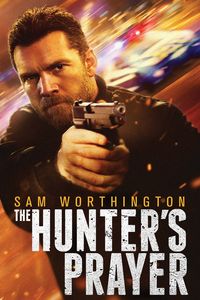
    (In French, On TV, February 2021) It’s too early to call it a wrap, but Sam Worthington will eventually have an amazing story to tell about his time in Hollywood — assuming he wants to talk about it. Plucked from obscurity and poverty to star in 2009’s Avatar, his first few years as a high-profile leading man were filled with a handful of projects that any actor would kill for, usually playing superhuman characters. And then… his profile dropped along with the quality of the projects. Was he judged not ready for primetime? Did his lack of distinctive charisma do him in? Or did he not want superstardom enough? While Avatar sequels still loom in his future, by the end of the 2010s he could be found making one or two films a year, not always in leading roles. The Hunter’s Prayer is one of those films — one in which he holds the lead, but so incredibly generic that it seems to exist to become one of those good-enough thrillers fit to fill a slot for TV programming directors. The story takes us in familiar territory, as a hitman can’t bring himself to complete a job and leagues with his former target to take down his client. Efficiently directed by Jonathan Mostow (another name who once seemed destined for bigger and better things — this is his first film since 2009’s forgettable Surrogates), it’s a film that works but never reaches for anything more. It’s watchable without being memorable, and doesn’t do much to distinguish itself from genre clichés and conventional execution. In this kind of showcase, Worthington himself looks like set dressing — he’s got the appearance and the rough charisma to be credible, but doesn’t go any farther than that. I’d feel sorry, except that I have a feeling that everyone got what they expected with The Hunter’s Prayer — a paycheque, their name on the movie poster, some renewed attention and a chance to do better next time. Nobody had any illusion about it being anything more.

  • Surrogates (2009)

    Surrogates (2009)

    (In theatres, September 2009) It’s a truth, universally acknowledged, that the best movies make you think.  But it’s a less-acknowledged universal truth that even bad movies can lead one to conclusions.  In this case, Surrogates is the kind of hit-and-miss film that makes one think that film really isn’t the ideal medium for idea-driven Science Fiction.  On a surface level, some things work well: Bruce Willis is his usual dependable self as a cop investigating unusual murders, Boston makes a great backdrop to the action, and director Jonathan Mostow has kept his eye for good action sequences and efficient storytelling –although, frankly, I would have liked longer cuts during the chase scenes.  The idea of a future where “surrogates” effectively allow one to decouple body from mind is rich in thematic possibilities, and the film does investigate a few of them.  If nothing else, Surrogates is a decent way to spend an hour and a half; at least it’s a bit more ambitious than most other movies at the theatre.  Alas, that’s not saying much, and the credibility problems with the film start with the first few frames.  In flagrant violation of market economics, human nature, bandwidth limitations and just plain logic, this is a film that depends on 98% of the (Boston? American? Human?) population relying on highly advanced and presumably expensive equipment just 14 years in the future.  Never mind that some people don’t even have cell phone today: Surrogates rushes into the bad clichés of a Manichean monolithic society in which everyone has and enjoys a surrogate, except for the easily-dismissible hillbillies and weirdoes who apparently choose to live in technology-free reserves.  Never mind that the world is usually a great deal more complex and that the kind of technological breakthrough that surrogates represents could lead to a world where the very concept of incarnation would be abandoned: Surrogates simplifies issues to the point where anyone with half a working brain will cringe at the way the film ignores possibilities and takes refuge in cheap movie mechanics.  The ending is particularly frustrating, as it all boils down to “press this button to save a billion lives!!!”  That a lot of those issues were present in Robert Vendetti’s script for the original underwhelming graphic novel isn’t much of an excuse when the film takes such liberties with the source material.  (If anything, Surrogates owes more to the I, Robot film than the graphic novel, down to James Cromwell in near-identical roles)  The contrast between Surrogates and thoughtful written SF is strong enough to make one suspect they’re barely in the same genre.  (Compare and contrast with Richard Morgan’s Altered Carbon for a particularly enlightening experience.)