Joseph Cotton

  • Niagara (1953)

    Niagara (1953)

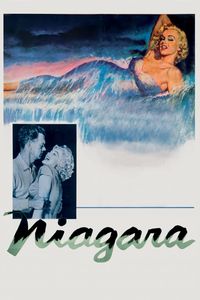
    (On Cable TV, January 2021) Among cinephiles, Marilyn Monroe is far better known as a gifted comedienne—seeing her in the middle of a glum film noir such as Niagara is a bit of a stretch, but not an unwelcome one. Playing a villainous character saddled with an antagonistic relationship with an abusive husband, Monroe remains the draw here even though she’s a supporting character in a film headlined by Joseph Cotton and Jean Peters. Our protagonists are average Americans heading to Niagara Falls for a delayed honeymoon (earning a wink and a nod from a Canadian Customs official), but see their dream holiday go off the rails when they’re introduced to a volatile couple whose antics draw them in. Monroe plays a wife with a lover on the side and dark plans to get rid of her husband. It’s a laugh to see her phone and ask for bus tickets to Ottawa—but the film itself is as noirish as it gets despite the colour cinematography of the falls. She plans on having her lover get rid of her husband, but things don’t go as planned, and our bland likable lead couple soon gets caught in the escalating madness. As a thriller, Niagara is fine enough, but I suspect that one of the aspects of the film that grows with time is an expansive look at early 1950s Niagara Falls from both sides of the border. There are far many more on-location scenes than you’d expect. The downplayed Canadian aspect of the setting was apparently a topic of contention behind the scenes, but I’ll be glad for what we do get. In any case, the intersection of 1950s tourism, noir tropes and Monroe in a very atypical role makes Niagara worth a look if any of those elements prove to be of interest. Who knows what Monroe’s latter-day career would have ben if she hadn’t died so soon? Maybe Niagara holds part of the answer.

  • The Man with a Cloak (1951)

    The Man with a Cloak (1951)

    (On Cable TV, April 2020) Two Classic Hollywood genres crash into each other in The Man with a Cloak: The historical drama and film noir. I mean—why not? Part 1948 costume drama, part historical fantasy involving the fate of Napoleon’s France being played out in Manhattan by Edgar Allan Poe, specifically through the vast fortune of one of the film’s characters. Alas, many people are after that fortune, and the film takes a sombre turn when wills, poisons and deaths come into play. While it takes a while to heat up (frankly, the beginning is just dull), The Man with a Cloak does get nicely dramatic after a while—all the way to a knock-down drawn-out fist-fight at the end. This being said, I suppose that most twenty-first viewers will have a look due to Barbara Stanwyck (always magnificent) in one of the lead roles, alongside Joseph Cotton as a mysterious investigator and Leslie Caron playing a visiting Frenchwoman. It’s not quite correct to call The Man with a Cloak a pure film noir, but in addition to borrowing plot elements from the genre (and a bit of gothic mystery), it also tries to ape many of its stylistic features—albeit to middling effect, as director Fletcher Markle wasn’t exactly a gifted stylist. Still, it does add a bit of atmosphere to a film that can certainly use it. The film’s final revelation feels more like a joke than a serious twist, but there it is. The Man with a Cloak is hardly a great film, but it does offer something slightly different from either pure costume drama or film noir. Plus, hey : Stanwyck.

  • Journey Into Fear (1943)

    Journey Into Fear (1943)

    (On Cable TV, March 2020) There’s something slightly insane about those WW2 thrillers shot and released as the war was going on—trying to comment on topical events despite the long length of film production (which was admittedly shorter then than now) and the possibility that real-world events would overtake them. And that’s not even mentioning the biggest uncertainty of all: not knowing how the war would end. Usually, screenwriters went around this problem by focusing on personal adventures, slightly blurring the background, cranking up the propaganda and hoping for the best. Journey into Fear is one of those instant-WW2 thrillers, but making life even harder on itself by adapting a 1940 novel. (Famously, the film’s protagonist has to escape to another country than in the book because France had been overrun by the Nazis in-between.) The result is a claustrophobic thriller about escaping the Nazis in one of the less overexposed fronts of WW2: Turkey. Journey into Fear is short (68 minutes!) and to the point, with a rather good action climax after a film that largely takes place aboard a passenger ship filled with tension. Orson Welles shows up on-screen and seems to have fun as a Turkish general, but the film’s messy production history holds that Welles was also involved as screenwriter, director and producer—effectively making this an unofficial early-Welles picture. Joseph Cotten and the beautiful Dolores Del Río also co-star to good effect. While not a great movie, Journey into Fear remains an effective thriller, and to think it was produced as the war went or, with no less a mercurial presence as Welles, is almost mind-boggling.

  • From the Earth to the Moon (1958)

    From the Earth to the Moon (1958)

    (On Cable TV, August 2019) Oh, what a terrible, terrible disappointment. I should probably come clean right away and admit that Jules Verne’s De la Terre à la Lune is one of my favourite novels. I must have re-read it three or four times at a decade’s interval (which reminds me that I’m overdue for another reread)—a childhood favourite that still works in adulthood due to its mixture of clipped humour and engineering details. In the right hands, it would make a fantastic movie. But From the Earth to the Moon director Byron Haskin did not have the right hands, or if he did, he wasn’t given what was necessary to do the novel justice. My disappointment is so acute that I’m not going to get into the details, but this 1958 version of the story is a dismal shadow of its true potential. It removes the fun and the spectacle of the original novel and replaces it with clichés and bad ideas. Getting rid of Michel Ardan is inexplicable given the theatricality of the character. Inventing “Power X” and cheaply demonstrating it in a boring quarry is a terrible idea. Adding an antagonist is useless. Screwing up the novel’s third act is a travesty. And so on. I’m usually tolerant when it comes to film adaptations and older movies but this is not acceptable. What a waste and what a disappointment. Too bad for George Sanders and Joseph Cotton, who usually do much better. From the Earth to the Moon is not even enjoyable on its own terms, let alone as an adaptation.