Jude Law

  • Vox Lux (2018)

    Vox Lux (2018)

    (On Cable TV, September 2021) All right, Vox Lux: You have all the rights in the world to be as unpleasant as possible from the get-go (that is: graphic footage of a likable teacher getting gunned down in a school shooting during the film’s opening scene) and then being all mysterious and incoherent until the end… but that doesn’t force me to like you. Writer-director Brady Corbet certainly aims high enough to be considered pretentious, with a two-act structure that seemingly leaves much of the story in the backstory. Part one, beginning in 2000, has to do with a school shooting survivor becoming a national sensation for a song penned in the aftermath of the attack and then becoming a star. The second act picks up sixteen years later as our protagonist (now played by Natalie Portman), in her full-blown egomaniac mode, prepares for a concert and goes lunching with her daughter. It ends at a concert with the possibly-supernatural revelation that our protagonist made a deal with the devil for survival in exchange for perverting the world. Now that’s a premise… too bad it’s a tossed-off line after what feels like an hour of prologue and forty-five minutes of tangents. There are many fascinating things in Vox Lux, from the slightly alternate reality it plays with, to William Defoe voicing an unsettling narrator, to some visual ideas and directorial panache in setting up single-shot sequences. Too bad that it’s so incredibly scattered — thematically, narratively, visually, the film goes everywhere and nowhere at once, not quite understanding the power of focus… or even in following up with the ideas it has. Want to do a film about a deal-with-the-devil singer ruining the twenty-first century? I’m so there. But gallivanting in small-scale fame-building (albeit with Jude Law!), describing a European trip that turns out to be meaningless, glancing off September 11 as a personal tragedy, skipping over much of the dramatic meat of a decaying sororal relationship, playing with the idea of terrorism being inspired by her work, stopping to take a look at diva-like behaviour… Vox Lux is so undisciplined that it begs the question as to what purpose the film intended for itself. It’s just messy, overlong, underwritten, and afraid to poke at its own demons. It’s unconventional all right, but that means that the safety zone for a successful landing is practically non-existent.
  • The Nest (2020)

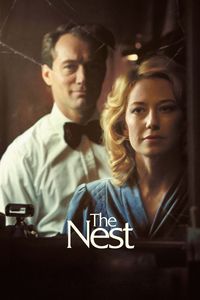
    The Nest (2020)

    (On Cable TV, April 2021) One of my weaknesses as a movie reviewer is my over-eagerness to expect genre elements when there’s even a remote possibility that there will be. My disappointment when something turns out to be depressingly mundane probably won’t be shared by other reviewers perfectly at ease in down-to-earth drama. To be fair, if The Nest can lead viewers to expect a fantastic finale, it’s because much of the film is built along foreboding lines, with a family moving into a strange house and the father being a bit too invested in his delusions to be completely sane. Everyone in the family looks glum, and at times explicitly share their concerns about their new house. With a title like The Nest, wouldn’t you too expect some kind of horror-film third act? But no — The Nest is about broken birds gathering together, and specifically a protagonist making bad decisions for which his family keeps paying. It’s a good thing that he’s played by a charismatic performer such as Jude Law, because otherwise the film would be far less interesting than it already isn’t. Filmed in surprisingly bad fashion (including office scenes washed-out by exterior light — can someone get fill-in lighting in there?), it’s bland and unappealing and, more fatally, not interesting at all. The Nest can’t keep up with its own subplots, eventually forgetting almost everything to focus on the father’s financial woes. Nor does it end with any kind of finale beyond the characters sadly eating at the dinner table, their problems revealed but still intact. I’m clearly not meant to appreciate such shades-of-beige drama — I wanted zombies to eat them, vampires to suck them dry (reinforcing the theme) or ghosts to drive them crazy. Anything would have been better than this pointless mess.

  • Alfie (2004)

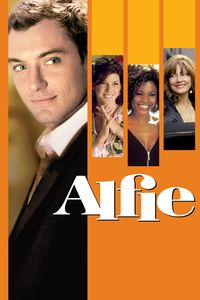
    Alfie (2004)

    (In French, On TV, February 2021) I wasn’t all that interested by 2004’s Alfie back when it was in theatres or during its most active video lifecycle, but a recent look at the original 1966 film featuring Michael Caine had me suddenly interested in the later version. Jude Law was among the best choices to measure up to Caine, but this newer take updates and tweaks so many things that it hardly feels like a remake, and more of a companion work. What has not changed is the conceit of having its irremediable cad of a protagonist (suggested to be the son of Caine’s character) regularly address the audience to boast about his philosophy of life: As a British man deliberately expatriated in New York to improve his chances of hooking up, his life is a tightly optimized machinery for meeting, bedding and discarding girls. The first few minutes of the film are all in good fun, but consequences come in the form of a worrying medical diagnostic, the end of a longer-term relationship and, most dramatically, a fling with a friend’s on-and-off girlfriend, resulting in an unwanted pregnancy. Shifting from insouciant cad comedy to a more serious recognition of his flaws, Alfie does follow the original’s dramatic arc, but rearranging and updating the material to make for a decent watch by itself. Law strikes just the right balance in being charmingly arrogant and showing the capacity to reconsider his life after multiple setbacks. He does remain a cad, but at least a marginally forgivable cad. A strong supporting cast has its own merits, from Marisa Tomei to Omar Epps to Nia Long to Sienna Miller and Susan Sarandon. The soundtrack includes many down-tempo pieces sung by Mick Jagger. It’s obvious that 2004’s Alfie can’t have the same epochal resonance as the 1966 Swinging London one — it’s a different time and place, and no one can match 1960s Michael Caine. But the remake is interesting enough to live on its own terms, even for those with recent memories of the original.

  • King Arthur: Legend of the Sword (2017)

    King Arthur: Legend of the Sword (2017)

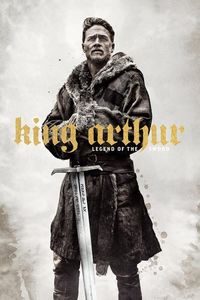
    (Video On-Demand, September 2017) The reviews for King Arthur: Legend of the Sword were harsh enough that I didn’t expect to enjoy the film, but it doesn’t turn out to be quite as bad as anticipated. As an attempt to take the Arthurian legend and fuse it with modern fantasy filmmaking, it’s actually rather good. It helps that director Guy Richie’s style is in full display here: while some sequences are almost incomprehensible (sometimes due to information being undisclosed until much later), other moments have almost genius-level editing blending cause and effect, narration and irony in one energetic package. There are a lot of special effects along the way, Jude Law effectively mugging for the camera as a villain (which he should do more often), and an honest attempt at revitalizing Arthurian myth. It’s certainly not all good. Charlie Hunnam remains a strikingly ineffective lead despite being better here than in many other movies. There are a few dull moments. The anachronisms are blatant despite taking place in an avowed fantasy film. And yet, and yet… King Arthur: Legend of the Sword does have its share of strong moments, and it’s almost regrettable that its commercial failure film means that none of its planned sequels will even be brought to screen. As an origin story, it would have promised much for later exploits of the Knights of the Round Table. As it is, though, it’s a better-than-average fantasy film, with almost-stirring echoes of British myth-making for us colonials. I very much prefer this maximalist approach to the Arthurian legend than 2004’s gritty yet completely dull King Arthur, which made the legend so realistic that it completely lost interest.

  • Genius (2016)

    Genius (2016)

    (Video on Demand, February 2016) Even by the standards of Oscar-baiting historical docu-fiction, Genius seems tame and detached. It’s a problem that can’t be blamed on the actors—Colin Firth is good as legendary editor Max Perkins, while Jude Law is suitably unhinged as Tom Wolfe. Nicole Kidman is more disappointing as Wolfe’s one-time wife, but it’s not much of a role—and she gets to point a gun at the protagonist in the film’s most incongruous scene. The plot loosely talks about the working collaboration and tortuous friendship between Perkins and Wolfe over a period of a decade (two years go by in a blink during a montage) as they argue about Wolfe’s novels and the writer’s mercurial personality eventually leads him to paranoia. All well and good; as someone who’s fond of movies about writers; I particularly appreciated the editing humour and portrait of books as works to be rewritten rather than completed once THE END is first typed. Still, I could help but find the film long and meandering. Viewers may struggle to remain interested, and the film doesn’t help by taking occasional lengthy breaks in plotting. While well shot, with a convincing recreation of 1920s New York, Genius is a disappointment considering its source material. I’m glad it exists (what are the odds of seeing another major movie featuring a book editor as a hero?), but it could and should have been better.

  • Black Sea (2014)

    Black Sea (2014)

    (On Cable TV, April 2015) I have an inordinate fascination for underwater movies (the fact that there are not many of them helps), and this low-budget effort seemed different enough to be intriguing. Uncharacteristically not taking place in any military context, Black Sea is about commercial submarine operators, suddenly hired to go retrieve a sunken Nazi treasure. There are some corporate shenanigans, but they’re secondary to the tensions between the Russian and English crews aboard a quasi-disaffected Russian submarine. Still, for all of the promising hooks and the solid presence of Jude Law as the protagonist, Black Sea is surprisingly dull. It plods along with ugly cinematography, by-the-numbers scripting, a downbeat ending and a slack pace. It never quite manages to transform all of its assets into a compelling film, and feels much longer than it is by sheer lack of excitement. I wish that there would be more to write about Black Sea, but almost all of it boils down to “boring, boring, boring”. This being said, take note: This is exactly the kind of gritty, atmospheric, middle-of-the-road film that is highly susceptible to mood. Chances are good that you may like it more.

  • Dom Hemingway (2013)

    Dom Hemingway (2013)

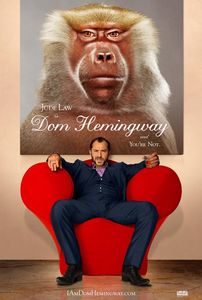
    (On Cable TV, October 2015) Brash, loud, articulate, arrogant and convinced that the world owes him a favour, Dom Hemingway is a great addition to the British crime canon, and Jude Law turns in a splendid performance by incarnating him.  The film’s story isn’t much more than a simple ex-con seeks revenge romp, but –from the very first moments- it’s Law’s charisma as Hemingway that carry Dom Hemingway.  The direction keeps up with its protagonist’s flights of eloquence and brash actions, resulting in a film that moves fast, hits hard and harkens back to some of the most dynamic British crime films of the past fifteen years.  Dom Hemingway doesn’t always succeed (Emilia Clark is a notable low-point for the film, sucking energy out of it even as her character is supposed to be an emotional linchpin for Hemingway’s redemption.) but it gamely tries, and there are plenty of good scenes along the way.  Great lines of dialogue don’t always mask the routine nature of the story, but the quotable content can’t be dismissed and writer/director Richard Shepard clearly knows and enjoys what he’s putting together.  Still, discussion of the film starts and ends with Jude Law, who clearly relishes the opportunity to let go of his pretty-boy persona and take on a darker role with gusto.  Dom Hemingway sparks to life whenever he sinks his teeth in the character, and the result feel invigorating.

  • Side Effects (2013)

    Side Effects (2013)

    (Video on Demand, May 2013) Director Steven Soderbergh often has very different goals in mind than what the average moviegoer would prefer, but occasionally his artistic impulses align with his target audience and the result can be spectacular.  Side Effects may exhibit much of Soderbergh’s usual tics, but it also features his technical proficiency and his ability to play with audience expectations.  Interestingly enough, the film doesn’t start out promisingly: As a troubled young woman murders her husband and everyone suspects that her medications are to blame, it’s easy to feel let down by yet another basic anti-pharma diatribe; surely Soderbergh wouldn’t steep to something so basic?  But then Side Effects becomes a much more unpredictable film, and we understand why the project attracted the director.  It ends up being a fine psychological thriller, shot with Soderbergh’s typical drab pseudo-realism but in increasingly compelling fashion.  The film switches protagonists midway through, Rooney Mara’s mopey performance receding in order to favour Jude Law’s increasingly tortured psychologist.  (Meanwhile, Catherine Zeta-Jones has another small but effective supporting role –she’s been doing a lot of those lately.) A clever script, coupled with capable direction, makes for an effective thriller.  Side Effects is easily one of the strongest films of 2013 so far, and it’s a remarkable testimony to Soderbergh’s skills once he sets out to deliver a crowd-pleaser.

  • Anna Karenina (2012)

    Anna Karenina (2012)

    (Video On-demand, March 2013) Director Joe Wright has always shown tendencies toward stylistic show-boating, and the first half-hour of Anna Karenina is crammed with directorial flourishes as the film moves in-between interior sets and a larger theatrical stage. As a way to freshly present an oft-told story (Tolstoy’s novel has been adapted to the big screen at least 12 times until now), it’s not a bad choice –except that there seems to be little rhyme or reason to the device, and it seems to be half-abandoned as the film progresses.  While viewers who like a bit of cinematic flourish may be pleased by the way Wright plays along with conventions, it does obscure the story and turns the film into something it’s not meant to be. It also obscures the good work done by the actors, including Keira Knightley in the titular role and Jude Law as her despairing husband. (Meanwhile, Aaron Taylor-Johnson’s mustache steals the show for none-so-positive reasons.)  The costumes are sumptuous and the visuals occasionally evoke a nicely idealized view of 19th century Russian aristocracy, but the self-conscious artificiality of the film’s presentation work at undercutting the impact of those.  As a take on familiar material, this 2012 version of Anna Karenina isn’t ugly to look at… but it’s quite a bit abstract when it starts messing with the way movies are presented, and that may not necessarily work at a romantic drama’s advantage.

  • Sherlock Holmes: A Game of Shadows (2011)

    Sherlock Holmes: A Game of Shadows (2011)

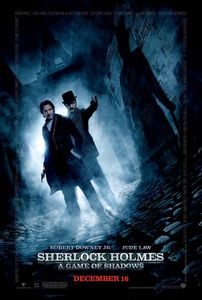
    (In theaters, December 2011) It goes without saying that sequels often aim to replicate the elements that made the success of their predecessor, and add something more.  In this light, this follow-up to 2009’s Sherlock Holmes is an unqualified success, and maybe even a more enjoyable film than its predecessor.  Front and center, of course, is Robert Downey Jr.’s fast-witted take on the title character, complete with instant-strategy monologues and slashy repartee with Jude Law’s dependable Watson.  More importantly, though, Game of Shadows ups the ante by providing an antagonist that is strong enough to present a challenge to Holmes: Jared Harris’ Moriarty lives up to its literary namesake, and makes for a formidable opponent.  It all leads to a climactic chess game that plays off a few of the series’ signature motifs.  (Literary fans will see Reichenbach Falls appear and nod at where the film is going.)  Casting Stephen Fry as Mycroft is a bit of a coup, while it’s nice to see Noomi Rapace’s high cheekbones get a bit of Hollywood gloss after her role as “The Girl” of the Millennium trilogy.  Director Guy Richie once again provides an action-adventure take on the basic premise, along with light steampunk esthetics and slow-motion action sequences.  (A blue-tinted run through a forest provides a quasi-impressionistic sequence of almost-still images.)  While the end result doesn’t transcend the Hollywood holiday blockbuster genre, it’s a well-executed example of the form, keenly aware of its audience’s demands and almost eager to satisfy them.

  • Repo Men (2010)

    Repo Men (2010)

    (In theatres, March 2010) In a generous mood, I would probably praise Repo Men for its satiric vision of a future where synthetic organ transplants are common and expensive enough to warrant repo men going around repossessing deadbeats, leaving them, well, dead on the floor.  I would congratulate Jude Law, Liev Schreiber and Forrest Whittaker for thankless roles playing unsympathetic characters and Alice Braga for something like a breakthrough role.  I would say something clever about the film’s forthright carnographic nature.  I may even have something affable to say about Eric Garcia, who sort-of-adapted his own novel for the screen (the story, as described in the book’s afterword, is far more complicated) and wrote one of the most bitterly depressing movie ending in recent memory.  Heck, I would point out the numerous undisguised references to Toronto (where the movie was shot): the inverted TTC sign, the Eaton center complete with Indigo bookstore, the streetcars, even the traffic lights and suburban streets.  But I am not in a generous mood, because Repo Men is an unpleasant and defective attempt at a satirical action SF film that fails at most of what it attempts.  The characters are unlikable, their actions are despicable, the chuckles are faint and the Saw-inspired gory violence isn’t warranted by anything looking like thematic depth.  It is a literally viscerally repulsive film, and even trying to play along the grim sardonic humour gets increasingly difficult to swallow during self-congratulatory action sequences.  Once the film’s none-too-serious credentials are established, it’s hard to care –and that includes a wannabe-romantic sequence in which internal organs are exposed and fondled.  The ending wants to be witty, but it just feels absurd before it is revealed to be cheaply cynical.  The Science Fictional elements don’t even fit together and the result is a big bloody bore.  Instead, just give me another shot of Repo: The Genetic Opera!: at least that film knew how to balance arch seriousness with a sense of camp.  The irony is that Garcia’s novel is actually quite a bit better than the film –don’t let the adaptation scare you from a novel that does what the film wanted to do in a far more palatable fashion.

  • Sherlock Holmes (2009)

    Sherlock Holmes (2009)

    (In theatres, December 2009) It had to happen sooner or later: a retelling of Sherlock Holmes (suspiciously absent from the big screen since 1985’s Young Sherlock Holmes) in the mode of the action thriller.  No, it’s not even trying to be an adaptation of Arthur Conan Doyle’s stories: This Sherlock Holmes knows how to fight, has abandoned deerstalker hat restraint for debonair nonchalance and enjoys the company of a hot ex-girlfriend.  Pre-made for slash fiction writers, explosion connoisseurs and steampunk enthusiasts, Sherlock Holmes has little to say about its character, and a lot about modern blockbuster filmmaking.  It generally works, despite Scooby-doo plotting and inconsistent use of dramatic devices.  At least we’re spared an origin story, as the story picks up well into Holmes’ career.  Robert Downey Jr. seems to be channelling Tony Stark with an irresistibly arrogant portrait of a super-genius (it works because he’s charmingly roguish rather than super-nerdy) while Jude Law does his job as the level-headed foil.  Rachel McAdams, for some reason, always look better in historical movies (must be costumes), while Mark Strong turns in another performance as the bad guy.  Director Guy Richie reigns in some of his usual tricks but manages to deliver a satisfying action film.  Only the sound seems a bit soft (the mumbling doesn’t help): viewers without an ear for soft English accents may want to wait for DVD subtitles or sit closer to the screen.  The CGI-enhanced portrait of 1880s London is suitably grimy, mechanical and interesting.  Sherlock Holmes may be a travesty of the original stories and a by-the-number mainstream thriller, but it’s pretty good as such.  Bring on the sequel, and let’s see Holmes square off against Moriarty.

  • Sky Captain And The World Of Tomorrow (2004)

    Sky Captain And The World Of Tomorrow (2004)

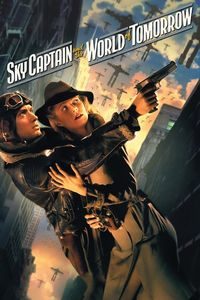
    (In theaters, September 2004) Every two or three years, sci-fi geeks get a little present from Hollywood. Dark City, Equilibrium and now, Sky Captain And The World Of Tomorrow. They have to be quick, though: The films usually crash and burn with nary a trace, proof that what turns on geeks like myself is just not what amuses mundanes. Oh, it’s not like this is a perfect film, even for pre-sold audiences: Shot in a virtual environment, it has all the stiffness of old studio films. Interaction between characters and stage are reduced to a strict minimum, and there’s an aura of artificiality clogging the naturalism of the direction. The self-consciously pulpish story may not be to everyone’s taste, but even the best intentions can’t compensate for lengthy stretches of banal dialogue. This being said, nothing will stop me from loving this film unconditionally; it’s simply a beautiful piece of nostalgic golden-era SF, filled with big images and classic themes, wonderful machines and crazy ideas. I’m not usually a big fan of Gwyneth Paltrow, but it just takes long flowing locks of blonde hair and a sassy attitude to show me the error of my ways. Yes, this is a box-office flop and an incomprehensible curiosity to mass audience. But I’ll be buying the DVD as soon as it comes out; thank you Hollywood, and I’ll wait until the next happy accident.

    (Streaming, May 2025) Twenty years later, Sky Captain And The World Of Tomorrow remains sui generis — writer-director Kerry Conran never managed to parlay the buzz around his achievement into a Hollywood career (although he says he’s working on things), and blockbuster effects-driven movies rarely swung as hard for the fences as this early example of all-digital filmmaking.  But the film remains a success on at least three fronts — it’s still hugely fun to watch, it’s has become a bit of a cult movie for retro-SF fans, and the innovations pioneered here can still be heard echoing in more recent films and TV shows (think StageCraft’s The Volume) where nearly everything is animated except for the actors. And it works!  Despite some stiffness (intentional), occasionally dodgy effects (inevitable) and uneven dialogue (unfortunate), it’s a wonderfully imaginative film on a visual level, and it lives by the ethos of showing something cool every few minutes.  Jude Law makes for a perfectly cocky hero, and Gwyneth Paltrow has seldom looked better.  If you listen to the commentary tracks, make sure to listen to producer Jon Avnet’s one before the one with writer-director Conran: Avnet’s track is a complete and often very honest account of the six years he spend on this unlikely project, and it’s tinged with affection for the film.  In contrast, the disappointing Conran track is sparse, often trivial (“this was the first scene we shot… we built a set of this”) and barely hints at the passion project that this film was.  It’s not enough to make anyone watch the film another time, but the Avnet one will.