Jules Verne

  • Mysterious Island (1961)

    Mysterious Island (1961)

    (On Cable TV, August 2020) I first read Jules Verne’s L’Ile Mysterieuse as a kid and was thrilled at the result. It was, I think, the first real robinsonade that I encountered, and I kept marvelling at the way our desperate characters could manage to recreate civilization while stuck on an island in the middle of the Pacific. It was also the first novel that drove the point home of an imagined universe, as it eventually featured Captain Nemo of another Jules Verne novel. I much older and jaded now, but I was still disappointed at the 1961 adaptation of Mysterious Island. If I hadn’t read the novel, I probably would have been satisfied with the big-screen result. But having such vivid memories of the original worked against the movie – where were the details of their survival against all odds? What are giant stop-motion creatures doing in that story? Why is there a woman in the cast of characters? The answer to all of these questions, obviously, as found in Hollywood’s need to make movies thrilling, exciting and have at least one female role. In doing so, it transformed Mysterious Island from a novel of survival to a Ray Harryhausen special effects spectacle, simplifying as much of the plot as they could in order to squeeze in more special effects sequences. I’m complaining on behalf of my younger self, but I can understand the impulse – and I note that nearly every single Classic Hollywoodian Vernes novel adaptation has committed the same sins, sometimes ending with gold (20,000 Leagues Under the Seas) and sometimes with dreck (From the Earth to the Moon) and sometimes with something in-between (Journey to the Center of the Earth). Mysterious Island is somewhere in the middle – the addition of Harrysausen’s stop-motion special effects is almost always something wonderful to watch, and it does compensate for many of the shortcuts taken in order to fit a leisurely detail-packed novel into a film’s running time. I still think that the third act could have been improved, and the character of Nemo given a better send-off. But it’s been seventy years since the film’s release and it’s not healthy to obsess over the choices two generations removed. As mentioned, this ranks somewhere near the theoretical middle of Verne adaptations – generally faithful at first, then increasingly Hollywoodized. Audiences went to see it, and that’s what mattered then.
  • Journey to the Center of the Earth (1959)

    Journey to the Center of the Earth (1959)

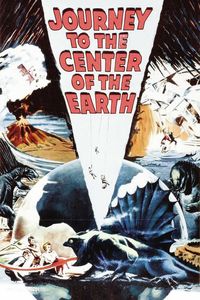
    (On TV, August 2020) These have been some very disappointing adaptations of Jules Verne novels in the 1950s-1960s, but Journey to the Centre of the Earth is not one of them… even if it’s often not really faithful at all. A special-effects spectacle, the film spends far too much time on its first act, laboriously setting up plot elements that could have been handled far more snappily. Fortunately, the fun begins once the characters head deep under the Earth, and start encountering a series of special effects showcases, from geodes to gigantic creatures to table-size mushrooms to a volcano about to explode. It’s easy to like a film that features both the distinctive voice of James Mason and the luscious red curls of Arlene Dahl. Deservedly shot in widescreen colour, Journey to the Center of the Earth was meant as a special-effects powerhouse and feels like it: It won the 1959 Visual Effects Academy Award, and lavishly spends time showing off. Those special effects may look a bit ridiculous now, but the still get the message across. As a lighthearted adventure, it ends rather happily with our group of explorers returning to share their tales. Much of what’s in the film is a pumped-up version of the original novel – with added romance, murder and thrills. But the spirit of Verne’s novel, with its cheerful exploration and return to civilization, is completely intact… and that makes all the difference.

  • Captain Nemo and the Underwater City (1969)

    Captain Nemo and the Underwater City (1969)

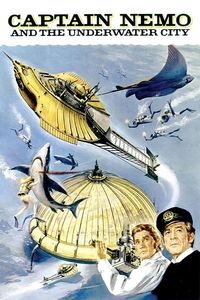
    (On Cable TV, April 2020) Huh—I really did not have “proto-steampunk underwater adventure” on my to-watch list today, but that’s what I got in Captain Nemo and the Underwater City. Loosely based on Jules Verne’s classic novel, it’s more a branded excuse to show off Victorian underwater wonders than to let it suggest any kind of a plot. Unfortunately, whatever plot it does feature is a misguided story of escape, featuring a protagonist that comes off as a dangerous idiot less worth cheering for than worth drowning for everyone’s safety. It’s not quite the only dodgy plot elements, especially considering what feels like a kid’s film: a comic-relief character is killed off late in the film through sheer greed, and everyone seems to take with impassivity that’s meant as lifelong imprisonment. (Well, except for the dangerous protagonist, who should not be celebrated as a hero.) At least Nanette Newman looks good, and Robert Ryan shows appropriate gravitas a Captain Nemo. The film’s production history suggests that it was heavily influenced by the late-1960s Jacques Cousteau underwater craze, and that’s best reflected in how much of the film is a wide-eyed wonder at submarine cities and possibilities. Even discounting the film’s less-than-stellar narrative, there’s some rather incredible visual stuff for a film that’s largely forgotten today—novel visuals in a Victorian underwater steampunk atmosphere. There’s probably a good remake to be made from Captain Nemo and the Underwater City, but only if anyone still remembered it.

  • From the Earth to the Moon (1958)

    From the Earth to the Moon (1958)

    (On Cable TV, August 2019) Oh, what a terrible, terrible disappointment. I should probably come clean right away and admit that Jules Verne’s De la Terre à la Lune is one of my favourite novels. I must have re-read it three or four times at a decade’s interval (which reminds me that I’m overdue for another reread)—a childhood favourite that still works in adulthood due to its mixture of clipped humour and engineering details. In the right hands, it would make a fantastic movie. But From the Earth to the Moon director Byron Haskin did not have the right hands, or if he did, he wasn’t given what was necessary to do the novel justice. My disappointment is so acute that I’m not going to get into the details, but this 1958 version of the story is a dismal shadow of its true potential. It removes the fun and the spectacle of the original novel and replaces it with clichés and bad ideas. Getting rid of Michel Ardan is inexplicable given the theatricality of the character. Inventing “Power X” and cheaply demonstrating it in a boring quarry is a terrible idea. Adding an antagonist is useless. Screwing up the novel’s third act is a travesty. And so on. I’m usually tolerant when it comes to film adaptations and older movies but this is not acceptable. What a waste and what a disappointment. Too bad for George Sanders and Joseph Cotton, who usually do much better. From the Earth to the Moon is not even enjoyable on its own terms, let alone as an adaptation.

  • Around the World in Eighty Days (1956)

    Around the World in Eighty Days (1956)

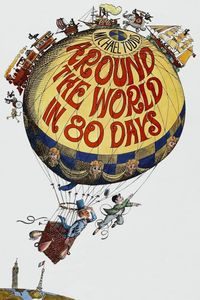
    (On Cable TV, November 2017) Watching some films from bygone days is almost an anthropological experience. Not just for what’s shown on-screen, but what led to what’s shown on-screen. Around the World in Eighty Days is one such curio, not only portraying the world of 1872 as seen from 1956 (84-year difference), but also telling us much about 1956 Hollywood from today’s perspective (61-year difference). The basics of the film are simple enough, adapting Jules Verne’s globetrotting adventure tale into a lavish three-hour-long spectacle. But it’s the way it is put together that captivates as much as the narrative of the story. Famously filled with cameos, Around the World in Eighty Days regularly grinds to a halt as then-famous faces grin at the camera to remind us that they’re in the movie. Of course, sixty years later, it’s hard to identify most of them unless you’re a dedicated movie buff: what remains are nearly incomprehensible skits revolving around famous people without us knowing that they’re famous people. (The Fernandel and Frank Sinatra examples are particularly egregious, except that Sinatra is still somewhat recognizable.) David Niven is good but occasionally inscrutable as the main character, while Cantinflas (wildly popular then, almost unknown now) is a revelation as Passepartout. Around the World in Eighty Days remains strange and kind of charming in its own way. What’s not quite so funny is the cavalcade of ethnic stereotypes that parade through the entire film. Nobody escapes unscathed, whether it’s the British (eccentric to a fault, and never willing to sacrifice tea in the middle of a crisis) or the Americans (frontier barbarians obsessed with electioneering) or any of the non-English-speaking nationalities. The Native-American segments are particularly tough to watch, but by no means the only uncomfortable moment in the movie. Still, the film moves with a decent amount of action, humour and scenery—while largely filmed on Hollywood studios, the production did spend a lot of effort to make sure that the details were correct, and did travel to foreign countries in order to capture establishing shots. The result is one-of-a-kind. I’d normally welcome a remake, except that a loose comedic remake was completed in 2004 and has since already sunk away from view so thoroughly that I still haven’t seen in on TV or any of the major streaming platforms after a year of searching. In the meantime, the original Around the World in Eighty Days remains available for anyone’s viewing pleasure, but if there’s a film that screams out for pop-up notes, it’s this one.