Julia Roberts

  • Stepmom (1998)

    Stepmom (1998)

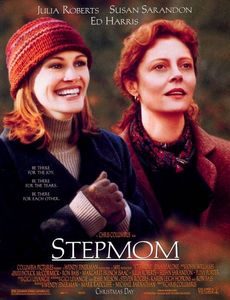
    (On Cable TV, January 2016) Prepare your hankies, because Stepmom is determined to make you cry as hard as you can. The narrative threads are set up early, as the younger second wife of a sympathetic but featureless man (Ed Harris) can’t quite get the respect she wants from her stepchildren. Real mom is best mom, and so Susan Sarandon puts Julia Roberts in her place a few times to establish the narrative tension right before her cancer diagnosis is revealed. The rest is by-the-number sentimental filmmaking by director Chris Columbus, made fitfully interesting by a few hilariously unrealistic looks at fashion photography and adequate performances. Harris, Sarandon and Roberts can’t disguise that this is a very specific kind of movie. Everything plays exactly like we expect, and the result defies any attempts at deeper analysis or even sustained interest. Stepmom will appeal to its target audience and leave large groups indifferent. It is well made, but it is not worth more than a moment’s attention.
  • Mirror Mirror (2012)

    Mirror Mirror (2012)

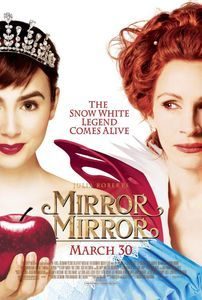
    (On-demand, August 2012) What a strange film this is. Playing off the elements of the Snow White fairytale, it teeters between fantasy archetypes subversion, camp humor, beautiful visuals and oddly stilted locations.  In the hands of director Tarsem Singh, Mirror Mirror is, at the very least, beautiful to look at: Nearly every frame looks polished to perfection, and imaginative visuals are featured throughout.  There is some inventive costuming, the actors all seem to have some fun (Armie Hammer’s take on puppy-love is hilarious, while Julia Roberts seems to relish the antagonist role) and some of the funny moments are, in fact, pretty funny.  Unfortunately, the flashes of cleverness and humor are intermittent: the script seems to lurch from one mode to another without coherency, and the humor seems sprinkled randomly rather than coming from a unified approach.  (As it is, a significant portion of the gags embarrassingly fall flat.)  Mirror Mirror remains amiable throughout, but it seems to be trying a lot of things without understanding how they fit together.  For a big-budget film, it does seem to take place in a mere handful of locations.  The inclusion of modern idiom and hipper-than-thou cynicism seem particularly out of place in a fantasy setting.  Thematically, I’m not sure that the stated feminist ideals of the film are actually upheld, especially once the antagonist seems dispatched with a superfluous amount of cruelty.  Mirror Mirror’s lack of tonal unity makes it hard to really get into the groove of the film, and easier to notice its flaws.  There have been plenty of similar and far more successful takes on such material (Enchanted springs to mind) and what sets them apart is cohesion, not scattered cleverness.  [September 2012 Update: This review is a bit too harsh.  At least Mirror Mirror is better than Snow White and the Huntsman.]

  • Flatliners (1990)

    Flatliners (1990)

    (On Cable TV, April 2012) For years, I wondered if missing out on Flatliners had led to an embarrassing omission in my movie-going culture.  Hadn’t this film earned some interest as a science-fiction film?  Didn’t it star a bunch of actors who went on to bigger things?  Wasn’t this one of Joel Shumacher’s best-known movies from his earlier, better period?  The answer to these questions is yes… but the film itself seems a bit of a letdown after viewing.  Oh, some things still work well, and may even work better than expected.  Of the five main actors, Kiefer Sutherland, Julia Roberts, Kevin Bacon and Oliver Platt have all gone on to big careers –with poor William Baldwin being left behind.  Schumacher’s direction is backed-up with Jan de Bont’s impressive cinematography: the visuals of the film may not make much sense, but they evoke a modern-gothic atmosphere that remains distinctive even today.  The high-concept of the film remains potent, with genius-level medical students voluntarily defying death to investigate the mysteries of the afterlife.  Unfortunately, all of these elements don’t quite add up satisfyingly.  The jump from the high concept to the characters’ personification of those concepts is weak, and the contrivances become almost too big to ignore.  The idea of atonement being closely linked to death is powerful, but the way this variously follows the character is more difficult to accept.  (As Platt’s character knowingly remarks, those without deep-seated traumas will end up with some fairly silly phantoms.)  There is quite a bit of repetitive one-upmanship in the way the plotting unfolds, and Flatliners sadly goes too quickly from provocative idea to ordinary morality.  Still, it’s easy to argue that the film is worth a look: Roberts, Sutherland and Bacon look really good in early roles, and the visual style of the film is still an achievement twenty years later.  There are some good ideas in the mix (witness the visual motif of “construction” -reconstruction, deconstruction- underlying nearly each scene), the portrait of intelligent characters interacting is charming and some of the suspense still works surprisingly well when it doesn’t descend in silliness.  There are a few films that qualify as “minor classics” of their era in time.  While Flatliners certainly won’t climb year’s-best lists retroactively, it’s a film that remains more remarkable than many of its contemporaries.  I don’t regret seeing it… and I may even have liked to see it a bit earlier.