Julia Stiles

  • Hustlers (2019)

    Hustlers (2019)

    (Amazon Streaming, December 2020) Welcome to the 2020s! Your new moral orthodoxy, and you don’t get to choose to accept it, is that drugging, robbing and possibly abusing people is perfectly fine as long as they’re men and you pre-emptively declare yourself the victim! Wait, what? Well, yes: While it’s absurdly reductive to see Hustlers through the lens of reactionary misandry, there’s also a lot of that in the film. Adapted from an article about real NYC strippers drugging and robbing Wall Street types, the film does become more potent as a class-war kind of screed. It does have the (belated) decency to recognize that its heroines may not be completely righteous – that once you successfully target the deserving, it’s much easier to hurt the undeserving. Fortunately, some top talent goes into the execution: written and directed by Lorene Scafaria, the film assembles an all-star cast of actors-singers like Jennifer Lopez, Constance Wu, Julia Stiles, Keke Palmer, Lizzo and Cardi B (who once said she drugged and robbed clients of their money during her early years as a stripper – role model, wooo). Nearly everyone does great work, with special attention paid to a great performance from Lopez, who hits upon a number of her personal strengths to create her character. The execution of Hustlers is a great deal better than its somewhat problematic premise, in between what could have been male exploitation of a salacious topic, on the one hand, or unrepentant man-bashing on the other. Having never been a stripper nor a strip-club patron in the past, I’m clearly not in the target audience for this film, but even I could appreciate the better moments of the film when it gets cracking on the atmosphere, the characterization and the dark irony inherent in its Robin Hood(ick) premise. Maybe it’ll go down more easily on a second viewing.
  • The Omen (2006)

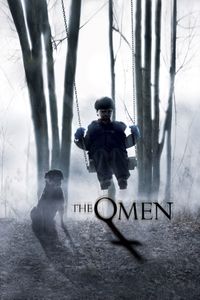
    The Omen (2006)

    (In French, On Cable TV, March 2020) Exactly no one will be surprised by this remake of The Omen, and it almost seems by design—More akin to a theatrical revival than a new movie, this update changes very little to the 1976 script (to the point where original screenwriter David Seltzer got the sole writing credit respite a few rewrites without his input!) and essentially updates the actors, cinematography, direction and setting to 2006 standards. As a result, it does feel slicker than the original (the dog attack sequence isn’t quite so ridiculous, for one thing) but loses almost all of its authenticity… if that’s the right word. Not that I’m a big fan of the original—which may account for my not-pleased-nor-displeased disposition toward this remake. It’s almost interesting (like the 1998 Psycho remake) to see essentially the same script given a new coat of paint and taken out for a spin. If nothing else, a double bill of both the original and the remake, while tedious, would be instructive as to how filmmaking evolved in three decades even as the themes of the original have held up. Going back to the theatrical revival analogy, well—why not? For director John Moore, isn’t it better to redo what seemed to work well in the first place than to take chances with modifications that don’t pan out? Despite my lack of affection for the original, it’s rather neat to see Julia Stiles, Liev Schreiber and Mia Farrow step into these well-established roles for a film. It’s not that good, but then again: The Omen’s over-the-top histrionics can be reasonably entertaining, and if the remake doesn’t bring anything new, maybe it does have familiarity to its credit—although by 2020, with immense streaming libraries that can include the original, it remains to see whether there’s a reason for 2006’s The Omen to exist. Aside from, let’s admit it, the rather amazing “2006-06-06” release date.

  • Closed Circuit (2013)

    Closed Circuit (2013)

    (On Cable TV, August 2014)  It may or may not be a trend, but I’ve now seen three post-9/11 British thrillers about terrorism in the past 18 months (Dirty War, Cleanskin and now Closed Circuit), and they all eventually end up concluding that their secret services are to be feared just as much as the terrorists.  The setup, in Closed Circuit‘s case, promises a bit less than full-blown paranoia: As the case against a terrorist heats up, two lawyers are asked to take the suspects’ defense, one operating publically while the other one defends the client in secret court.  The suicide of a previous lawyer assigned to the case weighs heavily in the picture.  When both lawyers (previously romantically involved, in a twist that initially promises much) discover increasingly troubling details about their client, they too become the target.  The first half of Closed Circuit has a good escalation of thrills as our lawyer protagonists discover far more than expected about their client and his connections to the British Secret Services.  But it all tips over to a fairly standard conspiracy/chase thriller that, in the end, doesn’t do much than shrug and deliver a weakly comforting epilogue.  It’s all well and good to point at the British establishment and argue that they are all-powerful, but that’s not much of a conclusion –I expected a bit more.  Still, Closed Circuit does have a few assets.  Eric Bana makes for a fine protagonist, while Rebecca Hall once again plays brainy heroines like no others.  Jim Broadbent is unexpectedly menacing as a political force warning our heroes against overstepping unspoken boundaries, while Ciaran Hinds once again ends up as a powerful character who can’t be trusted.  (Julia Stiles is also in the film, but almost as a cameo.  Anne-Marie Duff is far more memorable with even fewer appearances.)  The direction is competent (with an expected visual motif of surveillance cameras), the focus on legal proceedings is fascinating in its own way and the first two-third of the script are built solidly.  It’s a shame that after such a promising and unusual beginning, the conclusion disintegrates to so much generic pap that we’ve seen countless times before.  At least the British pessimism is enough to keep it distinct from what a typical American thriller would have gone for.