Julie Delpy

  • Lolo (2015)

    (On Cable TV, November 2021) As a fluently bilingual Francophone, I have a privileged perch from which to consider Julie Delpy’s career — not only from the American side, but also the French one. Lolo, for instance, has Delpy as writer-director-star, and goes straight for high-concept comedy rather than the more subtle material elsewhere in her filmography. Featuring leading French comedian Danny Boon as a divorced man who meets and romances a divorced woman (Delpy), this film soon takes a dark turn when her possessive adult son does his best to sabotage their relationship. Anyone familiar with Boon’s other films could be forgiven for thinking that he wrote or directed it, so closely does it follow several of his other films. But what sets Lolo apart from many other comedies is how deeply it becomes stuck in the son’s dangerous possessiveness, and how it can’t get out of the pit it digs for itself — by the time the young man is revealed to be an utter psychopath, there’s no definitive ending, no way out of this bad situation… and the comedy of the film is seriously threatened. It doesn’t help that Lolo goes for maximum humiliation comedy whenever it can, scarcely leaving any dignity to Boon’s character as he’s manipulated into increasingly more embarrassing (eventually dangerous and criminal) behaviour. It does suggest a fundamental problem at the film’s core — a lack of understanding of how far you can go with comedy and still have it remain a comedy. Directorially, the film is fine without being remarkable — the tone is a lot of mainstream comedy without much in terms of impact. In other words, Lolo works but not completely, and it has enough weak moments and bone-headed decisions to confound. I do like Delpy a lot as a performer (and this is one area in this film where her work is irreproachable), but as a writer-director, Lolo doesn’t strike me as particularly successful.
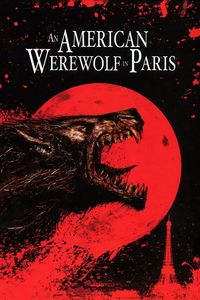
  • An American Werewolf in Paris (1997)

    An American Werewolf in Paris (1997)

    (In French, On Cable TV, April 2020) There’s a reason why An American Werewolf in London is still ranked as one of the finest horror-comedy films of all time and why no one ever talks about An American Werewolf in Paris, and it’s not mere Anglophilia. Part of the reason is because of sheer talent—the first film is from John Landis, while this one seems to come straight out of the studio’s sequel-extrusion department. The first is bold and crazy in its choices, whereas the second apes the first without too much conviction. The first has the guts of a memorable ending, whereas this one settles for an off-the-wall climax. The first has some incredible practical effects, whereas the second is stuck at the infancy of the CGI age. At least the second has a young and very cute Julie Delpy in an unusual horror-comedy role… but it’s not enough. An American Werewolf in Paris very clearly apes the first film, especially with its visions, but without quite recapturing what made it special. Seen from 2020, the film feels increasingly dated in its choices, musical or otherwise. It’s not, to be specific about it, that terrible of a film—you can watch it easily enough—but it’s a noticeable step down from the original and a mediocre film (at best) in its own right.

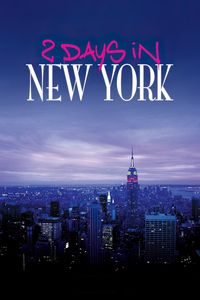
  • 2 Days in New York (2012)

    2 Days in New York (2012)

    (On TV, April 2020) By the time I realized that 2 Days in New York was the sequel to another film called 2 Days in Paris, it was too late to stop, and I was increasingly sure that I wasn’t in any hurry to watch another film in this series. A comedy of familial humiliation, it stars Julie Delpy and Chris Rock as a Franco-American couple living in New York whose lives are upended when her French family decides to visit. The visitors are skilled in creating trouble and cannot be trusted alone in society, whether because of excessive lust, property crimes or casual racism. The tensions keep rising within the couple, and Delpy the writer-director-star seems determined to create a film of maximum discomfort. Alas, there’s a hard limit to how much of this we’re willing to tolerate, and 2 Days in New York hits it pretty early on. To Delpy’s credit, the actors are fine, the story ends well and this is the film to watch if ever you want to see her fight with Vincent Gallo about her soul. (Fortunately, Rock does especially well as “the American boyfriend.”) One character is so strikingly unpleasant that even the movie is giddy about having him deported from the United States midway through. Still, this doesn’t do much to improve the result: 2 Days in New York is still a grating, deliberately off-putting experience. I didn’t exactly hate it, but I’m not planning on watching it ever again.

  • Trois couleurs: Blanc [Three Colours: White] (1994)

    Trois couleurs: Blanc [Three Colours: White] (1994)

    (On DVD, September 2019) Second entry writer-director Krzysztof Kieślowski’s intriguingly titled Trois couleurs trilogy, Trois couleurs: Blanc once against takes an off-beat approach to what could have been a stock premise, by blending a post-love story with a revenge fantasy taken to the hilt. Zbigniew Zamachowski headlines as a protagonist who loses everything once his wife (Julie Delpy, suitably repulsive) divorces him for impotence, but soon lands back on his feet with an ambitious plan to get back on top … and ruin her forever. The plot takes twists and turns that are at once funny and sad, with neither of the main two characters feeling like someone we can cheer for. There’s a clever use of uplifting plot devices in service of a downbeat moral trajectory (clearly, our protagonist has never heard of “the best revenge is living well”) and while the result is interesting, I can’t imagine revisiting this film for fun anytime soon.

  • Before Sunrise (1995)

    Before Sunrise (1995)

    (On DVD, November 2017) I came to Before Sunrise unusually, having first watched the middle (Before Sunset), then the end (Before Midnight) only to finish at the beginning of the Jesse and Celeste trilogy-so-far. This time, however, I knew what to expect: A time-compressed romance featuring Ethan Hawke and Julie Delpy at their most charming selves, having an extended conversation spanning relationships, philosophy and clever ideas. It worked well in the two latter movies and it works just as well here. This being said, I’m not sure I like Before Sunrise better than the others—it lacks the almost-real-time pacing of Before Sunset (with its masterful long shots) or the verbal pyrotechnics of Before Midnight’s most harrowing sequence. It also feels as if there are far more intrusions by third-party characters than in the other movies that focus intensely on the lead couple. But, as a first entry in the trilogy, it’s still special. Knowing how the story has unfolded afterwards, there is a profoundly ironic quality to Before Sunrise’s first scenes and dialogues, in which an old married couple argues in front of our protagonists and one of their first conversations is about jumping ahead “ten, twenty years” and being stuck in a marriage that “doesn’t have that same energy that it used to have.”  But Jesse and Celeste do have the same energy here than in later movies, and it’s a delight to just sit back and hear them exchange ideas and experiences just for the sake of it. Vienna is a good backdrop for that kind of not-so-aimless wandering (one of the final sequences of the movie shows us Vienna without Jesse and Celeste, to surprisingly poignant effect) and the entire film is quietly triumphant. I passed on Before Sunrise for more than twenty years, but it’s far better than it sounds on paper. But then again, I’m far more interested in writer/director Richard Linklater’s movies than I was before as well.

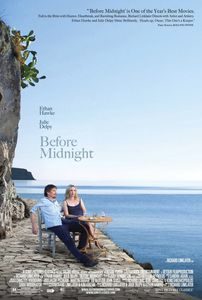
  • Before Midnight (2013)

    Before Midnight (2013)

    (Netflix Streaming, December 2016) I am, once amazed, at writer/director Richard Linklater and what he has managed to do with Before Midnight. I shouldn’t like that film. It’s the third in a trilogy whose first film I haven’t yet seen (although I was quite taken by the second one), it’s a chatty domestic drama and its dramatic centrepiece is a terrible argument between husband and wife. It’s really not my cup of tea, but much like I was halfway smitten by Before Sunset, I’m similarly charmed by Before Midnight. It’s a dialogue-heavy film, but what dialogue! The interplay between Julie Delpy and Ethan Hawke is fantastic even (especially) in the midst of their argument, and there’s a lot of wit in the way the conversations develop. The dialogue can be quotable at time (There’s a “bimbo” scene that’s an instant classic as far as I’m concerned) yet heartfelt soon afterwards. The development of the couple’s relationship over time and three films (yet in short, almost real-time bursts every time) is remarkable: in-between this trilogy and Boyhood, Linklater is carving a unique niche for himself as a filmmaker experimenting with time in ways others won’t even consider. The Greek Mediterranean scenery adds much to the film without undue effort, but the real heart of the film is in the script and the way the lead actors develop it. I’ve been taken by surprise twice by this trilogy, and I have to get my hands on Before Sunrise before long now that I think that I know what to expect.

  • Before Sunset (2004)

    Before Sunset (2004)

    (On DVD, September 2016) I wasn’t quite expecting to like Before Sunset. On paper, it sounds like a snooze: two ex-lovers meeting again a few years later, walking around Paris and talking about their lives. Sounds dull, right? Add to that the added complication that it’s a sequel to a film (Before Sunrise) that I haven’t yet seen and I was firmly expecting to fidget through the entire movie. Much to my surprise, though, Before Sunset quickly becomes almost hypnotically compelling. As two characters talk about the profound and the mundane, often in uninterrupted long shots showcasing Paris, we’re drawn to the movie almost as eavesdroppers, wishing them the best even though “the best” may end up breaking existing relationships with others. Writer/director Richard Linklater has become the master of unusual small-scale dramas, and Before Sunset looks like a peak in his filmography, creating sharp interest out of elements that would be dull in other hands. Ethan Hawke and Julie Delpy are fantastic in their roles and it makes perfect sense to learn that they’ve had some input in their dialogue. Utterly charming, uncommonly mature and compelling almost from beginning to end, Before Sunset is a beautiful anomaly, and the one main lesson I take away from it is that I must now see both Before Sunrise and Before Midnight.