Julien Duvivier

  • Pépé le Moko (1937)

    Pépé le Moko (1937)

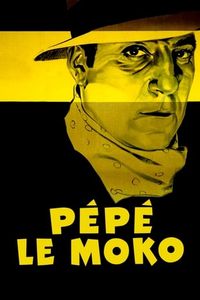
    (On Cable TV, October 2012) Often presented as part of the proto-film noir corpus, Pépé le Moko has a surprising aura of modernity about it—almost as if it was a 1950s film sent back twenty years earlier. In many ways, it prefigures the French Nouvelle Vague and its preoccupation with crime stories as a framework for character-driven moments. Here, we spend the film in Algiers, specifically in the labyrinthine Casbah where our titular character hides from the authorities. Pepe is an underworld prince—a master thief commanding respect and the attention of authorities seeking to flush him out. As the film begins, our protagonist gets stir-crazy from being confined in the same surroundings with the same woman for nearly two years. At the same time, another attractive woman passing through Algiers makes his acquaintance and the attraction is immediate. This obviously won’t end well (Pépé le Moko intentionally pushes things to poetic tragedy), but the way to get there is filled with a fascinating environment, intriguing characters, some good set-pieces and an approach that still feels compelling three-quarter of a century later. Writer-director Julien Duvivier makes a few good choices along the way, starting with casting Jean Gabin in the lead role. I was fascinated by some of the supporting characters—particularly the unusual beauty of Line Noro, and Lucas Gridoux as a cleverly shifty inspector. The ending shifts from crime thriller to romantic tragedy, but it does make sense—Duvivier is working in the French poetic realism tradition, and you can see in Pépé le Moko a springboard from that to the Nouvelle Vague. But even if you’re not quite up to speed in historical film movements, Pépé le Moko has enough to keep you interested from beginning to end.

  • Anna Karenina (1948)

    Anna Karenina (1948)

    (On Cable TV, March 2020) It’s a gift to cinephiles to see so many adaptations of a few classic novels—especially when they’re released within a few years. So it is that Leo Tolstoy’s Anna Karenina had two high-profile English-language adaptations in 1935 and 1948, forever begging for comparative pieces. I won’t quite do that here—not having read the novel is a handicap, and at some point, most black-and-while period dramas sort of blur into each other. Still, a back-to-back viewing of both versions shows that if the British 1948 one doesn’t have Greta Garbo, it does have a wonderful Vivien Leigh in the title role. The rest of it is a very respectable adaptation, once again focusing on the romantic tragedy of Karenina rather than the myriad subplots. (Some of the ensuing plot shortcuts can be confounding, but that’s the way it goes.) Anna Karenina is, in many ways, very Russian: winter, ballet, ill-fated protagonists and a shrug at the capriciousness of fate. I prefer this version to the prior one, what with a better use of exteriors, more confident directing and more expansive storytelling. Some of this reflects technical progress accomplished during a thirteen-year period—but some of it is due to writer-director Julien Duvivier’s approach to the material—and perhaps the influence of crowd-pleasing producer Alexander Korda. There’s some good control over the material, whether it’s the technical aspects of recreating historical Russia, the costumes, or the very good execution of the final scene. This being said, Anna Karenina does remain a costume drama, and one executed with late-1940s means. Modern viewers, if they’re just looking into checking out the story, may want to ease themselves into it by watching the 2012 version—maybe not quite as good as the early ones, but certainly more technically accomplished.