Juno Temple

  • Wonder Wheel (2017)

    Wonder Wheel (2017)

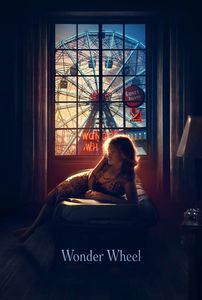
    (In French, On TV, February 2021) While Woody Allen’s life has long been shrouded in controversy, there was a definite shift in public opinion against him during 2017’s #MeToo movement, as tolerance for his numerous personal relationships with younger women became unacceptable to a much wider audience. In that chronology, Wonder Wheel may be the last of the pre-controversy Allen movies and also the last with plausible deniability from casual fans. (Meanwhile, everyone who watched Manhattan in theatres is left thinking, “Hey, we knew there was something off with the guy back in the 1970s!”)  It’s also likely to be one of Allen’s last “normal” films — he’s 85, just wrote a controversial autobiography and is going to be scrutinized forever, so it’s unlikely that he’s going to go back to his past production rhythm that led to a very long uninterrupted streak of annual movies. For better or for worse, Wonder Wheel is unmistakably a Woody Allen film: While it starts in a nostalgic vein reminiscent of Radio Days by taking us back to 1950s Coney Island, the lighthearted autobiographical bent soon becomes a lead-in to a more dramatic tale of adultery and jealousy à la Café Society, then of criminal intention à la Irrational Man. In other words, we’re in familiar territory well beyond the Windsor typeface and jazz music. While the spectacular opening shot of Coney Island beach shows that even Allen can use CGI to draw a historical tableau, much of the film is in his usual low-key style, with a character providing a running narration to tie together the scenes without having to shoot the connective plotting material. Acting-wise, it’s a typically gifted ensemble: Justin Timberlake as the dreamy beach monitor moonlighting as an author and narrator, Kate Winslet as the tortured lead, the ever-cute Juno Temple as the object of temptation and Jim Belushi in an unusually effective dramatic role. Think the worst of Allen-the-man (I do!), but as a filmmaker he’s long been able to deliver something interesting, even on full autopilot. The story does show signs of not quite being a coherent whole, with far too many digressions before getting to a quick finale, but it’s still watchable enough. This being said, the meta-narrative surrounding the movie is more interesting: While Allen may be on the verge of being disgraced out of the industry (his two subsequent films have been haphazardly distributed following Amazon’s decision to break their five-film contract), it may be time to start looking at his body of work as near-finite. I’m still not sure how I feel about that—I’ve had trouble enjoying many of his films on their own merits, but he was a major filmmaker for a very long time and even his steady-as-it-goes output away from the high points of the 1970s–1980s has been consistently interesting as long as you go along with his specific blend of nostalgia, philosophy, crime and strong actor showcases. We may come to look at Wonder Wheel as the last of the films he made within the American film industry, and that’s something perhaps more interesting than what the film is about.

  • Afternoon Delight (2013)

    Afternoon Delight (2013)

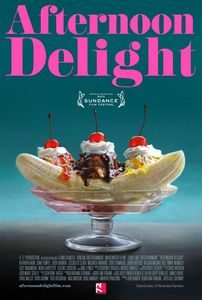
    (On Cable TV, November 2015) I’m not sure how or why Kathryn Hahn ended up associated with raunchy comedy in my mind (although watching her roles as borderline-deviant in Bad Words and This is Where I Leave You probably explains it), but it may have led to wrong assumptions in watching Afternoon Delight.  Billed as a low-key comedy in which a frustrated suburban mom changes her life after befriending a stripper, Afternoon Delight ends up being a somewhat miserable drama in which a well-off mother uses then discards a sex worker to rekindle her marriage.  This sounds worse than it is, but the truth is that there’s a surprisingly reprehensible way to read Afternoon Delight that may not be what writer/director Jill Soloway intended.  In-between the naturalistic staging, unspectacular camera work, tonal issues and decidedly un-triumphant ending in which a character gets sidelined after serving her purpose, Afternoon Delight is the kind of independent low-budget drama that seduces with an interesting premise and unsettles with an intensely uncomfortable third act. (That princess-trinket scene… heart-breaking.)  Hahn does quite a bit better as a complex lead character than in her more usual scene-stealing comic roles, while Juno Temple is also quite good as the young woman who upsets the protagonist’s world – both of them, though, aren’t well-served by the end stretch of the film, which seems happy throwing away an entire character just to make its lead couple happy.  Maybe that’s the point; maybe that’s an accident –all I know is that by the end of Afternoon Delight, I didn’t want anything to do with anyone in the film.

  • Horns (2013)

    Horns (2013)

    (On Cable TV, November 2015) Tone control is a tricky thing, and few films show this as well as Horns.  Adapting Joe Hill’s novel is not an easy proposition, considering how the book veers between comedy and horror and heartfelt redemption story.  Novelists can usually control tone better than directors: prose works differently, and what shows up on-screen often suffers from excessive literalism.  So it is that while Horns’ screenplay considerably simplifies and strengthens the book’s story (to the point where reading a synopsis of the book can feel like a comedy of overstuffed plotlines), this big-screen version can’t quite manage its transition from comedy to horror.  The film is best in its first half, as our protagonist discovers that he’s been cursed with invisible horns, the power of persuasion and a gift for allowing strangers to tell them their deepest secrets.  This leads to a number of very funny sequences, but those laughs get fewer and fewer as his newfound powers lead him to understand what happened on the night of his girlfriend’s murder –a murder for which he’s the prime suspect.  Chaos engulfs his small town, friends turn to enemies, parents can’t be trusted and the secrets he discover may not be the ones he wants to hear about.  Daniel Radcliffe is quite good in the lead role, with Juno Temple being as angelic as she can be as the (idealized?) dead girlfriend.  Despite Horns’ problems, this is Alexandre Aja’s least repulsive film yet and one that suggests that he may have a future beyond genre-horror shlock.