Katharine Hepburn

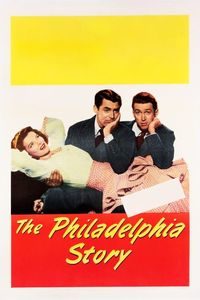
  • The Philadelphia Story (1940)

    The Philadelphia Story (1940)

    (On DVD, June 2018) The great things about digging deeper and deeper in a hobby is that the digging eventually produces its own rewards. In my case, I’ve been watching older and older movies, and discovering new favourite actors. To have The Philadelphia Story pop up on my pile of films to watch at this point is a gift: A movie starring Katharine Hepburn and James Stewart and Cary Grant? What have I done to get such a treat? Even better: it’s a screwball comedy, fast establishing itself as one of my favourite bygone genres. I was primed for a good time and got exactly what I wanted: A fast, witty, fun romantic comedy featuring Hepburn at her most alluring, Stewart as his usual sympathetic self and Grant in a plum comic role. The script provides witty lines, great characters and a savvy understanding of the mechanics of the genre, while director George Cukor keeps things moving even as the film multiplies small subplots on the way to a satisfying conclusion. Among supporting players, Ruth Hussey is surprisingly fun as a no-nonsense photographer, while Virginia Weidler is a discovery as a sassy young sister. Still, this is a picture that belongs to Hepburn, perfectly cast as a woman struggling with goddess-hood. Both Stewart and Grant also play to their strengths, helping to make The Philadelphia Story a definitive statement about three screen legends. It still plays exceptionally well today.
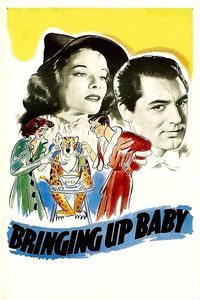
  • Bringing up Baby (1938)

    Bringing up Baby (1938)

    (On Cable TV, January 2018) All right. This is it. I am a contended cinephile. When I embarked on a conscious program to watch older movies, I did so supposing that sooner or later, I’d watch a movie that I’d fall in love with. While I’ve been really happy to revisit some old favourites and see them hold up (2001: A Space Odyssey, for instance), or to confirm that some beloved classics are beloved for a reason (Singin’ in the Rain, anyone?), I started watching Bringing up Baby without any expectations other than crossing off a popular title from 1938. Within minutes (specifically the torn dress sequence), however, I was squarely identifying with Cary Grant’s proto-nerd protagonist, falling in love with Katharine Hepburn’s drop-dead gorgeous romantic interest and gasping at the speed and precision of director Howard Hawks’ movie. To put it simply: Bringing Up Baby is as funny, witty and fast as any contemporary romantic comedy, and the 1938 year of release is irrelevant. The plot is a big ball of nonsense that has something to do with a paleontologist, an heiress and a tame leopard. But never mind the plot, as the real strength of the film is in its witty fast-paced dialogue. Hepburn is an instant favourite as a character too crazy to be true … but the entire film is like that, and it plays beautifully even eighty years (!) later. Those who complain that “old” movies are dull and slow clearly haven’t seen Bringing up Baby. It’s raucously funny even today—while contemporary comedic theory holds that chicken and monkeys are the funniest animals, the film makes a strong case that leopards may be a comic engine of their own, as several of the film’s funniest sequences hinge on the eponymous “Baby.”  (To be fair, one scene also involves chicken. Being eaten by the leopard.)  Considering that the film is often upheld as a representative example of screwball comedies, I have a feeling that I’ve just discovered an untapped vein of pure cinematic bliss. At the pace at which I see movies, I often see them and move on, never to re-watch again. In Bringing up Baby’s case, however, I ended up ordering it on DVD (along with three other similar Hepburn comedies) within days of seeing it. I have a feeling I’ll be extolling its virtues and often lending the DVD in the next few years.

  • Guess Who’s Coming to Dinner (1967)

    Guess Who’s Coming to Dinner (1967)

    (On Cable TV, January 2018) It’s not a failure if some social-issue films don’t work as well now than at the time of their release—sometimes, the world moves in the direction advocated, and as a result the film looks as if it’s been outpaced by the future. So it is that the central conceit of Guess Who’s Coming to Dinner (a white girl bringing back a black fiancé home for her parents’ approval) doesn’t quite have the same charge fifty years later. And that’s quite all right. This being said, let’s not take this for a condemnation of the work from director Stanley Kramer, or by Spencer Tracy, Sidney Poitier, and Katharine Hepburn. After all, the film finished shooting six months before Loving v. Virginia actually legalized interracial marriages across the United States. But it does feel a bit stuffy, all the way to a conclusion that boils down to an intensely paternalistic “Father has thought about it and will let you crazy kids do whatever you want” conclusion. It’s not quite fair to dismiss the film in such a way (and indeed, Guess Who’s Coming to Dinner’s ending gets far more potent once you read about how Spencer Tracy died two weeks after shooting his final scene and final film with long-time co-star Katharine Hepburn) but it is definitely a reflection of its time, and time has moved on.

    (Second Viewing, On Cable TV, October 2018) As I suspected, revisiting Guess Who’s Coming to Dinner after watching a handful of Spencer Tracy/Katharine Hepburn movies has significantly improved my opinion of the film. This was a partial re-watch, focusing on the scenes featuring Tracy and Hepburn, and it affirms that Guess Who’s Coming to Dinner is a terrific victory lap for Tracy, whose kindly-father persona here acts as a capstone to a career that saw numerous pairings with Hepburn at various moments in their careers. It’s easy to imagine a shared backstory for their characters that includes bits and pieces of Woman of the Year or Adam’s Rib, and that’s when context can become crucial in seeing what the fuss is about a particular movie. If you de-emphasize the racial message and focus on the Hepburn/Spencer couple, this film becomes a satisfying epilogue to a shared on-screen career, well worth watching if you’re familiar with the rest of the Hepburn/Tracy filmography.