Katharine Ross

  • Games (1967)

    (On Cable TV, July 2021) I had a momentarily double take in looking at Games’ TV log entry — talking about a 1967ish film featuring “A young couple who are into kinky mind games,” screams Who’s Afraid of Virginia Woolf? to me, but as a viewing attests, there’s a gulf of difference between the two movies: Games is a pure genre thriller, occasionally silly and ultimately quite glum. It does feature a couple into mind games (first shown as party tricks) but slowly sinks into a tangled web of deception and murder. Simone Signoret is the film’s most remarkable asset as a mysterious older woman who turns the tables on the couple, even if said couple is played by none other than Katharine Ross and a surprisingly young James Caan. For noted iconoclast director Curtis Harrington, Games is about as close to mainstream stuff as he did — there’s a pleasant lunacy to the overlapping plots that come to dominate the film, but it’s executed in relatively straightforward fashion for a twisty thriller. The colourful cinematography is very much of tis time, and now gives an interesting period patina to the result. You can slot Games squarely in the “solid movie” category — not a masterpiece nor particularly memorable, but well-made and entertaining enough to make up an evening’s entertainment.
  • The Legacy (1978)

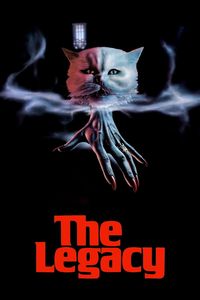
    The Legacy (1978)

    (In French, On Cable TV, February 2021) If you absolutely have to pick a reason to watch The Legacy, the best is probably the lead casting — young Katharine Ross and Sam Shepard (with dark hair and moustache!) in the film where they met before getting married a few years later. Otherwise, there’s not a lot of intellectual nourishment or entertainment satisfaction in the rest of the film. In a convoluted tale of how a British aristocrat turns to occult satanic practices to keep up family traditions, director Richard Marquand is at his best in creating an atmosphere, and at his worst when turning to generic death sequences as a structural device. (No, but seriously: kill off all the sacrificed at once rather than go through individual risky death sequences — no fuss, no trouble and you’re done. But that doesn’t make for a feature-length horror film.)  The Legacy feels a bit more old-fashioned than its production date — although technology does deliciously intrude over the gothic atmosphere in what is perhaps the film’s most intriguing scene. Ross and Shepard spend most of the film running around screaming, and while the ending does bring everything up a notch, it’s too late to make The Legacy more than a passable curio for dedicated horror fans.

  • Shenandoah (1965)

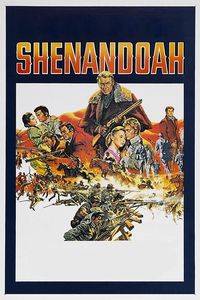
    Shenandoah (1965)

    (On TV, January 2021) It’s interesting that you could (erroneously) pinpoint Civil-War drama Shenandoah as being from the early seventies just by paying attention to its politics. Featuring James Stewart as a Virginian farmer with a less-than-enthusiastic opinion of the war coming to claim his sons, it’s a film with a far more muddled portrayal of Confederates and Union forces than previous eras. Perhaps the most amazing thing about the film is how it seems to operate with a very 1970s antiwar attitude despite being from the mid-1960s—There’s a clear war-is-hell attitude here that would extend to WW2 dramas five years later. The point here is the toll that the war takes on families—the multiple strands of the plot are all about personal loss for abstract political reasons, and the film is merciless in what it ends up taking from the lead character. I don’t think the film would have been nearly as interesting without Stewart in the lead, leaning on his mild persona, his drawled spoken mannerisms and his dogged facial expressions to earn so much sympathy from audiences. (It’s also Katharine Ross’s screen debut.) I’m not going to overhype Shenandoah: it’s often long, repetitive and perhaps too insistent on its themes, although that last may be forgiven considering how it struck in unfamiliar directions for mid-1960s movie audiences. But it’s also unusual in how it’s a Civil War film that avoids big battles (and burns down Union trains!), heartfelt in portraying the senseless toll of war on decent families and a good late-career showcase for Stewart. There have been many much duller Civil War dramas in Hollywood history.