Space Jam: A New Legacy (2021)
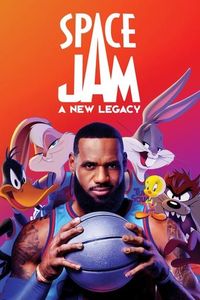
(On Cable TV, December 2021) Let’s not pretend that the first 1996 Space Jam was an artistic masterpiece or a heartfelt achievement — it was meant to sell toys, glorify Michael Jordan and keep the Looney Tunes relevant. As such, Space Jam: A New Legacy is very much in-line with expectations. Somehow, though, it feels worse. The film does not exist in a context where it’s one of many original works pushed by Warner Brothers — it’s meant as a tentpole among many other tentpoles, squeezing all potential out of commercially viable concepts. When LeBron James is absorbed by the film’s “Warner 3000 Serververse” to meet with the Looney Tunes and interact with the rest of the Warner-owned intellectual properties, the film feels like a dystopian celebration of cultural prostitution, with noble emotions packaged in sellable units for some uncaring financial overlord. I’m being more cynical than usual here, and I’m not sure why: After all, if there’s any movie studio that I like more than others, it’s Warner Brothers all the way to the gangster films of the 1930s. I’m also unusually fond of blending universes for comic purposes, and any metafictional component usually grabs my interest. But as the film greedily pillages from dozens of Warner franchises, I’m not amused as much as made acutely conscious of the hard walls between the Warner, Disney, Sony or Paramount properties — it’s all a hustle meant to subjugate storytelling to corporate initiatives, and A New Legacy is particularly naked in its intent. I’m not saying that it can’t be funny or surprising or entertaining (I’m not sure who I was least expecting to show up here: Ingrid Bergman, or A Clockwork Orange’s droogs) but it’s more wearying than anything else for anyone with any degree of media literacy. (It’s increasingly infuriating to see The Iron Giant being heralded as one of Warner’s masterpieces when it was essentially dumped and ignored by the studio upon initial release.) LeBron James himself is fine in his own role — but trying to make the film all about father-son bonding seems hilariously misguided when there aren’t more than five minutes of footage unmodified by special effects in the entire film. At least the Looney Tunes are decently funny, and their integration with other Warner properties is closer to the spirit of the cartoons than the cash-grab of the film. Otherwise, A New Legacy is definitely not interested in being just a film: it’s interested in selling you Warners, LeBron, Looney Tunes, basketball, video-games and chunks of the Warners back-catalogue — essentially, whatever is worth discretionary money to the target audience. I wouldn’t be so annoyed by the result if Warners was still in the business of making strong standalone films. But A New Legacy exists during a period in Warner’s leadership that’s all about retreads and catalogue exploitation to an extent that feels like storytelling bankruptcy. I sat through it without pain, but I felt distinctly more cynical by the end of it. Which is saying a lot considering where I started from.