Lee Tracy

  • Doctor X (1932)

    Doctor X (1932)

    (On Cable TV, May 2021) The Universal Monster films of the early 1930s get a lot of acclaim even today, but there were many other interesting horror films from other studios during the Pre-Code era, and some of them can feel surprisingly modern. From Warner Brothers, for instance, we had Doctor X and the subsequent Mystery of the Wax Museum, both of them shot in two-colour Technicolor and clearly anticipating later horror film tropes. Doctor X immediately announces itself as being Pre-Code for quickly jumping in a story with a cannibalistic killer, with dismemberment, rape and necrophilia not being far behind. What makes the film odder today is its insistence on keeping a somewhat prominent comic relief character as protagonist — a terribly unprofessional journalist played by Lee Tracy meddling around the edges of a police investigation into mysterious deaths whose culprit can be narrowed down to one of the mad scientists at a local medical academy. Doctor X remains foreboding — the colour scheme of the film oscillates between sickly green and disquieting orange, and director Michael Curtiz often plays off German expressionism in his use of shadows. The mad-scientist aspect of the plot still has quite a bit of charm (I found myself imagining how the same plot could work in a 2020s setting), and there’s no mistaking Fay Wray (future star of the following year’s King Kong) in the damsel-in-distress role. The contemporary setting of the film in 1930s New York City is interesting, and the slick dialogue adds another layer of interest. (Surely I can’t be the only one fascinated by a 1930s film with a “Doctor Xavier” heading an institute for gifted youngsters mad scientists?)  Doctor X is well worth a look even today, and takes up a surprisingly high spot on my list of essential 1930s horror films. Like its stablemate Mystery of the Wax Museum, the 2020 colour restoration of Doctor X makes it look fantastic and far more modern than its production date.
  • The Half-Naked Truth (1932)

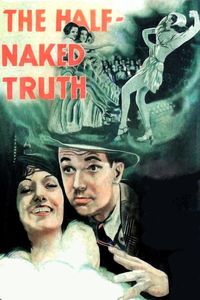
    The Half-Naked Truth (1932)

    (On Cable TV, March 2021) After seeing the entire Mexican Spitfire series, it’s hard not to seek out other movies featuring Mexican-born Lupe Velez, not only one of Hollywood’s most striking beauties of the 1930s but also one of the few Latin actresses to find success playing explicitly Latin characters. The Half-Naked Truth finds her in the middle of her Hollywood career, well-established but not yet the headliner she would later become. Here she plays a hot-tempered dancer, often only a prop for the true protagonist of the film, a publicity agent doing his damnedest to promote his client. Velez is always worth looking at, of course, but even she becomes a supporting player to Lee Tracy’s unhinged performance as a motormouth hustler. The comedy is fast and absurd and intense — far more than you’d expect from a 1930s film, excluding the screwball genre. But it works — although the film eventually drives to a somewhat underwhelming conclusion, and seems to be missing a third act somewhere. It’s useful to note that many members of the film’s crew would go on to do bigger things later on, such as director Gregory La Cava going to much-better comedies such as My Man Godfrey. Still, even as an early work for everyone involved, it’s more than watchable.

  • Millionaires in Prison (1940)

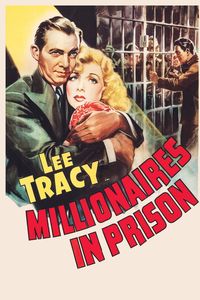
    Millionaires in Prison (1940)

    (On Cable TV, March 2021) The only thing more remarkable than Millionaires in Prison’s blend of several elements (medical thriller, buddy con comedy, social critique, men in prison drama) is that it tries to do it all in barely more than an hour. As a result, expect quite a few herky-jerky swerves from beginning to end, as director Ray McCarey does his perfunctory best with a weird script and (produced in the factory setting of B-grade Hollywood) wasn’t particularly interested in being any good for posterity. It starts as five millionaires are convicted and end up in the same cell block, but the following minutes can go from comedy to romance, only to end up in inspiring medical drama by the end of the film. If the film contains social commentary, it’s implied at best — this isn’t meant to be profound stuff. A letdown considering the title, Millionaires in Prison does get a few laughs thanks to its actors more than its script—Lee Tracy in particular. Not recommended except maybe as a curiosity or an example of lower-grade filmmaking circa 1940s.