Leo McCarey

  • Make Way for Tomorrow (1937)

    Make Way for Tomorrow (1937)

    (On Cable TV, December 2020) Some incredible movies should come with a warning, and Make Way for Tomorrow is a tragic tearjerker in sheep’s clothing. The setup looks as if it’s setting up a comforting watch, as a fifty-year-long couple is forced by economics to live apart “for a while”: They have five children, but none are able to accommodate them both. As time passes, the two elderly parents’ efforts to get back together are fruitless, and their children are of absolutely no help. But if you’re waiting for everyone to figure out a solution, for the cavalry to arrive, for the Hollywood happy ending to wrap it up, here is your last and most essential warning: This is not going to turn out well. Director Leo McCarey (often better known for comedies!) is merciless in hammering the script’s message for 92 almost unbearable minutes. If you really want to be clinical about it, this isn’t much of a film for a narrative standpoint: there is no reversal of fortune, there is no improvement, there are no twists: it just keeps getting worse every single minute. But the most tragic thing about Make Way for Tomorrow (what a title!) is not what specifically happens to the characters – it’s the cold certainty, rarely expressed in cinema, that we don’t usually get happy endings in real life. Unlike film, the camera doesn’t cut away to the ending credits: people keep on living, degrading, becoming increasingly isolated and that is the natural order of things.

  • Love Affair (1939)

    Love Affair (1939)

    (On Cable TV, February 2020) By sheer happenstance, I happened to have Love Affair waiting on my DVR after watching An Affair to Remember and finding out that it was a remake of this film. Watching both at a few days’ interval only highlighted the similarities between both versions and what it takes to make it work. Both movies are easier than most pairs to analyze: after all, both are (co-)written and directed by Leo McCarey, and both share a structure that is almost scene-per-scene identical. Love Affair is in black-and-white, whereas An Affair to Remember is in Technicolor, but that’s not the most significant difference: Stars Charles Boyer and Irene Dunne are in the lead roles and while they’re certainly not bad or unlikable actors, they simply can’t compare to Cary Grant and Deborah Kerr, who shoulders almost all of the remake’s added interest over its progenitor. Perhaps the best example of this difference can be found in the weepy last scene—a bit silly and melodramatic with good actors, but somehow almost convincing with superior ones. Oh, I liked Love Affair well enough, despite thinking that the first half isn’t as funny as the remake’s first half. It’s more even and less frustrating in parts when compared to the melodramatic remake. But even if the remake is flawed, it’s still far more memorable than the first movie. So it goes—Hollywood alchemy, unpredictable and striking at once.

  • An Affair to Remember (1957)

    An Affair to Remember (1957)

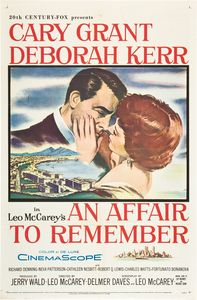
    (On TV, February 2020) While An Affair to Remember is often hailed as one of the finest romantic movies of all time, it’s amazing to see how much it walks a very fine line between an honest romantic comedy and overcooked romantic schmaltz. The film is almost clearly divided into two halves, and as things unfolded, I ended up watching the film in two separate sessions separated by that division. The first half of the film is significantly better than the second, as a world-famous playboy meets a retired nightclub singer aboard a transatlantic liner bound for New York. Comedy and smart dialogue take precedence in this flirty first half, culminating in a cleverly unseen kiss that complicates everything for both characters, as they are already engaged to others. Faster than you can say, “Sleepless in Seattle will steal this,” they agree to meet on top of the Empire State Building six months later. It’s all funny and charming and Cary Grant can do no wrong and Deborah Kerr (despite an unflattering hairstyle) clearly shows why she was one of the best actresses of her time. Then there’s the break: the characters disembark from the ship in Manhattan, and the film loses the pressure of the seagoing setting. But that’s also the point where the film piles on the contrived obstacles, what with one character becoming paraplegic on the way to a weepy conclusion. It works largely because of the actors, because suave, charming and sophisticated Grant could make people swoon by reading the telephone book at that time of his career. It ends on a note that would be unbearable had the film starred nearly anyone else—good casting, certainly, but not-so-good screenwriting. Despite its flaws, there’s no denying that An Affair to Remember is a film to remember as well: not as a completely successful film as much as an imperfect one that succeeds despite itself based on certain very specific elements. Amusing enough, it’s directed by Leo McCarey, who also directed Love Affair, the film on which An Affair to Remember is based.

  • The Awful Truth (1937)

    The Awful Truth (1937)

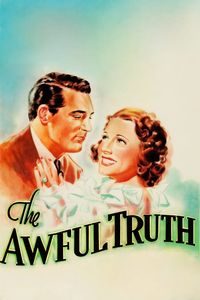
    (On Cable TV, May 2018) Considering that The Awful Truth is the movie that created Cary Grant’s comic persona, we should be grateful for its existence and for director Leo McCarey’s instincts in guiding Grant toward his vision of the role. This is a late-thirties screwball comedy that practically exemplifies the sophisticated and urbane “Comedy of remarriage” so characteristic to the years following the introduction of the Hays Code: Here we’ve got Grand and co-star Irene Dunne as an unhappily married couple that decides to divorce, then sabotage each other’s new affairs before realizing that they are each other’s best partners. (Try not to think too much about the liberties allowed to only the very rich people in the 1930s.) It’s decently funny—maybe not as much as other later efforts from Grant, but still amusing, and Dunne has good timing as well. (Plus Skippy the dog!) Divorce has rarely been so much fun. The comedy isn’t just about the lines, but the physical performances of the actors and their interactions—read up on the improvisational making-of imposed by McCarey to learn more about how the picture was shaped by on-set ideas and follow-up. If I didn’t already know how much I love screwball comedy, The Awful Truth would have taught me.