Leonard Nimoy

  • 3 Men and a Baby (1987)

    (Disney Streaming, August 2021) Perhaps the most noteworthy aspect of 3 Men and a Baby now is outside the film itself, as an evocative example of box-office irrelevance. Upon release, it became the highest-grossing Hollywood movie of the year, outclassing such films as Full Metal Jacket, The Princess Bride, Predator, Lethal Weapon, RoboCop, Spaceballs, Evil Dead II or Wall Street. Of course, the irony today is that any of those movies are significantly better-known than 3 Men and a Baby, and for good cause: they all still have a daring, distinctive quality, whereas 3 Men and a Baby was always meant as a common-denominator kind of comedy, the type of film that families grudgingly compromise on seeing together, especially at Christmastime, which was the film’s savvily-targeted release season. To be fair, it’s not a bad film: The plot seems custom-made for the Christmas season as well, as three bachelors are abruptly forced to take care of a baby, the result of one of their casual romantic trysts. Directed by Leonard Nimoy (a fascinating piece of trivia by itself), 3 Men and a Baby makes good use of the charms of co-leads Steve Guttenberg (in one of his best movies), Ted Danson and Tom Selleck, who’s particularly good at selling the emotional core of the story. The dynamic opening sequence sets the tone of a bachelor’s utopia with a great apartment and a wild party — but the real fun begins as a baby is dropped on their doorstep and they need to figure out everything with minimal female supervision. I’m not sure I ever watched the entire film before, because even if some elements were familiar, the entire criminal subplot felt newish (and unnecessary, even if something had to bring the film to 102 minutes). Otherwise, 3 Men and a Baby is predictable, with big plot strings seen well in advance, and a feeling of comfort amply fulfilled by the big happy finale. You can see why it made so much money… and also why it slipped away from the collective unconscious even as its contemporaries have shown stronger staying power. Here is something to consider when you see dull or terrible films rake in the money even as some fan favourites languish: you can’t always tell what will endure and what won’t.

  • Star Trek III: The Search for Spock (1984)

    Star Trek III: The Search for Spock (1984)

    (Second Viewing, On Blu-ray, November 2018) The running gag about the first Star Trek movies is that the even-numbered ones were bad and the odd-numbered ones were good, but it’s all relative—Star Trek III: The Search for Spock may be a bit dull at times, but it’s not quite as bad as the first or fifth instalments. Directly picking up where Star Trek II left off and leading directly to Star Trek IV, this instalment is entirely dedicated to tying up the big loose end left by the second film: Spock’s death. It feels more like an episode of the TV show that a movie-worthy story, although there are definitely stronger moments scattered in the film. I mean: Spock is found! Kirk’s son dies! The Enterprise self-destructs! Compared to Star Trek: Genesis, at least it’s to save Spock, and part of the film’s explicit moral is that sometimes a single person can justify heroic sacrifices. At least The Search for Spock is reasonably interesting to watch, with nearly every original cast member getting something to do. The special effects, alas, are very uneven: Some sequences look terrible, while others look great. Leonard Nimoy’s direction is usually average, falling back on TV-worthy framing and never quite attempting anything out of the ordinary. The Search for Spock all amounts to an acceptable entry, and one that doesn’t quite overstay its welcome at 105 minutes.

  • I am Spock, Leonard Nimoy

    I am Spock, Leonard Nimoy

    Hyperion, 1995, 352 pages, ISBN 0-786-86182-7

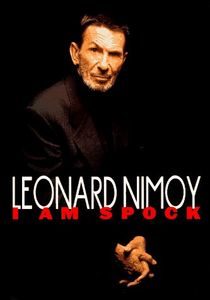
    At some point over the past few years, I got my hands on a copy of Leonard Nimoy’s second autobiography, titled I am Spock.  Dimly aware that the title was a reference to a first autobiography titled I am not Spock, I refrained from cracking open the book, hoping that someday I’d be able to read both books back-to-back and get the best out of the entire experience.  Against all odds, I got my wish when my work manager left a battered paperback copy of I am not Spock lying on her desk.  So how do the two compare?

    It’s worth keeping in mind that I am not Spock was published in 1975, at a time when cult interest in the then-defunct first Star Trek series was growing rapidly.  Nimoy earned much attention for his portrayal of the alien Mr. Spock, an unlikely sex-symbol who threatened the actor with typecasting and caused all sorts of amusing confusion when fans called by his character’s name or reflected upon him the qualities of the character.  I am not Spock, upon close reading, reveals no real animosity between Nimoy and Spock –merely a mildly-frustrated desire to distinguish between the character and the actor.  (Hence the book’s dialogues between actor Nimoy and character Spock.)

    While much of I am not Spock is about Nimoy’s formative experiences and the roles he played before and immediately after Star Trek, you can imagine that much of the book is about the making of Trek’s original three-season run, and the conflicts that eventually developed between Nimoy and the producers.  It’s an early revealing look into the difficulties of the show (one that would later be completed by other Trek autobiographies) that retains an evergreen fascination for fans.  Interestingly enough, it’s the now-dated parts of the book that remain most fascinating for contemporary readers, from slightly-psychedelic passages in which Nimoy argues with his alter-ego, or the typically-seventies expressions, hobbies and attitudes that Nimoy describes.

    I Am Spock’s title became mandatory considering that fans were not at all pleased with the title of the first book.  Hoping to make amends, Nimoy presented his twenty-years-later follow-up autobiography as even more of an unabashed love letter to his character.  You’d think that the narrative would simply pick up where the previous one ends, but I Am Spock incorporates and updates much of the previous book’s content.  The good news is that it makes the previous book redundant if you can’t find it.  The bad news is that if you’ve just read the previous book, much of the second one will feel like a re-thread, down to the same anecdotes and punch-lines.  There’s also a peculiar weirdness in reading I am Spock as a response to a book that it essentially contains: Your mind can expand in strange directions trying to make sense of this.

    But there is new content as well.  On the Star Trek front, I am Spock discusses the unexpected revival of Trek over the years, which included a series of successful movies featuring the cast of the original series.  On non-Trek matters, Nimoy discusses other acting jobs, and a successful foray in movie directing that saw him direct two Trek movies and the commercially-successful comedy Three Men and a Baby.  This, with the added benefit of twenty more years’ hindsight, make the follow-up book quite a bit more interesting than the 1975 installment: it presents Nimoy as a seasoned entertainer, able to fluently discuss challenges behind and in front of the camera. 

    One almost expects a third installment in 2015 called I Will Always be Spock; Nimoy, after all, has continued his association with the character by playing him as recently as in 2013’s Star Trek Into Darkness, and has added more roles and artistic activities to a lengthy career. 

    Unusually enough, I would advise time-pressed readers to skip the first book and focus on the second: while both are breezy, fun and revealing autobiographies, the second one has more to offer and repeats much of the first book’s material.  Reading them back-to-back is not a fascinating experience in how twenty years can change a person: it’s more of a exercise in repetitiveness.  Leonard Nimoy is Spock, and let’s leave it at that. (Sorry, Zachary Quinto.)