Liam Neeson

  • Taken 3 (2014)

    Taken 3 (2014)

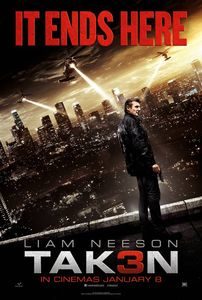
    (Netflix Streaming, November 2015) It may be time to sit down with Liam Neeson for an intervention.  For all of the money he must be making in doing these action thrillers at an age where most actors are trying to slow down, it’s not movies like Taken 3 that will make up his end-of-career highlights reel.  Duller and clunkier than most action thrillers, Taken 3 stays near Los Angeles in depicting a third family crisis for Neeson’s protagonist.  This time, though, the film dares to kill a returning character and the protagonist’s fury seems curiously tame compared to the first two films.  But then again, he’s being followed by criminals and the police.  Less xenophobic but far less interesting, Taken 3 struggles with the bare essentials of its genre: the action sequences are badly directed by Olivier Megaton, with choppy editing, incoherent sense of space and uncontrolled dramatic progression.  Taken 3 is lazy filmmaking at best, almost uninterested in its own story on the way to delivering another film in the series.  It doesn’t do much, wastes the dramatic potential of a death in the family and feels rote even at the best of times.  Neeson is far better than the material, and he’s the sole reason why this wasn’t a straight-to-video release.  What’s more damaging, though, is that he’s getting to be, well, a bit boring in these action roles.  Next to the underwhelming Run all Night and A Walk Among the Tombstones, we’re far from the dramatic heft of The Gray, or the bonkers action of Non-Stop or The A-Team.  I hope he starts picking better projects soon.

  • A Walk among the Tombstones (2014)

    A Walk among the Tombstones (2014)

    (On Cable TV, July 2015) As much as I enjoy seeing Liam Neeson taking on action roles in borderline-exploitation thrillers, the problem is that he’s usually far better than the movies surrounding him, and he’s such a good actor that an unintentional layer of irony surrounds his Liamsploitation streak.  So it is that his most enjoyable roles have been in over-the-top thrillers, from Non-Stop to Unknown to The A-Team to Taken.  With the unusual exception of The Grey (serious film ; fantastic role), he doesn’t do as well in straight-up crime thrillers like A Walk Among the Tombstones, a humorless and dark suspense film in which he plays a private investigator tracking down the murdered wife of a mobster and finding a pair of serial killers.  It’s a dirty grimy little tale, and while Neeson is irreproachable as an ex-alcoholic retired cop turned to private investigations, the film itself is far duller than it ought to be.  In other words; Neeson is awesome, the film is not fun.  Adapted from a late-sequence Scudder series novel by Lawrence Block, the film sometimes feels like an overblown TV series pilot, complete with the story of how the protagonist meets and befriends his sidekick.  While it would be churlish not to like the result as a run-of-the-mill suspense film, seeing Neeson headlining the film does bring up unfair expectations.

  • Run All Night (2015)

    Run All Night (2015)

    (Video on Demand, June 2015)  Are we ever going to get enough of Liam Neeson as an action hero?  Maybe not just yet, especially when he can elevate straight-up genre material with a good performance.  In Run All Night, he plays a little bit more downtrodden than usual as a Mob enforcer far past his prime, reduced to playing Santa Claus for his boss’ family in order to pay his heating repair bills.  He is being kept around out of loyalty by the Big Boss (Ed Harris), but when things heat up and his estranged son kills the Boss’ son, the usual rules don’t apply and what follows is a night-long chase through New York, as organized crime, hired assassins and the police all try to find our heroes.  It gets a bit complex at times, but the point is seeing Liam Neeson’s character regain his dignity and (once again) save his family from harm.  Director Jaume Collet-Serra seems a bit more restrained than usual here, although the frantic Google-Earth-inspired scene transitions give a taste of his trademark directorial insanity.  There are no crazy plot twists, though, as Run All Night remains a straightforward crime thriller, all the way to a relatively conventional ending.  It’s not quite as compelling as other Liamspoilation movies, but there’s undeniable satisfaction in seeing Neeson face off against Harris (even if mostly by phone) in a grim dark thriller with some thematic depth.  It probably could have been a bit better – Joel Kinnaman is a charisma void in one of the film’s major roles and the script could have used a bit of tightening up.  Neeson can do better, Collet-Serra can do better, we viewers can do better.  But as far as such crime thrillers go, it’s a solid middle-of-the-road effort.

  • Non-Stop (2014)

    Non-Stop (2014)

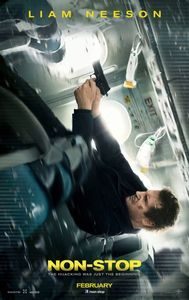
    (On Cable TV, November 2014) Is it time for yet another Liam Neeson thriller?  A better question would be: when isn’t it time for another Liam Neeson thriller?  An action star at a time when most other actors his age are trying to get out of the strenuous business, Neeson reliably takes on another grizzled veteran able to intimidate grown men simply by stepping into frame.  Here, he’s back in action as a federal Air Marshall who discovers an intricate conspiracy aboard his flight.  Racing against time, will he be able to discover who’s goading him by text messages?  It’s not a big plane, and there are only 150 suspects…  Director Jaume Collet-Serra handled the ensuing madness with occasional flourishes of style (most notably with a shot floating throughout the airplane), never quite letting the insanity of the script run away from him.  It’s a little bit demented, but just enough to keep the screws tightened during an exercise in a familiar “plane in peril” sub-genre.  (It’s quite a bit better than Flight Plan, if anyone remembers that)  While the specifics of the plot don’t always make sense, and the rationale behind the plot isn’t something that can really be explained while sober, there’s something interesting about an airplane thriller revolving around the very notion of inflight post-9/11 anti-terrorism security.  (Also ingenious: The on-screen effects showing us the text messages read by the characters.)  Lupita Nyong’o was cast in this film quite some time before winning an Oscar, so don’t be surprised to see that she has practically an extended cameo.  While the result isn’t particularly good, it is good enough to be entertaining when it needs to be, and fully exploits the added gravitas that Neeson can bring to any role.

  • Taken 2 (2012)

    Taken 2 (2012)

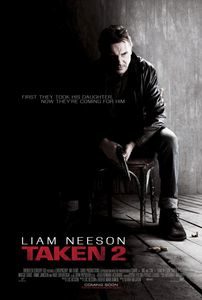
    (Video on Demand, February 2013) Part of the appeal of the original Taken was seeing a rather serious dramatic actor like Liam Neeson take on an action-hero role, within an exploitation film that was competently scripted and directed.  Taken 2 has no such element of surprise, and little to offer in terms of execution.  Frankly, its premise half-reads as a parody: Members of his family get kidnapped… again!  Of course, there’s a little more than that to it: the revenge-driven premise cleverly springs from the consequences of the first film, and you can point at this sequel to show how the expectations set by the first instalment are cleverly tweaked (ie; the adults get kidnapped but the daughter doesn’t, and the protagonist has to work with his daughter to get the means to escape) alongside the way Istanbul is used as a setting in order to show how Taken 2 is reasonably good at what it set out to do.  Unfortunately, there isn’t much extra substance or interest to the film.  Luc Besson’s “Digital Factory” is not known for consistent products, and Taken 2 falls in the middle of their offerings.  Director Olivier Megaton isn’t as meanly efficient as Taken’s Pierre Morel (his action sequences don’t flow quite as well), and the script seems noticeably lighter: Mute off the gunfights and chase sequences, and not much remains in this fairly linear plot.  Liam Neeson, of course, isn’t the same actor as he used to be: Although equally effective at inhabiting his character, he is now (after Taken, The A-Team, Unknown and The Grey) almost his own Liamsploitation action category.  Taken 2 isn’t much of a surprise, nor does it work as hard as the original at pleasing audiences… considering that the effectiveness of original was almost an accident, trying to replicate it doesn’t really work.  It’s a film that works best as filler for people who want a quasi-copy of the original.  Everyone else may want to look at something else.

  • Wrath of the Titans (2012)

    Wrath of the Titans (2012)

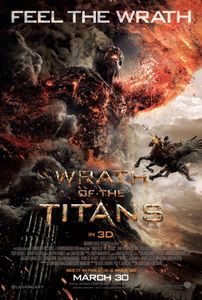
    (On Cable TV, January 2013) The sad news is that Wrath of the Titans doesn’t have the arch melodramatic tone that made its predecessor so much fun to watch: “Release the Kraken!”, anyone?  The good news is that this sequel to Clash of the Titans remains a relatively entertaining action/fantasy film: the bare-bones plot serves handily as an excuse for well-choreographed action sequences involving grander-than-life fantastical creatures.  Director Jonathan Liebesman shows a good eye for flowing action sequences, and the film has a few gorgeous continuous shots in which the action plays out beautifully.  Tons of fiery special effects add more interest, especially when dealing with the skyscraper-sized end boss.  Sam Worthington holds the film together as no-nonsense reluctant hero Perseus, but Bill Nighy has a bit of fun as a half-mad god while Liam Neeson also makes an impression as a bound Zeus.  Thematically, there’s a flicker of interest when we realize that the story is taking place at the twilight of the gods’ influence over human affairs: there’s a last-hurrah atmosphere to the plot that interesting in its own right.  Still, let’s not kid ourselves: this is pure spectacle, the fantasy elements being excuses for bigger action set-pieces.  Wrath of the Titans works well in this context, and delivers the high-gloss entertainment factor that viewers of the first film expected.  That first entry wasn’t all that good, but this follow-up best succeeds at what it tries to do, and that’s already quite a bit better than many recent action/fantasy hybrids.

  • The Grey (2011)

    The Grey (2011)

    (On-demand video, June 2012) We don’t see that many men-against-nature survival thrillers nowadays, but something like The Grey can be powerful enough to last us a while, especially when it takes a standard action-movie premise and turns it into an excuse to discuss existentialist themes.  From the first few moments, it’s obvious that the trailers promising a B-grade survival thriller have been telling us only part of the story, because The Grey soon turns contemplative about humankind’s willingness to live and die.  Liam Neeson is superb in a lead role that echoes the Liamsploitation of Taken and Unknown but also makes use of his gravitas to lend further dramatic weight to the result.  As half a dozen blue-collar oil workers find themselves stranded in Alaska following a plane crash, they have to figure out how to survive their harsh environment, and the pack of wolves that start hunting them.  As you can expect, a lot of people die in this film, not necessarily in the order we’d expect them to fall (the script is fond of giving characters some depth right before they exit) and certainly not gloriously.  The tone is grim, but to its credit it’s grim throughout: the ending, which may have felt bleak in other circumstances, here feels fully justified.  This isn’t a film we may have expected from writer/director Joe Carnahan after the enjoyably simple-minded combo of Smokin’ Aces and The A-Team: You have to go back to 2002’s Narc in order to find something similarly hefty in his filmography.  The Grey actually manages to combine both thrills and thoughts, putting some solid thematic content within a thriller framework.  It works pretty well, and you do (eventually) get to see Neeson punch a wolf in the face.

  • Unknown (2011)

    Unknown (2011)

    (In theaters, February 2011)  I suspect that any overall appreciation of the film will hinge on the reaction to the shift from the Hitchcockian beginning of this B-grade thriller to its far stranger ending.  The premise is solid suspense gold (an American traveler in Berlin has an accident, suffers from some amnesia, but isn’t recognized by his wife once he finds her again) but as the film progresses it shifts while adding assassins, car chases and characters curiously versed in espionage lore.  It’s all nicely tied up, but more importantly it’s delivered with a solid regard for thriller conventions.  While Unknown may not qualify as a top-quality suspense film, it’s quick and dirty enough to serve as a respectable typical genre exercise.  In a solid performance, Liam Neeson reminds us of his turn in the seemingly-related Taken and carries much of the film on his shoulders.  The cinematography is Berlin Winter-harsh and if Jaume Collet-Serra’s directing is a bit too jumpy to be more effective, the entire film feels like a straight-ahead delivery of expected thrills.  Never mind the plot holes or the mid-film lulls: You want a thriller?  Here’s a thriller.  Curiously enough, this exploitative genre piece is adapted from a far more introspective 2003 French novel by Didier van Cauwelaert, Hors de moi, which delves into metaphysical possibilities before delivering pretty much the same twist as the film, without car chases.  The movie, for once, is far more satisfying.

  • The A-Team (2010)

    The A-Team (2010)

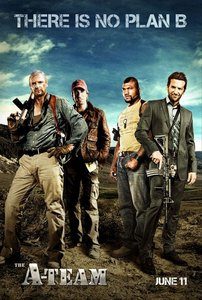
    (In theatres, June 2010) Having no particular knowledge or affection for the eighties TV series from which this film is adapted, I can only judge it on how well it performs as an action movie.  Fortunately, The A-Team delivers all the expected thrills: Writer/director Joe Carnahan finally gets a decent budget, and the if the result frequently mocks plausibility, it’s good enough to make The A-Team a perfectly acceptable action movie.  While a few longer shots would have been helpful in keeping the tension high, Carnahan’s visual style here is heavy on anachronistic back-and-forth between planning and an execution that places a lot more emphasis on speed than grace.  It benefits from grand-scale CGI stunts: how else to portray a bunch of shipping containers falling down like matchsticks?  By the time the characters are flying a tank via its main cannon, I couldn’t have been happier: Action insanity plus echoes of Grand Theft Auto 3!  This intensity, combined with an engaging ensemble cast of characters, does a lot to compensate for a script that never quite seems certain when to start: The A-Team delivers two successive origin stories before we get the sense that the film is truly underway, and even then the entire film seems like a pilot episode for its own sequels.  But why complain when Liam Neeson is slumming with cigars and cackling grins?  Why nit-pick when Bradley Cooper makes for an irresistible con-man?  Finally, what about Jessica Biel, back on the big screen as a competent military investigator?  I’m always on the market for an over-the-top action comedy if it’s made with intelligence, speed and charm.  The A-Team at least gets good grades on speed and charm, and substitutes kinetic cleverness in lieu of intelligence.  I’ll take it.  After all, I love it when an action movie comes together.

  • Clash of the Titans (2010)

    Clash of the Titans (2010)

    (In theatres, April 2010) Sword-and-sandal epics are worthless without an overwrought sense of melodrama, and that’s the single best reason to recommend Clash of the Titans despite a weak script, inconsistent directing and lacklustre performances by actors who should know better.  Three words from Liam Neeson to convince you:  “RELEASE THE KRAKEN!” (Thesis: All movies are improved by a character shouting “RELEASE THE KRAKEN!”) I don’t recall the 1981 original in enough detail to make useful comparisons, so let us consider this remake on its own terms: a mishmash of Greek mythology, action-movie sequences, and blockbuster fantasy trappings.  Among several better actors playing the pantheon, Sam Worthington doesn’t have much to do drama-wise as Perseus (he gets a team and loses it almost as quickly), but after Avatar and Terminator: Salvation the film should do fine in polishing his niche as the guy to play non-entirely-human action heroes.  He gets to run around in a tunic, fight scorpions, cut the head of Medusa, and all the other things a demigod is expected to do.  Direction-wise, Louis Leterrier’s action scenes are uneven: The scorpion fight takes place in clear sunlight with decently long cuts, but the Medusa and Kraken sequence are a bit of an overcut mess even though the CGI feels a bit better than average.  Still, the fun of the picture lies in the arch leaden quality of the dialogue and the fact that everyone seems to be playing the material as straight as possible.  It’s not great art, it may not even be great entertainment, but it does what it has to do, and that should be enough.

  • The Haunting (1999)

    The Haunting (1999)

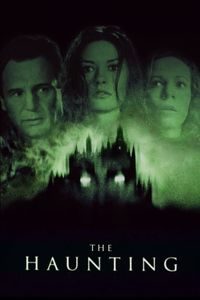
    (In theaters, July 1999) Are horror films basically incompatible with the Hollywood blockbuster mentality? This film offers part of the answer. This big-budget, star-studded Haunted-house offering from Dreamworks manages the rare feat of being a completely ordinary horror film without one good scare in it. Aside from a mild jump-shot or two, The Haunting fails at eliciting anything approaching dread from the audience, with disastrous results. In many ways, this is a movie from another time, where you could afford to build up the suspense for an hour before letting it all flow. This approach could have been applauded if The Haunting has done anything worthwhile… but this build-up only elicits impatience rather than tension. The below-average script doesn’t help things, with some particularly bad dialogue (mirroring almost everything the characters feel despite the fact that it’s blindingly obvious to the audience.) and a lack of any sympathy for the characters. Jan de Bont’s direction is far from being as dynamic as I would have expected from his work on Speed and Twister. Catherine Zeta-Jones is as lovely as ever, but she has to fight against the House itself in the looks department. The bad ending finally seals The Haunting‘s rating to, at best, barely average.

    (Streaming, June 2025) Twenty-five years later, I come to the 1999 version of The Haunting with a very different perspective informed by having seen the 1963 version, having read Shirley Jackson’s novel and being far more appreciative of classic horror.  Alas, none of this leads me to a more positive appreciation — although there a a few things I do like more about it.  The beginning, for instance, is rather good — never mind a fleeting glimpse of Virginia Madsen in the opening scene, The Haunting is never quite as good as its first half-hour where everything is still possible and the film does seem intent on combining terrific set design with an intention to follow the original novel.  The casting helps a lot — Lili Taylor is really good as the mousy protagonist, Catherine Zeta-Jones fantastic at the outgoing Theo and Liam Neeson makes for a great authority figure. When I read the novel, I couldn’t help but imagine them in the lead roles. (Alas, Owen Wilson is utterly miscast in a badly-written character — I like 1963’s Russ Tamblyn much better.)  The sets are grand and the pacing is such that you can hope for the best.  But then The Haunting takes a turn for the worse by going for a special-effects spectacle at a time when CGI really wasn’t perfect and from source material that’s built on ambiguity.  The final half-hour is grotesque overkill — and I’m not even objecting to the heroic-sacrifice finale. As of this to say that despite a very different path, I still end up twenty-five years with an impression of the 1999 The Haunting that’s no less critical.  It’s not even trashy-fun like the near-contemporary remakes of 13 Ghosts and House on Haunted Hill — it’s just ponderous, misguided and near-useless.  This wasn’t the movie that killed Jan de Bont’s promising career as a director — but it was one of the three strikes (alongside Speed 2 and Lara Croft 2) that earned him early retirement from Hollywood.