Lillian Gish

  • Orphans of the Storm (1921)

    Orphans of the Storm (1921)

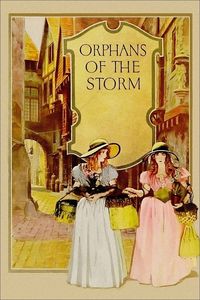
    (YouTube Streaming, February 2021) When it comes to early film director D.W. Griffith’s work, I should probably take a look at his best-known work rather than more minor productions such as Orphans of the Storm, a film about two orphan girls during the French Revolution. Still, you can often learn more about average entries than masterpieces, and it doesn’t take two minutes for Griffith to start lecturing through opening title cards that “The lesson — the French Revolution RIGHTLY overthrew a BAD government. But we in America should be careful lest we with a GOOD government mistake fanatics for leaders and exchange our decent law and order for Anarchy and Bolshevism.” (Emphasis his.)  This naïve political science lesson sounds stupid coming from someone whose infamously racist Birth of a Nation led to a resurgence of the Klu Klux Klan, but that’s Griffith for you. Cheerfully using the French Revolution to score domestic political points, Orphans of the Storm is perhaps best enjoyed as a showcase for Lillian and Dorothy Gish, as well as for Griffith’s undeniable talent, even at this early stage of cinema history, for re-creating lavish historical scenes with hundreds of extras. The story itself is the kind of melodramatic hokum that was in vogue at the time, adapted from a well-known novel and featuring not only orphans, revolution and anti-aristocratic resentment, but plot-convenient blindness as well. It’s… interesting in the way many first-rate 1920s silent productions are, which is to say that it’s often a slog to get through the historically relevant material. I still have a few more Griffith movies in my future as a cinephile, but I’m not really looking forward to any of them.

  • Way Down East (1920)

    Way Down East (1920)

    (On Cable TV, January 2019) I seldom reach back to the early 1920s for straight-up dramatic films, and Way Down East is a thorough reminder of why. Coming from legendary filmmaker D.W. Griffith and starring none other than silent film superstar Lillian Gish, it’s a century-old film that goes back even further in time for inspiration, to an 1889 melodramatic play. To say that social mores have changed is putting it mildly, especially how the entire film revolves around an unmarried pregnant woman and the debilitating social shame that this implied. (There’s also a lesson here between contemporary period pieces and authentic period pieces—anyone trying to remake Way Down East a hundred years later would face significant challenges in trying to re-create the same emotions evoked in 1920.) The film does not pull any punches in reaching for tears and thrills—there’s infant death, small-village ostracization and peril on ice floes. It also packs a bit of a class warfare message as its sympathies are solidly with the working-class heroine humiliated and abandoned by a rich suitor. Now, all of the above may sound like good dramatic material, but the early days of cinema weren’t as polished as what we expect: D.W. Griffith was still helping to invent the cinematic art form! As a result, Way Down East can be a trying viewing experience. Incredibly long, pretentious, outdated, shot with static cameras with terrible image quality (and that’s from the impeccable broadcast source TCM!), it can be an ordeal for most of its duration. Fortunately, it does improve sharply by the end, as the film points out the double standard it depicts, and then rushes to an action-packed finale on a partially frozen river that features an authentically dangerous ice-floe scene that will have even contemporary viewers gritting their teeth in suspense and sympathetic frostbite. Gish is very good and lovely here, but she suffered for it—legend has it that she suffered permanent nerve damage in her hand from shooting the climactic scene. I wouldn’t go as far as to suggest that you fast-forward directly to Way Down East’s last fifteen minutes … but it would save you a lot of time.