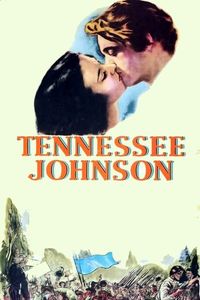
(On Cable TV, September 2021) I firmly believe that Hollywood movies can be very educational about history, but not by watching them — that would be silly. True education is attained only by fact-checking the Hollywood film against other sources. In the grand tradition of biopics, Tennessee Johnson sets out to produce a proudly nationalistic biography of Andrew Johnson, the first American president to be impeached (but not convicted). For political junkies with a historical bent, it’s weird to see Van Heflin take on the role of Johnson in the middle of a script that can’t stop praising him. After all, Johnson is not particularly well-regarded these days — the expression “one of the worst presidents” is often associated with him for good reason: Acceding to the presidency after Lincoln’s assassination, he mishandled the post-Civil War Reconstruction era. While he managed to keep the nation together after its trauma, his blunt racism led to continued white supremacy in the southern states. His reputation has sailed the ebbs and flows of American racism: After some damning assessments in the early twentieth century, he was partially rehabilitated in the 1930s–1950s as American racism rose, only to be re-condemned following the Civil Rights era. Tennessee Johnson is clearly from the crest of his better-regarded period — he’s heroically portrayed as coming from very humble origins, learning to read late in life, gathering popular support, making a mistake during his inauguration (in real life: showing up drunk after self-medicating typhoid fever with alcohol –a then-common practice—and making a spectacle of himself), avoiding assassination and then stepping up as president after Lincoln’s death. Then the film focuses on his impeachment, focusing its anger toward a clearly defined antagonist trumping up charges against him and having Johnson make an impassioned speech in its own defence (which never happened). Once not convicted, the film blips forward to show him returning to the US Senate after the end of his presidential term. If the film ends there, it’s because there isn’t much more to say: he died after a few months as a senator. But what’s missing from this? Then entire racial question, for once — the very reason why he’s widely reviled as the president who won the war but failed to enact any meaningful change in the southern states, thus prolonging southern segregation for nearly a century. This is Hollywood at its most hypocritical in whitewashing biographical figures, ignoring the worst, making excuses for the dubious and hyping the rest. I had a severe case of cognitive dissonance watching the film: Johnson is best seen, even today, as a complex man who had good traits but made terrible decisions and that would make a fascinating miniseries, as a film is probably too short to do justice to its topic and leads by design to unsatisfying results. Taken at face value, Tennessee Johnson is not that bad a movie: in the heroic-biopic mould, it clearly presents its subject, cleanly gives reasons why he’s admirable, and goes through the historical (or, ahem, pseudo-historical) events with some steady rhythm. Heflin does well in a role that asks him to go from peasant to president, and the film becomes even better once Lionel Barrymore makes an entrance as Johnson’s opponent. But I don’t quite believe in assessing films at face value, especially when they deal with specific, well-documented history. Watch Tennessee Johnson if you want, but make sure to keep Wikipedia nearby as you do.