Louis Jourdan

  • Can-Can (1960)

    (On Cable TV, September 2021) I never knew how badly I wanted to see a movie scene in which Frank Sinatra chats with Maurice Chevalier until I saw it right there in Can-Can, and it’s only one of the reasons why I liked the film so much. A classic 1950s musical that was released just ten weeks into 1960, it’s a mixture of familiar and fun Cole Porter songs, Sinatra crooning alongside Chevalier and Louis Jourdan, Shirley MacLaine dancing up a storm, and some delightfully chaste French debauchery as filtered through American Francophile sensibilities. MacLaine plays a Can-Can club owner trying to stay ahead of police raids against “lewd and lascivious dancing,” and having to pick between a lawyer (Sinatra) and a judge (Jourdan) while an older judge (Chevalier) is there to provide sage advice to all. It’s a lot of fun to see Sinatra and Chevalier, two crooners initially separated by decades and an ocean, chat about the meaning of love in Paris — if the scene didn’t exist, someone would have had to invent it. Jourdan is also quite good, singing and dancing pleasantly. Still, perhaps my biggest surprise of the film is liking MacLaine quite a bit as she credibly sings and dances — although I suspect that the long wig had a lot to do with it as well. The tone of the film is this kind of pitch-perfect blend between suggesting bawdiness without showing it (Khrushchev being easily impressed, there’s very little that’s risqué here) and falling back on an American’s idea of the relaxed French attitude toward love and marriage. It’s quite a bit of fun, and the soundtrack can rely on a few songs that can still be recognized. I’m fast running out of 1950s musical to see, but Can-Can is a decent addition to the corpus.
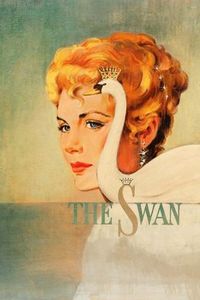
  • The Swan (1956)

    The Swan (1956)

    (On Cable TV, August 2021) At this point, I’m nearly convinced that tales of European royalty romance are only fit to bore me mildly. I simply don’t have the interest in whatever they’re playing off. It’s even worse in The Swan, which sets up a familiar tale of romance between a princess and a commoner… only to deliberately avoid the expected happy ending. Rather than make a point, it merely seems to be flaying about in confusion, just ending on a note of disappointment. Of course, The Swan is still being watched today for factors not entirely of the film’s own making. Here, Grace Kelly plays a princess in her next-to-last Hollywood movie before becoming… a princess. (The film was released on the day of her royal wedding, no less.)  Still, that doesn’t make Kelly’s performance any more animated — it’s easy to start rooting for Alec Guinness when he acts like an overgrown boy in a royal role, even as the film tries to have us sympathize with Louis Jourdan at the other extremity of the love triangle. I watched The Swan but I can’t say I have any definite feelings one way or the other. My expectations aren’t necessarily subverted by the anticlimactic ending — I just feel as if it’s missing something. Kelly looks like a princess but acts like a block of ice, whereas Guinness is an unexpected highlight. It’s clearly the film director Charles Vidor wanted to make, but I just keep on questioning whether it was a good idea at all.

  • Made in Paris (1966)

    Made in Paris (1966)

    (On Cable TV, September 2019) Those who maintain that movie musicals are about style more than actually singing and dancing should be comforted by Made in Paris, a nearly obscure mid-1960s MGM film that has a minimal amount of music and dance, but pretty much the same attitude shared by the musical genre. The messy script has our New York-based heroine heading off to Paris to be pursued by three suitors, only to end unconvincingly not with the devastatingly charming French fashion designer, nor the cynical American journalist, but her boss (whom she’d previously bashed over the head with a frying pan after him getting a bit handsy) having crossed the Atlantic to win her back. I’m spoiling the ending because it’s best to be prepared for its unsatisfying nature, but also to make the point that the best reason to watch the film is Ann-Margret’s bubbly performance as a feisty redhead—it’s as is Amy Adams or Isla Fisher had travelled in time to end up in a cute 1960s musical with go-go dancing and enough haute couture to make any gal cry. Playing off no less than Louis Jourdan, Richard Crenna and Chad Everett, Ann-Margret is a redheaded tornado of joy here, and the film is an absolute must-see to anyone already charmed by her leading role in Viva Las Vegas and other movies of the period. Made in Paris is clunky, but she’s quite wonderful in the middle of it all, and she compensates for many other missteps.